Creekbank Stories

“Brick By Brick” Ch 32 from Trampled Grass
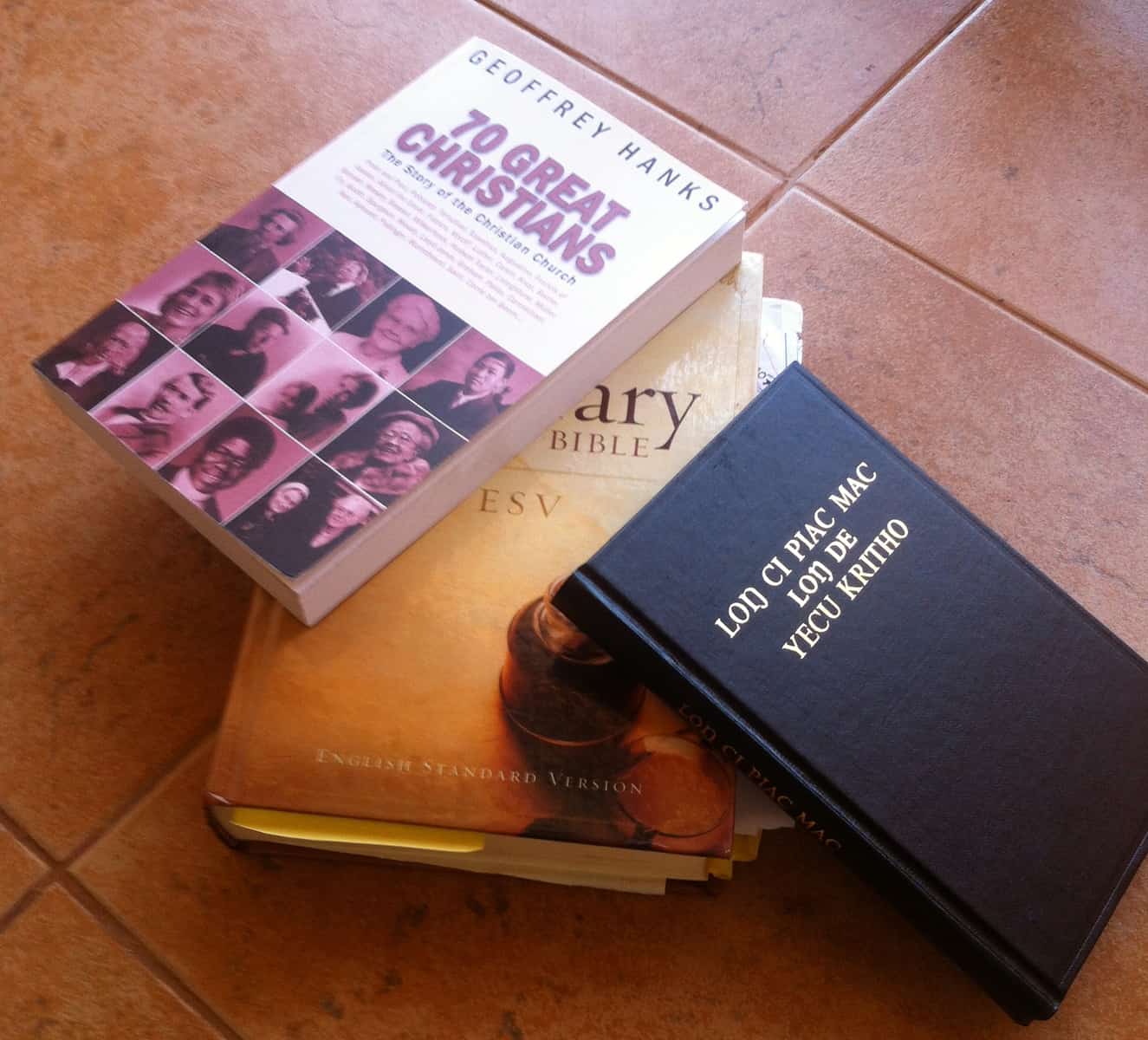
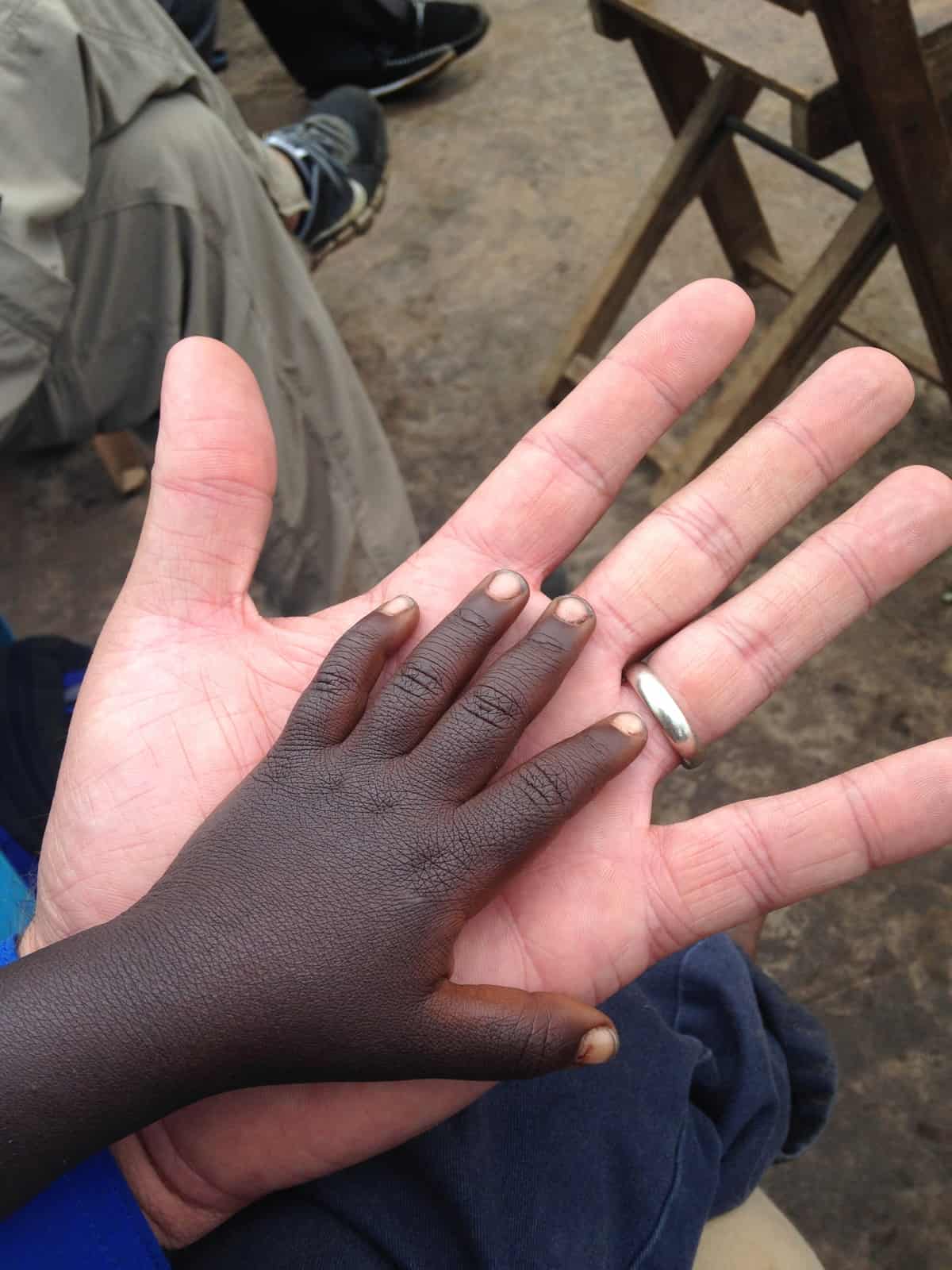
We continue our march through our new ebook, Trampled Grass.  Chapter 32 (below) is one of my favorite stories from the book.  Be sure to read the updated postscript. We’re posting chapters from our new ebook,  Trampled Grass, daily.   You can download a copy in four ways: Read sample chapters or purchase at Amazon. Read sample chapters or purchase at Smashwords. You can download a free PDF  at creekbank.netby signing up for our Story Letter. Download the Snippet App for easy reading on your tablet or phone.     You can receive our monthly Story Letter, here.     Do you wish to be notified of future blog posts? Click here to subscribe to The Creek Blog.                   Bricks can be used to build walls to keep others out or  paths to bring them together.                                                                                      Brick by Brick   I wonder where he’s at. I hope he’s still alive. I first met Batuk the Dinka at a lonely border checkpoint in South Sudan just north of the Tri-Corner of where South Sudan, Uganda, and DR Congo converge.                                                    The Tri-Corner, where South Sudan, Uganda & Dem.                                                     Rep. Congo meet, is the heart of Kakwa territory. The Bazi checkpoint is deep in SS’s Kakwa territory and it surprised us to see a Dinka there. He was easily identified as Dinka, the tallest people in the world. They are viewed by other tribes as arrogant and aggressive. Batuk didn’t make a good first impression. He was dressed in a running suit and approached our vehicle with a swagger that implied, “I’m in charge.” He was the Immigration Officer for this stretch of pot-holed road that can only charitably be called a highway. Batuk began an interrogation of where we five “Mzungu” men were going and why. As we informed him of our mission work, he scoffed. “Jesus is a white man’s God.” He continued his monologue ending with, “If Jesus appeared right here, I wouldn’t bow down to him.” We were glad to leave his checkpoint and head north, but knew he’d be waiting on our return trip. Four days later, there he was, still dressed in his running-suit uniform. However, we’d written down his name and so addressing him personallywas the first brick to fall in the wall between us. Several months later, DeDe, our son Clint, and I returned though Bazi. As we bounced north, we were ready for the checkpoint and Big Batuk. First of all, I addressed him by name and alluded to our previous visit. A quizzical smile appeared on his face. I handed him the photo shown below. “You said Jesus was a white man’s God.” We shouldn’t try to put Jesus in our little box.                     This painting, one of my favorites, is from the Catholic Guesthouse in Goma, DR Congo.   He glanced up from the photo. “That’s just how some artist drew him as African.” I shrugged. “Every culture makes Jesus look like their own.” I put my white hand on his dark arm. “Besides, the real Jesus was probably closer to your skin tone than mine.” He smiled. Then I handed him our bribe. A loaf of DeDe’s famous banana bread. “We brought this for you.” “For me?” “Yep.” It works like the Proverbial Charm: a bribe of bread, cookies, or bottle of water. I even sometimes give a copy of one of my books. Anything but money. He ushered us through the checkpoint, wishing good luck for our journey. Three days later on our return, he greeted us effusively. It must’ve been the banana bread. He stood toe-to-toe with me. “I have one thing I want from you.” I stiffened; ready for the infamous “African Ask” we face nearly daily. “I want two books.” He had my attention. “I want a book called 70 Great Christians and I want a Bible.” I’d never heard of the book but promised I’d find it if possible and deliver it in January. He walked us to our Land Cruiser. “God bless you on your way home.”  Bazi check point sketch. You can “go there” with                                                                                                                     Lat/Long on Google Map and pray for Batuk and Bazi   We waved and headed south. Over the next ten miles of potholes we talked of the change we’d seen in him. It wasn’t the banana bread. I firmly believe it was the kneading work of the Holy Spirit. Back home in Uganda, I ordered 70 Great Christians from Amazon. Our son Terry brought it over. It’s a fine book covering historic Jesus-followers from “The’PostlePaul” to Corrie Ten Boom. I planned on presenting the book and Bible to Batuk as we passed through Bazi at the end of 2013. But we weren’t able to go. War broke out. Crossing the border into South Sudan sadly became out of the question. As I think and pray about people in the war-torn country of South Sudan, I often think of Batuk. How is he? Is he still at his border post deep among the Kakwa, whom we love deeply? I pray for him. Will you join me in praying for Batuk? Lord willing, we are journeying through his checkpoint soon. I’ve got his care package ready. This man needs to know there is one white face that keeps a promise and was not put off by his initial demeanor and

“Act Of Faith” Ch 31 from ‘Trampled Grass’

Faith is the confidence that what we hope for will actually happen; it gives us assurance about things we cannot see. –Hebrews 11:1 NLT “Water is invisible when it’s underground. God put it down there and it’s our job to find it.” –Silva, Ugandan Hydrologist  Note boys in tree watching drilling Drilling a borehole is an true act of faith. Boreholes. That’s what they call water wells in Africa. You’re looking for something you can’t see. You believe it’s down there. The geologist says it’s so. But you can’t see it. Yet. It’s an act of faith to sink nine-meter length pipes and thousands of dollars into the red soil and rock underneath it. A successful borehole We were able to do this due to the generosity of our partners, Baptist Global Resource. BGR provided the funds and direction for us to drill wells in the Camps. Why we drill: Ulua Refugee Camp preaching point in the shadow of a new borehole I wish you could’ve have been there. There’s nothing quite like being among hundreds of refugees thrilled at having clean accessible water. Many have been carrying 20 liter jerry cans for long distances. That’s over forty pounds of water, normally carried on the head. There’s nothing like watching a well come in. Water spews everywhere. There is joy in the camp. We’ve been part of seven successful wells. Then there’s the disappointment of a dry hole. We know that feeling too. Acts of faith sometimes require perseverance. Not giving up. Not giving in. Believing and keeping on in spite of not yet seeing the result. That’s faith. That’s hope. May we never lose either.   One of my favorite stories to share is 92 Dry Holesfrom Deep Roots. It’s the story of Texas oilman Amon Carter. Enjoy!                                                                  Borehole drilling at Ulua 2 Camp.                                                                           Note tool  pushers in tree.

“Love & Water” Ch 30 from Trampled Grass

A word from Curt Two words today: Love and Water. Two things needed for life. Enjoy our essay on these two below.   We’re posting chapters from our new ebook,  Trampled Grass, daily. You can download a copy in four ways: Read sample chapters or purchase at Amazon. Read sample chapters or purchase at Smashwords. You can download a free PDF  at creekbank.net by signing up for our Story Letter. Download the Snippet App for easy reading on your tablet or phone.   You can receive our monthly Story Letter, here.   Do you wish to be notified of future blog posts? Click here to subscribe to The Creek Blog. “You can live without love but you can’t live without water.” –Sudanese Proverb Six foot six he stood on the ground Weighed two hundred and sixty-five pounds. But I saw that giant of man brought down By a thing called love. –”A Thing Called Love”   I’ve been wondering about those two forces that drive life where we now live. Water. Love. Water and Love. We live in the land divided by the rivers. And all of those rivers flow into the Nile. It’s the world’s longest river. It is arguably the world’s greatest. It’s the source of myths, stories, and wars. I’m from the land of the Mississippi. They say in northern Minnesota, you can easily step across the source of the Mighty Mississip. The Nile burst out of its source, Lake Victoria, as a full grown river full of rapids, depth, and width. We live and work along the White Nile, the southern portion of the river. It joins the Blue Nile at Khartoum, Sudan, and continues its journey to the Mediterranean.   A river that flows, with no tributaries, through a thousand miles of the world’s greatest desert, and comes out smiling. The world’s greatest river spits at the world’s greatest desert, the Sahara, and says, “Bring it on.” It’s not satisfied to be just another river. It chooses to do something few other world rivers have the gumption to do: it flows northward. The Upper Nile (where we live) is south. The lower Nile is in Egypt. Go figure. You cannot understand our part of Africa, especially the Sudans, if you don’t know about the Nile. Everything here is about water. Sudanese tribes have migrated for centuries, seeking water and grazing for their livestock. You don’t live, work, farm, or raise cattle, without water. “You can live without love, but you cannot live without water.” It’s a true statement. But maybe it’s not. I agree. You can’t live without water. Our bodies, which are mainly water, must have it. Without it, we’ll die. We’ll die of thirst long before we starve. But I’m not sure you can live without love. You can exist with the absence of love. But I’m not so confident a person can thrive. Our bodies are made to need water. Our soul is made to crave love. I’m not referring just to romantic love, although it is a wonderful thing. I’ve been in love with the same woman for over thirty-five years. That kind of love is so sweet. I fear I take it (and her) for granted. The human soul is made to love. It can be a person. Or in the case of parents (and grandparents) persons. It can be a Godly love. “But the greatest of these is love.” I didn’t make that up. The Apostle Paul (who was single) said it. As Pascal, a mathematician, said, “We all have a God-shaped hole in our heart. And although we try, nothing else can fill it.” Not even water Love. It’s a word we toss around. A powerful word. A strong emotion. It can drive a person. I believe it can even shape a nation.   As the song, “A Thing Called Love” shares, “Can’t hold it in your hand, see it with your eye, But like the wind it covers our land Strong enough to rule the heart of any man. It can lift you It can put you down. Take your world, turn it all around. Ever since time, nothing’s been found that’s stronger than love. Amen. May it be ever so. Long live love.   See “The Man”,  Johnny Cash, sing “Thing Called Love.”       In a dry land, every drop of water is precious.   If you enjoyed this story, you can receive notification when new The Creek Blog posts are published.   We’d be so honored to have you on our monthly Story Letter email here.   Follow us on: Curt’s Facebook Enjoy our Boards on Pinterest Twitter:  @curtiles    #UpCountry  #goChadan The Creekbank Amazon Page   We always enjoy hearing from our readers. As a prize today, we’ll send a free ebook to everyone who comments. Simply put your name/email/and brief comment in the form below:     [gravityform id=”1″ name=”Contact Us!”]

“Ground-Truthing” Ch 29 from Trampled Grass

        A word from Curt Truth.  It’s knowing the facts.  Seeing for yourself.  It’s the theme of this story. You’ll meet Oscar. And his dad. And a new word.  Ground truthing.   We’re posting chapters from our new ebook,  Trampled Grass, daily. You can download a copy in four ways: Read sample chapters or purchase at Amazon. Read sample chapters or purchase at Smashwords. You can download a free PDF  at creekbank.netby signing up for our Story Letter. Download the Snippet App for easy reading on your tablet or phone. Receive our monthly Story Letter, here.   Do you wish to be notified of future blog posts? Click here to subscribe to The Creek Blog.     You tell Mzungu to come up here (to Nebbi) so I can see him with my naked eye.” –Message from the father of our guard, Oscar. Oscar’s dad had heard about me but wished to see me face-to-face. That’s what Ground-Truthing is. This means seeing it first hand; not taking anyone else’s word for it. In the work of people-group research/anthropology, it’s called “Ground Truthing”—putting your boots on the ground to see for yourself: where people live, how they live and what they believe. Maps cannot replace that. Wikipedia can’t touch it. Word of mouth is good. But nothing is quite like going “barefoot.” Going there and putting your bare feet, or in our case, boots on the ground. Getting in among the people and seeing, feeling and tasting. They’ve opened a new mall in our town of Entebbe. It’s got a Nakamatt (Africa’s version of Wal-Mart). They’ve posted a sign that they’ll soon have a KFC. Rumors have swirled that the mall will eventually feature a multi-screen cinema. That’s a big deal. It’s been over a year since I’ve seen a movie in a theater. Watching a movie on a Kindle Fire is different from the big screen.   I have tromped through the partially completed three-story mall looking for the cinema. I’ve gotten directions on its location: “It’ll be on the ground floor.” “First floor for sure.” (Warning: it is actually the second floor. Those Brits mess up everything over here.) “Past the corridor on floor two.” No sign of any room that even remotely resembled a cinema. “Oh, it’ll open by the end of April.” “Summer at the latest.” I began to doubt the African grapevine. There doesn’t seem to be a cinema being built. My hopes plummeted. At least we have Amazon Prime. Two days ago, I made another survey of the mall. After two false leads, a third person said, “It’s in the hall behind the Yogurt stand in the Food Court.” And there it was—two rooms with bare concrete, but clearly what will eventually be a cinema. I believe I even smelled popcorn. I now knew for sure. I’d seen it with my own naked eye. I didn’t have to take anyone else’s word for it. “When will y’all be opening?” “Soon. Real soon.” Beware of these Africanisms: “Real soon” and “It’s not far.      The small country of Uganda is in the heart of Africa. Its larger neighbor South Sudan is north.   That brings me back to our work. Our job and calling is connecting or engaging unreached people groups with believers in both Africa and America. It’s about relationships. But isn’t everything?                                                                             Our Chadan Region:            Hundreds of the least reached groups are located in South Sudan and southern Chad.   Our area is called Chadan. It includes South Sudan and the southern half of Chad. Both regions have difficult conditions as well as hundreds of thousands of unreached by the life-changing Gospel of Jesus. Our focus has been on South Sudan, the world’s newest country. During 2013 our team moved in and out of the country. We were ground-truthing. You could call it ground trotting. Because many of our SS people groups live along the borders, we’ve also worked in northern Kenya and especially northern Uganda. The end of 2013 brought an end to the fragile peace that was in South Sudan. Suddenly entering most of the country became impossible. Most plans for 2014—going to places like Malakal, Bentui, and Juba—were shattered. The situation deteriorated in the first quarter of 2014. A ceasefire and peace all seem far-fetched. Our team is currently seeking God’s direction on focus and strategy. Here are our big questions: How do we best do Engagement of the Unreached with the situation in South Sudan? The two main parts of Engagement are Training (Discipling Leaders) and Research (Ground-Truthing) How do we go about those in the current situation? Thousands of “our people” (the unreached of South Sudan) have fled into neighboring countries. How do we Engage in the Refugee Camps of Uganda, Kenya, and Ethiopia? Are the closed doors within South Sudan a call to work in southern Chad? Or the refugee camps? As things slowly improve in South Sudan, when/how/where should we return? As the predicted famine unfolds, how do we respond? These are all big questions that require God-sized answers We implore you to pray for our Chadan leadership. What do we need to see? Do? Where do we need to put our naked eyes?                                                                      Chadan Engagement Team                                 exists to reach the  least reached in South Sudan and southern Chad.   On one of my trips #Up Country, we stopped in Nebbi Town and met Oscar’s father. He later called his son, “Now

“Gulu On The Move” Ch 28 from Trampled Grass

Bouncing along on a northern Uganda road, it’s hard to miss the colorful students. Parades of brightly dressed children are walking home from school. We’re north of Gulu in the heart of Acholi land. Africa is a land of brightness. No mild colors here. Pastels are passé here. Every school has its uniform colors. As the kilometers pass, we go from lavender to teal to bright red. The children wave as we pass. They appear to have no worries or fears. It wasn’t always so. Gulu was in the heart of the civil war between the Lord’s Resistance Army (LRA) and the Government. You’ve heard the name of their leader: Joseph Kony. The Lord’s Resistance Army. Never has a group been more misnamed. Don’t associate the Lord with the vile and violent acts this militia carried out. Sadly, this Acholi-populated army inflicted death and mutilation on its own people. The worst part of the LRA’s atrocities was the kidnapping of child soldiers. Rebel squads would slip into villages at night and kill, rape, and plunder. Part of their plunder was the taking of children and teens. They were brainwashed and manipulated into cold-blooded killers. Child soldiers. What a sad oxymoron! Two words that should never appear together. Child Soldiers—their future and innocence taken away. The best way to avoid being kidnapped in the LRA’s nighttime raids was to leave home. During the height of the LRA mayhem, an estimated 25,000 children would pour into Gulu town nightly. They were called Night Children. Seeking shelter wherever they could, they slept in doorways, on porches, and in homes and businesses that opened their doors. That’s why the colorfully dressed carefree schoolchildren of today are so touching. They are the next generation after the Night Children. The children of the children who lived in fear. That prior generation was robbed. This generation is living in hope. And a big part of their and their family’s hope is built on education. That’s why there’s such a long line of schoolchildren. And that’s why the statue stands in the midst of Gulu town. It’s not exactlybeautiful. Closer inspection reveals that it is made of rough sheet metal. It stands in the middle of a Gulu roundabout next to a clock. The statue’s base is plastered with ads and political signs. The median of the roundabout is unkempt. In spite of its surroundings, the statue stands out. Two children stand behind a huge stacks of books. The books are large. We’d call them tomes or coffee-table books. The book on top is open. The two children are reading. We can assume they are in school. They are not night children. They live in peace and freedom, and this allows them to get an education. Education is not the answer to everything. I firmly believe spiritual matters take priority. But this doesn’t allow us to throw the baby out with the bath water. Education lifts up a culture. It provides opportunities. It widens a worldview. It adds colour to a person’s world—transferring a black-and-white image into the vivid colors of Africa. May it ever be so in Gulu Town, home of the Acholi. Postscript Joseph Kony and his LRA army wreaked havoc in Uganda, South Sudan, and Democratic Congo. The remainder of his forces are now hiding in the jungles of eastern Central African Republic (CAR). Ugandan forces, with the aid of American soldiers, are tracking him down. Our hope is that evil leaders like him may become a thing of the past.   The Children and Book statue in Gulu is simple but fetching once you know the area’s history.    

“UNO” Ch 27 from Trampled Grass

 A Selfie: Adeit, Margaret, and Mzee   “My Father is always working, and so am I.” –Jesus in John 5:17   We stand amazed daily. Really. Amazed at the creative ways God is working all around us. He can even use a deck of cards to draw a family to him. We learned years ago that two things are good bridge builders across cultures and languages. A deck of UNO cards and a box of dominoes. Dominoes. I’ve played Chicken Foot all over the world. I’ll never forget playing dominoes among Sumatran tsunami survivors. “Kaki Ayam” (Chicken Foot in Achnese) was a bridge builder and friend maker for our team. Dominoes and UNO are great because you only need to recognize colors and numbers, and that is pretty universal. Ed and Becky O’Neal sent a dozen decks of UNO over. And one of those decks became the cement between a relationship that will stand the test of time. I’ve been trying to notice and record all of these “coincidences”* and events. I tell DeDe that we’re two old people stumbling and bumbling around Africa, and in the midst of our shortcomings, God keeps linking up us with the right people in the right places.  Coincidence is a cuss word in the Believer’s vocabulary. This “Amazing Bubble” shows why.   The numbered bubbles above illustrate how God is always at work. Bubble 1: Our 1996 Toyota Land Cruiser. It gets us to the difficult places where the unreached are. It was bought with gifts of love through folks like you through the Lottie Moon Christmas Offering. Thank you! Learn more at www.imb.org Our Land Cruiser “loaded for bear” at the Nile River ferry crossing. Laropi, Uganda   Your giving through Baptist Global Response allowed a Kentucky Baptist Disaster Team to visit and assess the needs of the South Sudanese refugees in northern Uganda. You can give directly to BGR’s South Sudan Projects.                                                                                              Adeit with friends in Alere Camp, Uganda                                                                                                 on the day of our original visit Bubble 2: Adeit. The gifts (Lottie Moon and Baptist Global Response) led us to a young girl named Adeit. We met her at Alere Refugee Camp near the Nile River. Coy Webb, director of Kentucky Baptist Disaster Relief, and I were visiting PSNs of the Adjumani refugee camps. PSNs are the People with Special Needs. They are the vulnerable. The young child, the elderly women, the infirm, blind, the orphan. Alere Camp was the last of the dozen we’d visited during agruelling week. The last visit at the last camp. I nearly suggested that we not visit any more homes. We’d seen enough to break any heart. It’d been easy to skip this last visit. If we had, I’d have been a much poor man. I’d have been a much poorer man if we’d turned back. A refugee led us up a steep path to a ring of huts. “There’s a young girl named Adeit with a bad foot.” The girl, who looked to be about eight or nine, was cutting onions. Her large Dinka smile made me instantly like her. Our guide pointed to her left foot which faced backwards. Adeit just shrugged and smiled. I gave her a deck of Uno cards and took her photo. We trudged back to our vehicle. I didn’t really expect to see her again. But Adeit took up residence in my heart. I found myself glancing at that photo daily. Shortly afterwards is when God began moving. Bubbles 3, 4, and 5; Local church leaders Joseph, Savior and Margaret began ministering to Adeit and her family. We met with these leaders and shared about the opportunity to help Adeit. Margaret raised her hand. “I will go with her and the mother to the hospital in Entebbe.” They are sharing Jesus in word and deed as they built a bridge of friendship and concern for Adeit’s handicap. Pastor Joseph Anyovi, shown praying at a borehole site, has been a key in Adeit’s story.   Bubble 6; Our Uganda Baptist Seminary is where Joseph, Savior, and hundreds of other national church leaders are being trained. Once again, your support of our organization makes this possible.  Uganda Baptist Seminary in Jinja,Uganda Bubble 7. Alere Refugee Bapist Church, where Adeit and her family now attend, is a melting pot of Dinka (Adeit’s family), Nuer, Madi, Kuku (Margaret) and more people groups. Bubble 8, 9, and 10: Joel V is an American doctor with Samaritan’s Purse. He’s an alumnus of our organization’s refugee camp work a decade ago. During a recent visit, he me told about CoRSU hospital near our home in Entebbe. I asked, “What do they do there?” “Rehab work on children.” “What kind?”“Things like club foot and deformities.” “What does it cost?” He explained that the cost was for transportation and lodging only and any surgery was free.  Dr. Joel Vanderford with Samaritan’s Purse Kampala, Uganda   I couldn’t get Adeit off my mind. Every time I opened my computer, her smile seemed to pop up. Because of the work of Pastors Joseph and Savior, a miracle began: Adeit, her mother Rebecca, and Guardian Angel Margaret (who served as translator) traveled by bus to the hospital. Three surgeries later, Adeit’s foot is facing forward. I believe her Dinka resilience (and stubbornness) will serve her well during her long rehab. We fully expect to see her running footraces. We visited her Camp last week and were thrilled to see how her journey is touching the entire community for the Gospel. Adeit, her mother Rebecca, and Margaret   All this is possible through our Chadan Team (Facebook @ANileApart) We use Twitter Hashtag #UpCountry on our travels whose focus is on the Unreached Peoples of South Sudan and southern Chad. Due to the war in South Sudan, we’re going to where thousands of South Sudanese have fled: the refugee camps along the country’s borderlands. Adeit’s Dinka tribe is one of our priority groups. We really do stand amazed at

“Heroes” Chapter 26 from Trampled Grass

Chapter cover: Hero Margaret at her tukul. Alere Refugee Camp, Uganda Header: Margaret holds Maggie Iles This book is filled with the term hero. It’s a medallion-like word reserved for angels and brave men and women. How do you define a hero? That’s why Margaret is a hero. Margaret lost both of her parents in South Sudan’s war. A member of the Kuku Bari tribe, she became the guardian of her younger siblings. In UN jargon, she became leader of a child-headed household. A brother lost his life and his children became hers. Others joined under the umbrella of her strength and courage. There are now eight dependents living with and around her at Alere Refugee Camp. She takes care of all of them but it doesn’t end there. She cooks simple meals and sells them at a low cost to the neighborhood children. That’s how Margaret came to know the girl with the bad limp. She related how she watched the girl struggle up the hill to school. The girl had a club foot and left earlier than the others to make it to school on time. In the afternoon, she limped past long after the others had sprinted down the hill. Little did the girl know that Margaret would be the catalyst in a miracle that repaired her foot and changed her life. The girl was named Adeit and her story is next. Margaret at her tukul (hut) in Alere Camp near Adjumani, Uganda  

“Gratitude” Ch 25 Gratitude

We’ve got a roof over our heads. And the kids are all fed. And the woman I love most of all Lies close beside me in our bed. Lord, give me the eyes to see Exactly what’s it’s worth And I will be the richest man on earth.” –Paul Overstreet “Richest Man on Earth” Paul Overstreet’s “Richest Man on Earth.”                                                                                                              What a fine song       Richest Man On Earth Best of Paul Overstreet I’ve never really understood the term until recently: A roof over our heads. Not everyone has that in Africa. Especially refugees. Poppa Mzee had a roof. But that was about it. The previous chapter page shows his home in Nyumazi Refugee Camp. A white UN tarp, which served as his roof, flapped in the breeze. I wondered how wet he’d get in a blowing rain. He lay on folded cardboard. Bare ground beneath him. A small bag ofpossessions served as his pillow. The worst part was how alone his spot looked. It was fifty yards to the next shelter. I wondered about his story. How did he get here? Why was he so alone among 19,000 people? One must be extremely careful distributing things in the Camps. You can easily cause a mob scene. People can get hurt. So we discourage giving anything to a select few. My sister Colleen once caused a near riot in a Liberian orphanage by giving candy to the children. Projects and giving must be carefully planned. I couldn’t get Poppa Mzee off my mind as our group walked to a new water well. We were met by the Camp Chairman, Wilson. He was a tall Dinka man in his forties. This position is filled by a vote of the refugees in the camp. It’s a big position. A tough position. Kind of like Moses in the wilderness. Listening to folks and their problems day after day. Chairman Wilson walked with us back toward our vehicle. We passed Poppa Mzee, and I asked the Chairman, “We have a sleeping mat tied on our roof. May I give one to this man?” “Sure.” He thought a moment. “Do you have two?” “Yep. Straight from Ten Mile, Louisiana.” That went over his head but he lowered his voice, “I brought my old daddy with me from South Sudan. He’d love one.” “We’ll give one mat to Mzee here and you can take the other to your father.” I won’t describe how Poppa Mzee received his mat. You can see it in the photos. It was a highlight of the day. Don’t miss these three photos: Poppa Mzee gets his mat. Poppa sighed as he settled onto his mat. My mind was a thousand miles away. No, make that eight thousand. I envisioned the ladies at Freedom Baptist Church in Ten Mile, Louisiana, who’d made this mat. They sent a duffel bag of sleeping pads made from Wal-Mart bags. I thought of Cooter, Dorothy, and all of the women who’d knitted these mats. I’ve been told it takes 700 Wal-Mart bags to make one mat. I wonder how long one mat takes? I just know it made a difference in Poppa Mzee Poppa’s life. As we left, he sat up on one elbow. “Cha lech.” I stopped. He repeated, “Cha lech.” Chairman Wilson said, “He’s saying thank you in Dinka. Cha lech.” Miz Cooter, I’m just passing on this thanks. Cha lech. Or as you’d say in Ten Mile, “Thank y’all.”   “We can do no great things but we can do small things with great love.” –Mother Teresa   Warning: Please do not send mats over. It is much simpler and economical to buy mats here or better yet supply the materials for folks to make their own from local materials. Postscript on Cooter Willis and her late husband, R.L., kept over 400 foster children in the space of three decades. They are rightfully famous in our area for a lifetime of good deeds and open hearts. Cooter Willis and her late husband, R.L. We’ve got the plastic knitting needles they would need. I wonder if Cooter Willis has her passport. Here I am, Lord. Send me. Poppa Mzee on his bare cardboard mat Nyumazi 1 Camp Adjumani, Uganda

“Beeped” Ch 20 from Trampled Grass

 A word from Curt Beeped. It’s part of our daily vocabulary in Africa. I believe you’ll enjoy the tongue in cheek story below.   We’re posting chapters from our new ebook,  Trampled Grass, daily. You can download a copy in three ways: Read sample chapters or purchase at Amazon.  You can download the entire book as a PDF at creekbank.net by subscribing to our Story Letter. Download the Snippet App for easy reading on your tablet or phone.     You can subscribe to our monthly Story Letter, here.       Have you ever been beeped? It’s a part of phone culture life in Africa. I use a jail-broken I-phone over here. I like the way that sounds. Jail broken. I wonder if there’s a warrant out there for me. Next thing you know, I’ll be ripping the “Under penalty of law” tags off pillows. There are no long-term phone contracts in our part of Africa. You purchase a SIM card from one of the providers (Airtel/MTN) and insert it into your phone. Next you buy a pay-as-you-go airtime card. They come in all sizes from 500 shillings up. (That’s about twenty cents worth.) You scratch off the code and upload your amount.   Our SIM card box with phone cards for Kenya, South Sudan, and Uganda. Africans live and die by their cell phones. I’ve not been remote enough where natives don’t have a phone. They may or may not have service (need I say, “Dry Creek, Louisiana USA”) but they’ve got a phone. My friend Bob tells about being in rural Kenya with a Maasai cattle herder. A cell phone rang, the Maasai answered and had a conversation about the current price of cattle in Nairobi. Another interesting thing about African phone culture is how they skipped the landline generation. Few Africans ever had a wired phone in their home or business. One of the best visuals of how the developing world skips technology generations is taking place here in Uganda: All over the country, fiber optic cable is being laid. It’s a big step in wiring the country together. The trenches for the cable are being dug by hand. Long lines of shirtless young men swing pickaxes as the red dirt flies. A good trencher could cut the time in half. And put hundreds of men out of work. Every advancement affects a way of life, sometimes good and sometimes not. . . . Back to African cell phones and the act called “beeping.” Africans buy all things in small chunks. It’s their economy and lifestyle. They’ll send a child to the store after offering you tea or coffee. The errand girl will return with a few teabags and a small ziplock bag of sugar. They know that to keep a pound of coffee or box of tea bags means the neighbors will borrow it all within a week. This also goes with purchasing fuel. Many boda boda (motorcycle taxi) rides include a stop at the station for a half litre of fuel. And that’s how their phone airtime economy also works. Africans buy airtime by small amounts and guard it religiously. And that’s where beeping comes in: The caller pays for the call. The receiving party talks for free. That’s why most of the calls I receive from Africans begin with, “Hey Bwana. This is Baki. Last night two unbelievers came to our Bible Study and”—CLICK. I’ve been beeped. Or rather flashed. It’s a verb over here:”He flashed me.” Or rather, I’ve been clicked: he’s hung up. And it’s my turn to call back—on my nickel (or shilling). My return call finds Baki relaxed and ready to talk all day. He knows the Mzungu has plenty of money because we buy airtime 20,000 shillings at a time. That’s about $7.63 at our current rate. I usually laugh at beeping. We Wazungu expect it, and are seldom disappointed. I especially tip my hat to the pros at beeping. Like my friend Baki who uses the hook so well. In writing we are taught to use the hook. It’s the beginning that hooks or captures the reader. What are some of the best book hooks you’ve known? My favorite is “It was the best of times and the worst of times” from Dickens’ Tale of Two Cities.One of my friends began his novel with, “For a hanging, it was a small crowd. Especially for hanging a woman.” That’s a fine hook! Good hooks, whether in a book, a headline, or phone beep, always make you want to know more. My favorite African beep contains something like, “I have wonderful news . . .” —CLICK It’s part of the cell phone culture of Africa. Well, I’m nearly out of air time so I’ll stop. By the way, did I tell you about my first cousin who won the Texas lottery . . .CLICK.      One of our favorite quotes (and photos). You’re welcome to share! If you enjoyed this story, Subscribe to our monthly Story Letter.   Follow us on: Curt’s Facebook Enjoy our Boards on Pinterest Twitter:  @curtiles    #UpCountry  #goChadan The Creekbank Amazon Page   We always enjoy hearing from our readers. [gravityform id=”1″ name=”Contact Us!”]

The O Word Ch. 19 from Trampled Grass

            A word from Curt   ~It’s the O word. Orphan. Read more on why it’s such a complicated word in Africa.     We’re posting chapters from our new ebook,  Trampled Grass. Read sample chapters or purchase at Amazon.     Gratefully,   Curt Iles   You can subscribe to our monthly Story Letter, here.   THE O WORD “She’ll tell you she’s an orphan after you meet her family.” –Chris Robinson in “She Talks to Angels”       African Orphans. It’s the O Word. Orphan. It’s a controversial subject in both of our countries. Here in Uganda. As well as the United States. The word orphan. Probably the most difficult part is defining an orphan. Who is an orphan? The simple answer is a child who has lost both parents. Mom and Dad are gone. Many times through death. Death is very creative here: HIV/AIDS, war, diseases, domestic violence, and accidents. It can easily be any combination of the above. Your chance of dying of old age are slim here. Being an orphan: it can be desertion. I’m heartbroken by how many orphans do not know their father. They’ve never met him as in, “He left right after I was born.”   Do we have any right to declare a child with one dead parent and an absentee one, “Not a real orphan?” I think not. I hope not. Orphans. The simple answer is a child with no father and mother. But simple answers seldom suffice in Africa. This continent is the origin of “It takes a village to raise a child.” It is part of the culture here, especially in the rural regions. Family. It’s often a complicated situation. When an African says, “He is my brother,” we ask, “Same father/same mother?” Because of polygamy, family trees often have many limbs. Often when we peel away the layers, “She’s my older sister” is really “she is the daughter of my father’s brother.” What we call a first cousin. But in Africa, a close cousin in the village is treated like a true sibling. Extended family lives in small hamlets where the pot gets stirred together, both literally and figuratively. Openzi village, near Adjumani, is a good example. I’ve visited there dozens of times and am stilling discovering who’s who. Joseph and Julious aren’t really brothers but cousins. The two men Joseph refers to as “my father” are actually his father’s brothers.   The Old House” pen and ink by Bill Iles My Louisiana rural culture had customs like that. My dad, born in 1934, came home to The Old House which was populated with his parents, paternal grandparents, an old maid aunt, and two great grandparents. Over the next two decades, five siblings were added to that mix. All of the older generations are long gone, but the old log house is still standing and my father’s generation is still intact like the logs placed there seven generations ago. Family. What a fine word.                                                                               He ain’t heavy. He’s my brother.” Familial roles are often blurred in African culture Like the O Word, Family can be hard to define. I’m not an expert on orphans, adoption, and the unique relationship between America and Africa on this subject. I compare it to a sparkling diamond’s many facets. Each one shows a different angle. These are some of the facets we’ve observed: There’s Robert, an American pastor, who a decade ago, adopted a family of three orphan siblings. Then he left them here in Uganda. He and his wife chose to leave them in their native culture. But they weren’t left alone. Pastor Robert paid for their education, training, and given them a solid foundation for life in Africa. Through his assistance, they were able to rise out of the poverty that grips orphans in Kampala. He was compelled to act and he did. Outsiders ( i.e., Westerners) can only address the tip of the orphan iceberg. The best work is done by caring Nationals. Like the earlier story about our Dinka friend Peter taking in James, the lonely Anuak boy. Peter and his family saw a boy totally alone. They were compelled to act. To get involved. To put some skin in the game. You’ll never see a movie or read a book about this unknown heroes but they are the heart and soul of helping refugee “Unaccompanied Minors.” It’s a term that breaks my heart. Unaccompanied minors .It travels with another sad term: Child-headed households. Their stories begin with, “The rebels attacked in the night. I ran after my father in the darkness. When he stopped, I realised it wasn’t my father. I still don’t know if he’s alive or dead.” Uganda is well-known in adoption circles due to two high profile Americans: There’s Katie Davis, author of Kisses from Katie. A young American on a short term missions trip, Katie fell in love with the needy children in Jinja, Uganda. She chose to give up her comfortable life and pour herself into building an orphanage. When we see her in Jinja, her van is packed with children. Watching them unload at church is akin to the circus clowns pouring out of a small VW. Katie Davis saw a need and was compelled to act. Sam Childers , best known forthe movie loosely based on his life, “Machine Gun Preacher,” is much more controversial. Seeing the suffering of children ravaged by the Lord’s Resistance Army along Uganda and South Sudan’s border, Childers was compelled to act. Compelled. There that word again. It means to be swept along by a force or idea. I’ve noticed it’s a word that aptly describes most difference makers in this world.”I saw this need and just couldn’t refuse to try to make things better.”Then there’s the story of Desire Grace. We haven’t adopted an African child but we’ve sure fallen in love with many. They easily tug at your heart. I guess in a way I

Reload & Remount Ch. 18 from Trampled Grass

A word from Curt Reload. It means to rebound. The following story is a humorous look at going into a serious place,  a refugee camp.   We’re posting chapters from our new ebook,  Trampled Grass, daily.   You can download a copy in three ways:   Read sample chapters or purchase at Amazon.   You can download the entire book as a PDF at creekbank.net.   Download the Snippet App for easy reading on your tablet or phone.     Gratefully,   Curt Iles   You can subscribe to our monthly Story Letter, here.     Driving up to a refugee camp is a daunting event. You’re greeted by thousands of people milling about. Run out of their homes by war. They’ve arrived in a foreign country. Been promised much but given little. Often hungry. Always worried. Normally on edge. Life is uncertain. They are understandably frustrated. When they see a truckload of whites drive up, they get their hopes up. Oftentimes, they also get their hackles up. They equate every white face with the UN, and if they’re angry with the UN, they lash out at you. We’ve experienced this repeatedly in the Adjumani refugee camps. Each time it’s worked out well, but several times we glanced back to where our truck was parked. I learned from Bob Calvert: always park your vehicle facing out. You never know when you may need to get out of Dodge fast. After a harrowing visit, we drove to Aiylo Camp. It is a new arrival camp and has over 15,000 residents in it and its sister camp. It was the usual jarring ride over five km of corduroy road. As we rounded the corner and entered Aiylo Camp, a large group of waving women stormed towards our vehicles. They were singing and dancing to the accompaniment of a large drum circle. Children were jumping up and down as we stepped out of our vehicle. I asked DeDe, “How did they know we were coming?” Our Kentucky volunteers basked in the warm welcome. It was so nice after several of the previous camp scrapes. Just then a police car sped into the camp followed by a nice bus. We stoodwatching as about a dozen nicely dressed dignitaries filed out of the bus. Armed policemen eyed us suspiciously. The welcoming crowd tried to rekindle their enthusiasm but seemingly had “shot their wad” on us. They stood looking from us to the new arrivals, clearly confused. I think they realized the same thing we did: they’d welcomed the wrong visitors. One of the visitors, a jewelry-bedecked woman, seemed to be in charge. She (nicely) informed our volunteers that this was a VIP group and it would be best if we excused ourselves pronto. They were a mixture of Members of Parliament and the Office of the Prime Minister. We were just peons who’d crashed the party. We piled in and left unceremoniously. I stole one last look at the crowd. They were staring at us like a “calf at a new gate.” (* all idioms compliments of Bob Calvert and Kevin Willis.) We now knew exactly what to do. We “got out of Dodge” as quickly as we could, laughing all the way to the next camp. In fact, we’re still laughing. Our missionary friends, who know Africa so well, seem to enjoy it being recounted the most. The Aiylo welcoming committee that welcomed the wrong visitors and couldn’t quite get reloaded and remounted* in time for the real welcome. Our work in the refugee camps is an absurd mixture of deep sorrow, kindness, anger, relief, tears, and even laughter. When we share a humorous story (like the one above), it in no means lessens our concern and care over the suffering in the Camps. It’s part of the coping method we’ve learned from our resilient friends in theCamps. And I’ve learned that Africans are the most resilient people in the world. Jerry Clower told the story of a football game between Mississippi State and Texas Tech in Lubbock, Texas. Texas Tech is famous for its “Red Raider,” a masked rider who gallops down the sidelines when Tech scores a touchdown. This is done to the boom of a black powder cannon.    The Texas Tech “Red Raider” Clower told of Texas Tech having the ball “first and goal” inside the Miss. State ten yard line. The Tech runner back ran off tackle inside the five. The referee (from the SEC) thought it was the goal line and signaled “Touchdown.” The cannon went off. The Red Raider galloped down the cheering sideline. And then the ref realized his mistake. He sprinted to the Tech bench and put his arm around the coach. “Coach, I have messed up. Now, we ain’t done nothing to you. It’s still second down and goal to go. I’ll just stand here long enough to allow your people to reload and remount.” We saw it for real at Aiylo Camp. They just couldn’t get reloaded and remounted in time to give a rousing welcome to the real guests. We just enjoyed our proverbial fifteen minutes of fame.                                            A Baobab tree, one of Africa’s most distinctive trees. I took photo in Zambia during training.   If you enjoyed this story, Subscribe to our monthly Story Letter.   Follow us on: Curt’s Facebook Enjoy our Boards on Pinterest Twitter:  @curtiles    #UpCountry  #goChadan The Creekbank Amazon Page   We always enjoy hearing from our readers. [gravityform id=”1″ name=”Contact Us!”]

“Lost Boys Remix” Ch 17 from Trampled Grass

          A word from Curt Found. It’s the opposite of lost. The story below is about the Lost Boys of South Sudan.   We’re posting chapters from our new ebook,  Trampled Grass, daily.   You can download a copy in three ways:   Read sample chapters or purchase at Amazon.   You can download the entire book as a PDF at creekbank.net.   Download the Snippet App for easy reading on your tablet or phone.   Gratefully,   Curt Iles   You can subscribe to our monthly Story Letter, here.     Chapter 17 Lost Boys Remix I’ve never seen you look like this without a reason, Another promise fallen through, another season passes by you. –Big Country”     They were called the Lost Boys and their story took place during the latter years of the 20th Century. A generation of young men in South Sudan who walked across their country to freedom in the refugee camps of Kenya and Ethiopia. Some had lost their families in the war. Others were one too many mouths to feed and were sent away. Lost Boys   The best book on the Lost Boys is God Grew Tired of Us by John Bul Dau.   The following stories come from the present. Stories of modern Lost Boys (and girls). Best of all, it sheds light on the heroes who took them into their homes and hearts. Lost boys who were found. A house full of lost boys and girls I sat in the dimly lit apartment. My Murle friend John introduced his own four children, then his three nephews/nieces living with him. “We still don’t know where their parents are.” Next he pointed out three more children, “These were the children of my best friend. When he and their mother were killed, we took them in.” Angels. Among the Murle, a tribe with a fearsome reputation among their neighbors.           An angel named Murle John A Lost Boy in Kampala I sat at the Refugee Office for the Ugandan Government in Kampala, our nation’s capital. I’m waiting to see an official who can open the door for continued work in the refugee camps across northern Uganda. The packed room is full of mostly Somalians. From the crowd of brown skins, I pick out a young man from my country. He’s South Sudanese. I sit by him. “What part of South Sudan are you from?” “Bor in Jonglei State.” I wonder how many Bor County residents are now in Uganda. I’ve met so many in the camps. Some are Dinka. Others are Nuer. All are hurting and homeless. They call the Sudanese young man’s name. I ask where he’s going next. “I have no idea.”
I look for hope in his eyes. A hope for the future. A hope for South Sudan. I see a glimmer. I wave as he leaves. Another Lost Boy from the land of divided rivers. A land the prophet Isaiah called “smooth, dark, tall, and fearsome.”   “The Lost Boy” I met today didn’t walk to Kampala. He probably rode a bus or lorry (truck) to get here. I still believe I saw that glint of strength. Two thoughts reverberate in my mind: South Sudanese are resilient. They have been toughened by decades of civil war, oppression from their Arab neighbours to the north, and conditions of famine. Secondly, the trouble in South Sudan is a spiritual battle. Only last night I read of rebels killing church workers—male and female—during one of the battles in Bor. There is a battle between evil and good in that country. I do not think it’s overreaching to call the killing, raping, and chaos the work of Satan. Jesus called him “a thief who comes to kill, steal, and destroy.” He’s doing a pretty good job of that presently. Sadly, I’ve followed his footsteps in lots of places in Africa: Rwanda, Congo, Liberia, South Africa, and now South Sudan. From listening to people who were present, there was plenty of evil on each side of the present conflict. Additionally, stories abound of Christian kindness crossing across tribal lines. It’s a battle for the soul of a nation. We’ve even seen within our South Sudan team. Every difficulty andobstacle possible has been thrown in our paths. We’ve lost valuable team members during these past months. Every step forward is often followed by one or two back. It’s all a reminder that we’re in a spiritual battle. We wrestle not against flesh and blood. I believe prayer– the prayers of Jesus-followers the world over– can make a difference in this battle. I have to believe that good—my — win and I want to be on His side. A Lost Boy in Ten Mile, Louisiana Don’t be fooled: Lost Boys can be found in America. I recently spent two weeks with one. I’m not sure what brought Tim Lee into the Foster Care system in Louisiana. I simply know that twenty years ago, he ended up in the home of two angels named R.L. and Margie “Cooter” Willis. Yep, an angel can even be named Cooter. It’s right up there with Clarence Oddbody ACS (Angel Second Class.) The Willis family have raised over four hundred foster children including Tim, who is a pastor and advocate for foster care. A Louisiana lost boy who was rescued and given a new life. Yes, Lost Boys are found all around us. So are the angels who take them in. Make their tribe increase. Here’s a very personal story on ways you can help in America. We encourage you to explore the opportunities for foster child care in America. It’s a way of being involved right where you are. Learn more   If you enjoyed this story, Subscribe to our monthly Story Letter.   Follow us on: Curt’s Facebook Enjoy our Boards on Pinterest Twitter:  @curtiles    #UpCountry  #goChadan The Creekbank Amazon Page   We always enjoy hearing from our readers. [gravityform id=”1″ name=”Contact Us!”]

“Long May It Run” Ch 16 from Trampled Grass

            A word from Curt Footing. It’s one of my favorite African verbs.  “I’m footing it.” It means you’re walking, usually out of necessity. It’s the mode of travel for most Africans. On foot. The following story shares how generous giving allows us to get our vehicles to the difficult places from which we can then foot it into villages, camps, and huts. We’re posting chapters from our new ebook,  Trampled Grass, daily. You can download a copy in three ways:  Read sample chapters or purchase at Amazon.  You can download the entire book as a PDF at creekbank.net.  Download the Snippet App for easy reading on your tablet or phone.   Gratefully, Curt Iles You can subscribe to our monthly Story Letter, here.      The road less traveled is never crowded and there’s a good reason.   When the rainy season comes to Uganda and South Sudan, getting to the unreached is much more difficult. That’s why having a good off-road vehicle is essential. Our organization, The International Mission Board , keeps us outfitted. Vehicles, like our 1996 Toyota Land Cruiser, are supplied through the generosity of the Lottie Moon Missions Offering. Nowhere are good vehicles for bad roads more needed than in South Sudan. We encourage you to give until it helps. And remember LMCO giving isn’t limited to the Christmas season. It is open all year as it meets our needs in vehicles, housing, supplies, and projects.  Our vehicle, MaMa Pearl, “loaded for bear” at the Nile River ferry. Our 1996 Toyota Land Cruiser is going strong at over a quarter million kilometers. Gifts to the Lottie Moon Offering allow folks like us to be outfitted for the difficult places. We believe you’ll enjoy the following story about a different type of machine for a wonderful couple serving with a sister organization: Chances are I’m one of the few people who knows where both Nimule and Choupique are. Bubba Hoezler does. He’s from Choupique, Louisiana. And he has a new Polaris Ranger waiting for him in Nimule, South Sudan. I know it’s there. I saw it. I first met Bubba and his wife, Cathy, in the Nairobi (Kenya) Airport five years ago. I was one of three Louisiana men enduring a seven-hour layover. As we visited, Bubba came over. “Y’all sound like you’re from the South.” “So do you.” He smiled. “Where are you from?” “Louisiana.” “Well, so am I.” “What part?” “Near Lake Charles.” “Really?” “What about you?” “Near DeRidder.” Bubba said, “Do you know where Sulphur is?” “Sure.” “I bet you’ve never heard of Choupique?” I surprised him. “I know exactly where it’s at. I preached at Choupique Baptist a few months ago.” He slapped my shoulder. “My Daddy leads the singing there.” That was my introduction to Bubba and Cathy Hoezler. We enjoyed their company all the way to Houston Airport. They were returning home from five years in Sudan. I remember Bubba’s comment as he bought an airport coffee. “I can’t remember the last time I handled paper money. Last week, I traded a bucket of nails for a jerry can of diesel.” Strangely, I’ve not seen them since. But I keep up with them through the Internet and mutual friends. They work for a wonderful sister organization. Cathy is a Physician’s Assistant and operates a clinic in one of the large refugee camps on the Sudan/South Sudan border. Bubba is an oil field hand who can work on anything. That comes in pretty handy in Africa. Through the Internet, I’ve followed the difficulty Bubba and Cathy were having getting a new vehicle into South Sudan. Not just any vehicle. A new Polaris Ranger. You may not be cultured enough to know about the class of vehicle known as “Off Road 4WD.” There’s the John Deere Gator, The Kawasaki Mule, And the Polaris. It’s a woods-running/deer-hunting/off-road rig. It’s made for getting in and out of tough places. You may not believe it but I know men that would trade their mother-in-law for one of those rigs.  The Polaris Ranger at Far Reach Ministries in Nimule, South Sudan Back home, we use them for mudding. Yep, mudding’s a verb as in “Me and the Old Lady are goin’ mudding on Sunday after church.” I’ve seen bad logging roads and trails during the wet Louisiana winter but nothing like the mud of South Sudan. The big difference here is that you’re often driving on the main road in off- road conditions. The photo below is mute testimony of this.  “Main Road” connecting Uganda and South Sudan during rainy season With South Sudan’s rainy season approaching, and knowing the narrow trails winding throughout refugee camps, I could just imagine their Polaris allowing Bubba and Cathy getting to inaccessible locations for their Jesus-work. The problem was that Bubba and Cathy couldn’t get their Polaris out of a really tough place: South Sudan customs at the Nimule border. Vehicle importation is a headache in this part of Africa. Customs fees, import taxes, and open palms can jack the price up to nearly double the original price. Customs at Nimule was demanding six thousand dollars to import the Polaris. It sat for weeks at the border. I sent an email urging Bubba to link up with one of my friends with Far Reach Ministries. FRM trains chaplains for the South Sudanese Army or SPLA. It’s a great ministry operated by Americans Wes and Vicky Bentley since 1999. Mid-December brought war to South Sudan and the mass displacement of hundreds of thousands, including Bubba and Cathy. They were forced to leave their refugee camp due to the instability. They landed in Nairobi and, like all of us, waited for the smoke to clear. Recently, our team was in Nimule. As usual, we stayed at the Far Reach Ministries Guesthouse. I saw it in the parking lot. A new black Polaris. I’ll admit to breaking the Ten Commandments. I coveted it. As my friend Gary used to

“Finding My People” Ch 15 of Trampled Grass

    cccc                     A leader leads. You cannot lead without followers. And sometimes a leader must go find his people. His followers. His flock. I want to broach that subject with two of my heroes. You may have heard of one. His name is Fred Luter. You won’t be familiar with the second hero. I’ll save him for later. Fred Luter is pastor of Franklin Avenue Baptist Church in New Orleans. He has achieved fame as president of our Southern Baptist Convention. I’m Southern Baptist. Don’t get started. I know every caricature, joke, and stereotype about us. I can tell them and laugh harder than anyone.* What makes Fred Luter unique is that he is black. And our Southern Baptist Convention broke away from other Baptists over the issue of black slavery. I knew Fred Luter long before he became famous. A generation ago, Fred was appointed as pastor of Franklin Avenue Baptist, a declining church in a changing neighborhood. That’s a nice way of saying it was a once lily-white church, now surrounded by a black community. Pastor Fred was told, “Either revive this church or bury it.” God used Fred to build a strong church that reached out to its community. He’s deeply loved among Louisiana Baptists for additional reasons. He’s a great preacher. He loves people. Fred is a caring pastor. He built a strong church in a tough part of New Orleans. Then came Katrina. Franklin Avenue Baptist was under ten feet of water. Fred’s flock scattered all over the United States. His church, the building as well as the members, was gone. He was a leader without followers. A shepherd without his flock. So Fred Luter became proactive. He began searching for his people. Member by member, he tracked them down.                                                                                         Pastor Fred Luter Franklin Avenue Baptist Church New Orleans, LA   He soon found large pockets of Franklin Avenue members in Houston and Atlanta. So he began gathering his members together in those cities. This meant a great deal of travel and flexibility on Fred’s part. It didn’t matter. He’d found his people. And he was doing what he was called to do. Pastor and preach to the Franklin Avenue congregation. Over time, evacuees began trickling back into New Orleans. Many chose not to return, but others went back to rebuild their city. However, those from Franklin Avenue found their church and neighborhood destroyed. So the reconvened church began using the facilities of a sister church, First Baptist New Orleans. Eventually, a new and beautiful Franklin Avenue Baptist Church was built in the same neighborhood. A strong church in a recovering community. Led by one of my heroes, ashepherd named Fred. My second hero is Dinka, South Sudan’s largest tribe. His name is John Monchoyl. He’s also a pastor. A church planter in Upper Nile State.                                                                             Pastor John Monchoyl Church Planter  Upper Nile State/South Sudan   He’d started five churches in and around Malakal, the largest city in the state. Malakal is inhabited by three tribes: Dinka, Nuer, and Shilluk. John’s an equal opportunity church planter. He planted churches for each tribal group as well as several mixed congregations. When South Sudan descended into anarchy just before Christmas 2013, the areas with mixed tribal groups saw the worst violence. Malakal was fought over by government forces and the rebels. It changed hands five times in a matter of months. The only safe place was in the local UN compound. John and his family plus other dependents made their way to Juba, South Sudan’s capital. They then began the long journey to West Nile District Uganda. That’s when we met him. He was moving his extended family of ten . They registered at a nearby refugee settlement, Rhino Camp.   John told us point blank, “I’m leaving my family here where it’s safe, but I’m going back to South Sudan.” His jaw tightened. “That’s where my people are. They’re hurting and suffering and I must be back among them.” I’d been following the BBC’s reports on the fighting in Malakal and its description as a “ghost town.” The town had been razed. John had gotten word told all of the churches were burned and gutted. I wondered what awaited Pastor John’s back in Malakal. Were his church members who stayed still alive? What he would find there? It didn’t matter to John. He was going to where his people were. To the place where they needed him most. If they were suffering, he would suffer with them. He would give them the greatest gift of a leader: His presence in a time of trouble. I’ve received texts from Pastor John in Malakal. He says things are safe and he is fine. It’s hard to read between the lines of an SMS, so I’ll take him at his word. Will you join us in praying for John Monchoyl and the Malakal Baptist Churches? A leader, who like my friend Pastor Fred, went to find his people. Read more on John’s Story