Creekbank Stories

Dec. 31: “Finishing Strong” Last Day of the Year
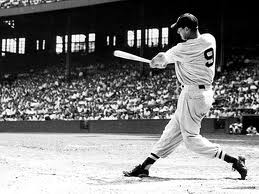
December 31 New Year’s Eve   Finishing Strong   Ted Williams is generally considered the greatest hitter in the history of major league baseball. Two events from his career speak about the concept of “finishing strong.” In 1941, Williams entered the last day of the season with a batting average of .3995. This would qualify him for a rounded off average of .400 and make him the first hitter in seventeen years to achieve that mark. His team, the Boston Red Sox, had a meaningless doubleheader that day and by sitting out these two games, Williams could end the year at .400. However that wasn’t the Ted Williams way. He played in both games, and when the dust had settled, he’d gotten 5 hits in 7 at bats to finish with an average of .406. No one has hit above .400 level in the seventy years since 1941. #   #   #   Ted Williams retired at the end of the 1960 season at the age of forty-two. In his last at bat in the final game of the year, he hit a home run. Old news footage shows Williams rounding the bases with a skip in his step and joy on his face. He hit a home run in his last at bat. That’s finishing strong. Finishing strong. We’re remembered not by how we started, but how we finish. Like Ted Williams, the Apostle Paul was a man of passion. He had an unyielding love for the Lord Jesus. In many of his writings, he expresses a strong desire to finish the work assigned to him by God. Paul understood that how we finish is how we are remembered. Living in a day where his listeners understood about athletes, he compared it to striving to finish the race and win the prize.      The first runner out of the blocks isn’t always remembered. It’s the one who finishes first. Paul’s words speak to this: “But none of these things move me; nor do I count my life dear to myself, so that I may finish my race with joy . . . . .” Acts 20:24 #  #  #             “If it’s worth doing, it is worth doing right- especially if it is for God!” #  #   # P.S. One of my favorite anecdotes involves a baseball discussion. “What do you think Ted Williams would hit if he was playing against today’s pitchers?” “Well, he’d be about ninety-four years old, so I don’t expect he’d do too well.”  

December 30 Moving Out

        A Word from Curt   Grateful. Gratitude is one of my 6+ words for 2016. I’m thankful for the wonderful gifts in my life. Today I’m thankful to have the calling of writing. It’s what I do. Who I am.  I’m thankful that you have chosen to read this blog and allow my heart to hopefully warm your life. Gratitude.  What a good word. For the month of December, we’ve served a daily helping of our short story collection, Christmas Jelly. We have three more chapters to complete.  They’re short thoughts on ending one year and getting ready for the new year.  I call this week,  “Bah Humbug.” Christmas is over and there’s no way it could meet every expectation we had. It’s no accident that the Christmas season and the week(s) after are a wonderfully difficult time. Bah Humbug week is a great time to reflect, think, plan, and prioritize. Enjoy today’s story,  “Moving Out.”           December 30 Ready to Move Out     A few summers ago, DeDe, our youngest son Terry, and I took part in a youth camp in the Black Hills of South Dakota. This area of majestic mountains, covered with vast stands of tall Ponderosa Pines, is one of my favorite places in America. To get to camp, we drove deeper and deeper into the Hills following a long snaking dirt road called Pasa Sapa Road (the Sioux name for the Black Hills.) Upon arriving at Kamp Kinship, we were greeted by the friendly staff and soon made ourselves right at home. One of the first things the Camp Director did was to instruct all drivers to park their vehicles outside the front gate. They were shown how to park in lines with the vehicles pointed out toward Pasa Sapa Road. My inquisitiveness at this was answered by one of the local men. “Up here in the Hills a wild fire can spread quickly. During the hot summer season, dry lightning storms rake across this area. One lightning strike in these dry hills can spark a spreading dangerous inferno that destroys everything in its path.” He nodded as the carefully parked cars. “We’re ready to move out at a moment’s notice. If you hear the camp bell ringing non-stop, it’s the signal to load up and evacuate immediately. Don’t even go back to your cabin.” This plan of “Being ready to move out” made an impression on me, especially later in the week. Wednesday evening, we had a wonderful worship service of singing and sharing. In the distant northwestern sky over the mountain, bright flashes of lightning split the sky one after another. My friend Stan said, “That storm’s coming from Wyoming. This is just the type that sets off fires in the mountains.” About midnight the storm roared over the camp. There was no rain but plenty of howling wind,  bolts of lightning, and booming thunder. Fortunately, no fires were ignited near Kamp Kinship. Only later did we learn that several fires erupted at different locations in the Black Hills. Later that weekend we traveled into Wyoming to Devil’s Tower and saw a huge wildfire that had been burning since the previous week. Parking the vehicles pointed out at camp “ready to move out” gave me several thoughts about being ready. Here are a few: Being ready to live – If only we would daily decide to live as if this was our last chance to suck in oxygen and see the sunset. Man, I want to be “ready to move out” and attack life with passion and joy. Being ready to die– “No man is ready to live who is not ready to die.” No one gets up in the morning and says, “Well, I believe I’ll probably go out and die today.” Deep down inside, we humans all secretly believe we’ll be the one exception to the rule and live forever. One time after the sudden death of a young person in Dry Creek, a wise man told me,  “When you put your shoes on in the morning, you don’t ever know who’ll be taking them off you.” “Living ready to die” for me entails living in a personal relationship with Jesus. He is my rock, friend, savior, confidant, and guide. I’ve trusted Him for every aspect of my life, including my eternal destination. I can confidently face life and death knowing He is holding not only my hand, but also my destiny.   Living ready to die also includes keeping a short account in my relationships with those around me. I choose not to let hurt feelings or a bad experience keep me from being in touch with others. If there is a problem, I go to them. As needed, I apologize and seek to make things right. That is a part of living joyfully and with gratitude. I’m pointing the vehicle of my life so I can be ready to go… or content to stay. Many of you have heard me speak of Brett Thornton who has a tattoo on each arm. One arm says, “R 2 G”, and the other, “C 2 S.” These tattoos sum up his life mission: “Ready to Go, Content to Stay.” It is an attitude of readiness to go where God leads: Ready to jump in the vehicle and spin out if the bell of God’s Holy Spirit rings out. At the same time, it means possessing a quiet peace that we can trust God if our instructions are to stay put and dig deeper right where we are. Ready to live Ready to die Ready to go . . . content to stay. Always ready to move out when needed. Moving up . . . and moving out.  

Dec. 26. . . and now it begins: Bah Humbug Week

For the next week, through January 1, I’ll share a daily short short story with thoughts to help us all navigate that wonderful week between Christmas and New Year’s Day. I lovingly call it “Bah Humbug” Week. It can be the most difficult week of the year. Stay tuned  daily for a story, thought, or insight that hopefully will make you smile, reflect, and move on beyond Christmas. SCI (Sidney Curt Iles) I love Christmas.  I really do. I’d glad it occurs yearly. And glad it only occurs yearly. I call the week after Christmas,  Dec. 26-Jan.1, “Bah Humbug Week.” It’s a week to recover.  It’s a week to reflect.  I use this week to look back over the past year with gratitude and as a springboard to think about and write what my priorities are for the coming year. Here we go.   Join us all week as we share short stories from “Bah Humbug Week.” Bah Humbug Week   From Christmas Jelly by Curt Iles.   If you’re still reading, and it’s after Christmas, I’m impressed.  It’s the week after Christmas and let’s be honest: We’re sick of it all. Glad it’s over. Too much of everything. No matter how good our Christmas was, it wasn’t as perfect as we imagined. So, it’s normal to have a post-Christmas letdown. It’s an emotional and physical hangover. If we’re not careful, it can be a spiritual letdown. To help you through this weirdly wonderful week, we’ve included a short story for each of the seven days separating Christmas from New Year’s. The week after Christmas is a transition week. I call it Inventory Week. An opportunity to glance back at the past year. A chance to look ahead to goals and dreams for the coming year. So here goes, I hope you have a Merry . . . “Bah Humbug” Week.   Bah Humbug Week Short List  Begin a gratitude journal. Daily write down one  (or more) thing you’re thankful for. Give yourself a Scrooge/Grinch day. Then move on. Develop a Life Plan for your coming year. Reflect on your blessings of the past year. Do something for someone who cannot pay you back. Write down your six words for the coming year. I’m working on mine. Here are several: Gratitude Balance Simplicity!   . Make and enjoy a pot of Ouiska Chitto Stew (See recipe below.)   #    #    # From Kay Campbell Fox: For twenty-nine years, my parents owned and operated a canoe business on the Ouiska Chitto River. Weekends meant leaving at 7:00 a.m., working until dark, and coming home exhausted and hungry. Mom was dedicated to ensuring her family was fed a hot and rewarding meal. Before we left for the river, she would assemble a large pot of beef stew in the crock-pot. There was never a question of the menu for the long day; and after several years, we changed the name of her stew to “Ouiska Chitto Stew.” It has become a traditional name in our family, and mom has left that legacy of dedication to her family. Kay Campbell Fox   Ouiska Chitto Stew Marilyn Campbell 2 lbs. Stew Meat 6 Carrots scraped and cut into 2-inch portions 6–8 Potatoes peeled and cut into pieces 1 Onion 1 Bell Pepper 3–4 Stalks Celery 1 pkg. McCormick Beef Stew Mix Seasoning to suit your taste Brown stew meat in pan with olive oil and seasoning. Transfer meat to crock-pot and add remaining ingredients. Cook on slow for 8 hours. Serve with rice and cornbread.            

Dec. 25 Christmas Day My Favorite: My Grandpas’ Boots

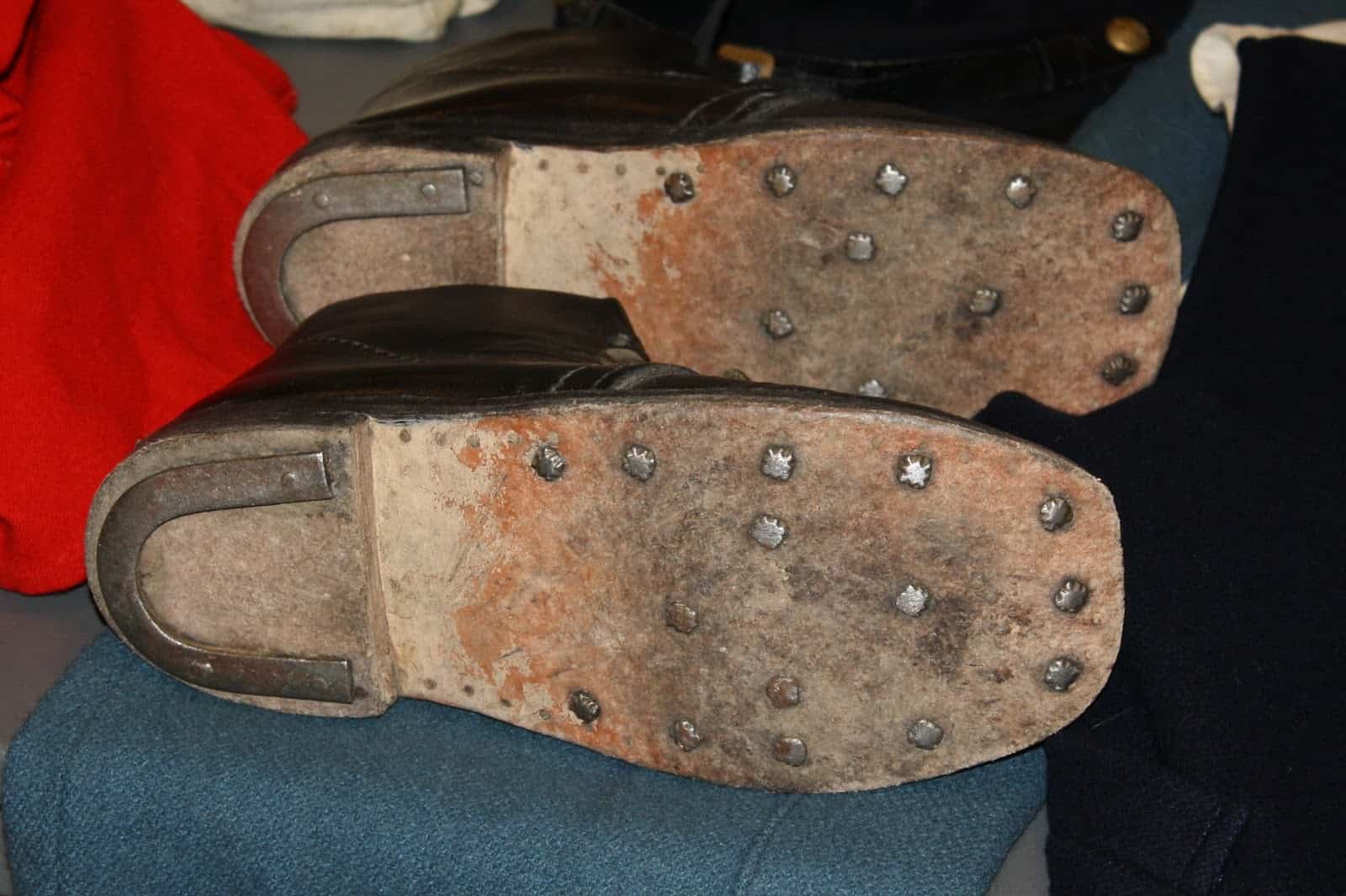
A Story for Christmas  During December we’re featuring one short story per day from my latest book, Christmas Jelly.  Today’s story is my favourite from the thirty-two stories.*   Enjoy! Christmas Jelly contains thirty-two chapters– 0ne for each day in December plus January 1.     MY GRANDPAS’ BOOTS CURT ILES       My name is Abe and this is the story of these scuffed boots I wear proudly. These boots have a good story to tell. These boots are six years older than me, and I’m almost seventy. Their history goes back to my hometown of Alexandria, Louisiana and the years after the Civil War. The retreating Union Army smoldering ruins in the spring of 1864.     My father was seven years old and remembered the day when the retreating Union Army burned the city. Citizens fled to the Red River levee to escape the flames. My grandfather, Abram B. Terry, wasn’t there on the day of the fire. He was in the Confederate Army and a prisoner of war up North. A year after the fire, Grandpa, whom everyone called Pops, limped home from the prison camp and found his hometown destroyed. He’d lost his left leg and replaced it with a stout dogwood crutch, and a heart that was harder than the hickory peg leg he now wore. The years after the war, known as Reconstruction, were hard on everyone in the Red River cotton country. In the year 1882, seventeen years after the end of the war, Pops and my dad, who was now twenty-three and still single, opened a sawmill on Bayou Rapides. Money was still tight and as Christmas approached, no one expected gifts. A string of events occurred in the in the cold weeks before Christmas changed everything about Pops and our family tree. At the same time as my family opened their sawmill, several new families arrived in Alexandria. Most of the men were former Union soldiers who’d come South to make money selling cotton to the New England textile markets. Pops disdainfully called them ‘Carpetbaggers’ and made my father promise to have nothing to do with them.                 On this fateful day in December 1882, Pops and my daddy were walking along the levee on their way to the bank. Pop stopped when saw a bearded man wearing a faded Union soldier greatcoat. “Hey Bluecoat,” Pop said, “Have you come back to see if there’s anything you didn’t burn the first time?”” The man, who was sitting at a checkerboard balanced on a keg, looked up with a disarming smile. “I don’t want to burn nothing. I might catch fire, too.”He lifted his right pants leg, revealing a wooden peg. Pops squinted. “Where’d you lose that?” “One of your snipers got it on the last day at Vicksburg. I was the final casualty. ” Pops leaned on his crutch revealing his own wooden leg. “Lost mine in ‘Pennsylvania.“He hobbled closer.“Bluecoat, how far is your’s gone?” “To the hip.” Pops grimaced. “I guess I ought to be thankful mine’s just below the knee.” “Mine started below the knee too, but Ol’ Sawbones just kept cutting.” Bluecoat winked.“Told him I’d shoot him if he went any higher.” “Bluecoat, you lost your right leg,” Pops said. The man moved his checkerboard. “And I see you left your left one somewhere up north, Reb.” “Yep, they said they buried it in a stump hole at Gettysburg. Pickett’s Charge. July 3rd, 1863.” Bluecoat grinned. “I guess we’re even then.” He scratched his long beard. “July 3rd. Was that a Friday?” “It was.”Pops stared down the street “A Friday I won’t forget.” “Friday, July 3rd,” Bluecoat said, “Same day I lost mine, if I remember—“ Pops interrupted him. “I was crawling away from the stone wall when they captured me and sent me to one of y’all’s prison camps near Elmira, New York. That’s where I cooled my heels—or rather heel—for the rest of the dang war. “ Bluecoat put his hand out. “Like I said, we’re even.” Pops’ face reddened “I lost a lot more than a leg up there.” “I’m sure you did.” Pops placed his right foot beside the Yankee’s left one “What size do you wear?” “9-E.” “Me, too.” Bluecoat extended his hand again. “My name’s Hiram Plott. Just arrived here from Illinois with my wife and four daughters.” Pops studied the open palm. “I don’t shake hands with the enemy.” Bluecoat shrugged “No hard feelings. It’s over on my end.” Pops turned away and spat. “It won’t ever be over on mine.” He grabbed me and said, “Come on, Son, we got work to do.” I figured that exchange ended any chance for friendship between the two one-legged Civil War veterans. But in the coming weeks, as Pops made his bank visits, he’d faithfully stop by and harass the Bluecoat Hiram Plott at his makeshift whiskey barrel office on the levee.      *                           *                          * My father remembered Christmas Eve of ‘82 as unusually cold for Louisiana. With the hard times, he didn’t expect any presents. He didn’t know how his mother—my grandmother—did it, but she scraped up enough money to buy a Christmas present for her husband, Pops. She handed him a box and he opened it to find a new pair of riding boots to replace the patched and re-soled one he’d been wearing since the war. When Pops held up the boots, he began crying. “How’d you afford these?” “Oh, I did some horse trading.” My father knew the truth; his mother had sold off some of the family heirloom silverware to buy those boots. Slipping the left boot on, Pops said, “Fits perfect.” Glancing down at the spare right boot, he tapped his wooden leg. “I‘ll keep that one in case my hickory

Dec. 24 Christmas Eve: “Thoughts on ‘Easy Marks.’ “

  An Easy Mark “I’m a thousand miles from anywhere, waiting for a train.” -Jimmy Rodgers “Waiting for a Train”   Calling someone an “easy mark” is normally not a compliment. We use it in the context of taking advantage of someone and associate it with weakness. I have a story that explains the term’s origin. I’ll let you—the reader—decide if being an easy mark is a compliment or not. Thanksgiving and then Christmas are good times to think about the “G words” of gratitude and generosity. They’re two of the best words in the English dictionary. The Great Depression of the 1930’s was a traumatic time in our nation’s history. This is evidenced by how deeply affected those who lived through were. My grandfather would sadly shake his head as he described the challenges of supporting a young family during that tough decade. During these hard years, families and individuals were uprooted and roamed the country desperate for work. My mother, who was a young child during this time, told of sitting at the window of a moving train and seeing a hobo, hanging onto the side of her car, passing by. Most hoboes were single men riding the rails looking for work. As the slowing trains neared a station, the hoboes would jump off and find the nearby gathering places called “hobo jungles.” One of my friends in Longville has a wonderful story from the Great Depression. His father was walking along the K.C.S. tracks toward their family home. Nearing their house, he found a note attached to a limb,   “Next House: Good Eats.” He kept the note as a souvenir. He was proud to be an “easy mark.” The following is my favorite easy mark story. An older widow lived along the tracks in a small Midwestern town. Although alone and poor, this woman had a reputation for giving food to anyone in need. In the language of hoboes, she was an “easy mark.” Hoboes, using a piece of chalk or coal, would mark the gatepost or nearby fences of homes where handouts were readily available. This woman’s gatepost was decorated with a massive X. She was used to the knocks at her back door, and actually looked forward to the opportunity to share, even though what she had was meager. One winter, just before Christmas, a strong storm blew through her town. The pelting rain seemed to be coming down sideways, and soon turned to snow as conditions deteriorated. The woman watched through her window as the slowing trains passed and wet hoboes jumped off, trotting toward shelter from the storm. However, to her surprise, they passed by her gate, oblivious to the cups of fresh hot soup awaiting them. This disturbed her greatly as she watched the nearby tracks. When another group of men struggled by without stopping, she grabbed her umbrella and stepped out into the cold rain. At her gatepost, holding her umbrella with one hand, she pulled out a piece of chalk and re-sketched her X where the rain had washed it off the post. Stepping back, seemingly satisfied that her “easy mark” was visible again, she returned to the house, wet but ready—ready and happy to greet the men who soon began coming through the gate to her door. I love that story because I grew up in the home of “an easy mark.” His name was Clayton Iles, and he was my beloved father. Both of my parents modeled kindness and generosity toward others, but Daddy turned it into an art form. He was a true easy mark—always ready to give a helping hand. Although not rich materially, he willingly made small “loans” to folks. Due to his being known as an easy mark, needy families came to him. And he helped willingly and without any expectation of repayment—which was good because repayment seldom came. He considered it a “gift” instead of a loan. When he died, I stood by his casket for four straight hours as a long line of friends and neighbors snaked out of the funeral home and into the street. Many leaned in and whispered about specific things Daddy had done for them—acts of kindness and compassion. At Southern funerals and wakes, we use the term “come to pay our respects.” That long line of mourners was Daddy’s repayment on his giving—respect mixed with love. He chose to invest his life in others and it paid great dividends in the joy and friendship he received in return. Beside his grave at Dry Creek Cemetery are several items: an old softball, a horseshoe, and a pinecone—all testaments to the things he loved. Engraved on his grave marker is the verse that was also engraved on his heart—the very words of Jesus in Matthew 25:    “. . . For I was hungry and you gave me food; I was thirsty and you gave me drink I was a stranger and you took me in; I was naked and you clothed me; I was sick and you visited me; I was in prison and you came to me . . . . Assuredly, I say to you, inasmuch as you did it to one of the least of these my brethren, you did it to me.” That was his ‘easy mark’ verse. He viewed it as a commandment from his Savior and lived by it daily. Now I’m a long ways from being the man of generosity that my dad was, but I’m still working on it. I’m going to work on it extra hard this Christmas season. Yes, Thanksgiving and Christmas are times when we remember it’s better to give than to receive. A time to live with gratitude for the “easy marks” that show up on gateposts, in hearts, and in generous deeds.

Dec. 23: Christmas Eve-Eve

The Hay’s in the Barn It’s “Christmas Eve-Eve.” Two days until Christmas. It’s close but there’s still time for planning and dreaming. A strong cold front is blowing in as I arrive at Foreman’s Meat Market. Last night we were in shirtsleeves. By tonight it will be freezing. Long vee formations of geese have been flying over all morning. They’re honking and struggling against the humid south wind being pulled toward the cold front. Foreman’s is a busy place in the week leading up to Christmas. Customers are gassing up or buying meat for family gatherings. Others are picking up deer sausage. The first drops of rain come from the darkening sky, and then the bottom drops out. A flatbed truck, loaded high with round bales of hay, skid into the parking lot. Three cowboys fall out of the truck and hurriedly begin pulling out a blue tarp over the hay. They tell me they’re bound for Lake Charles. The wind is now turning out of the north whipping their tarps. They tie down their load and roar south. Today is a good day to make sure the hay is in the barn. This common rural saying refers to finishing a task by a certain deadline. The hay’s in the barn. The good feeling resulting from doing all you can do. You’ve done a hard job and done it well. It’s a good feeling. Back at Foreman’s parking lot, the rain is arriving in sheets. I’ve got one more trip to town before Christmas. My hay is not quite all in the barn . . . there are a few more presents to buy. When Dry Creekers say, “I’m going to town” they mean DeRidder. A neighbor’s friendly  “I’m going to town. Do you need anything?” is a common question. Super Wal-Mart. I dread going in there on this crazy shopping day. I talk my youngest son, Terry, into going with me. I bribe him with the idea of a burger and fries. That’s the best way to get a rural boy to go into DeRidder—let him drive and promise him something to eat. Driving the twenty-five miles to town, the rain pours down. As we pass Bundick Lake, the whitecaps are surging, pushed by the strengthening north wind. The Wal-Mart parking lot is full. We park out near the highway and hurry in. The rain has stopped and the air has turned much colder. Shoppers, many lightly dressed, scurry in and out of the store. Like me, the shoppers haven’t quite got all of their hay in the barn. I recall Uncle Bill telling of Christmas Eve at a K Mart in Lake Charles. He said the hurry, frustration, and impatience of these last minute desperate shoppers was something to behold. I bet tomorrow night will be just that crazy at this Wal-Mart. I’d like to be brave enough one Christmas Eve to come observe it. Terry and I split up and decide on a place to meet later. I wonder how long it will take as crowded as the store is. DeDe won’t hardly shop with me here because of how many people I visit with. Today is different. Everyone’s in a hurry. Plenty of “Merry Christmases” abound combined with smiles and good-natured remarks. But there is little of the stop-and-visit normally found in the culture of Beauregard parish shopping. And I know why: everyone here today is trying to get all of his or her hay in the barn. After returning from town, I go to the cemetery and drain the water in the public restrooms. I re-check all of the pipes and faucets at our home as well as The Old House. It’s dark now and the temperature continues to drop. This will be one of the coldest Christmas’s in a long time. But I’m fine. I’ve got my hay in the barn. Before going to bed, I decide to make a personal “hay in the barn” list: I want to be full of gratitude at this special time of the year. I want to thank God for each and every blessing. I want to enjoy my family. What a gift family is. As my family grows and leaves the nest, I’m reminded to cherish each precious moment. I want to spread good cheer. I’m reminded that Christmas is often the toughest time of the year for folks. I want to call, write, and check on them. I want to make sure there is no unforgiveness in my life. Are there any walls that need breaking down? What better time of the year than now! I will seek to live the regret-free life. I want a minimum of “should’ve and could’ves.” Closing my journal, I crawl in bed. I sleep great that night. I should. The hay’s all in the barn.  

Dec. 22 A New Christmas Story: A Soldier Comes Home

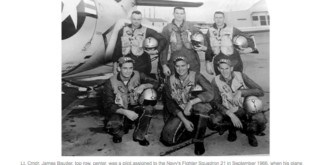
                Another Soldier Comes Home for Christmas I wonder when they finally took his Christmas stocking down. What year did the family remove his vacant chair from the Christmas dining room table? His name was Lt. Commander James R. Bauder. The date was September 21, 1966. Bauder and his fellow pilot , Lt. JG James B. Mills, took off in their F4B Phantom fighter jet, for a bombing run over North Vietnam.They were accompanied by a fellow Phantom. At some point in the bombing, Bauder’s plane went missing. There was no air to ground fire or explosions according to the second plane. There was no radio communication or radar from the carrier. After an extensive air search with no results, both Bauder and Mills were delcared M.I.A. That’s Missing in Action. September 21, 1966. It was a Wednesday in the United States. That’s 51 years ago. MIA. A status that, at least temporarily, lingers between life and death. It leaves a family and loved ones in limbo. I cannot imagine the anguish of not knowing. The years went on. No trace of the plane or pilots. In the years since the war’s end, there has been cooperation between the Vietnamese and Americans over recovering the remains of U.S. MIAs. An underwater search team spent part of Spring 2017 meticulously searching the area where the plane might have gone down.  Sadly, nothing was found. A few months later (this was reported in a subsequent NPR program) a Vietnamese fisherman snagged his nets on an underwater object. It was Bauder and Mill’s plane.  The mystery was solved after 51 years. A femur bone was recovered that matched the DNA of Bauder’s sister, Jane. The remains of an American soldier, in this case, a naval aviator, began its long journey home. ______________________________ I have no idea how the process works of repatriating the remains of an MIA hero to their family. I’m sure it’s done quickly and with great dignity. And whether he’s buried in Arlington Cemetery or among California family members who lived and died wondering about his fate, I hope they brought James Bauder home before Christmas. Merry Christmas, Captain. Welcome home.                                 Capt. James R. Bauder I don’t travel to Washington, DC often, but always make a visit to the Vietnam Wall. It is by far the most memorable monument in an area of national icons.  There are several names I always make sure to touch. Men from my community who paid the ultimate price in a far-off and unpopular war. I’m adding Captain Bauder’s name to that list. If you beat me there, take time to find him and touch his name. He’s waiting for your visit. Panel 10E, Row 126       More Reading/Bibliography on the Bauder/Mills MIA plane   http://www.pownetwork.org/bios/b/b012.htm http://www.aerotechnews.com/blog/2017/06/19/underwater-recovery-team-searches-for-mias-in-vietnam/   http://www.dpaa.mil/News-Stories/Recent-News-Stories/Article/1306973/sailor-missing-from-the-vietnam-war-accounted-for-bauder-j/   https://www.npr.org/2017/10/19/558137698/having-changed-america-the-league-of-pow-mia-families-fades   http://www.latimes.com/socal/la-canada-valley-sun/news/tn-vsl-me-mia-20171012-story.html

Dec. 21: Lazarus’ Second Funeral from “Christmas Jelly”

Lazarus’ Second Funeral I guess I’m only one who attended both of Boaz Lazurus’ funerals. The second one was yesterday. The first one was thirty-one years ago. I remember the first funeral well. I was a young rabbi, only recently assigned to the Bethany synagogue. I’ll never forget the raw grief of his two sisters, Mary and Martha. I had grown to love the Lazarus family and spent lots of time with them in the days leading up to his death. It was like being on a storm in the sea. Up one minute, down the next. The sisters had such hope that The Teacher would come and heal him. Martha, the older of the sisters, stood at the edge of town for two days waiting for Jesus to arrive. He didn’t come. And Lazarus died. Like the sisters, I questioned why the Teacher didn’t come when summoned. He’d supposedly healed the blind and lame. He could’ve healed his dear friend. But Lazarus died. I helped with the preparation, funeral, and burial. I was gone for a week after his burial. First Jerusalem then Jericho. On my way home to Bethany, I began hearing strange stories as I encountered travelers. Jesus had raised a man from the dead. A man from Bethany. The rumors used many names. Boaz was such a common name. It couldn’t be him. I had felt his cold body. I had helped bury him. Lazarus had died. I hurried my pace as I neared Bethany, arriving late at night. The streets were empty. The Lazarus house was dark but I beat on the door. Eventually, a lamp was lit. Martha came to the door. “Rabbi, what is it?” I hesitated. “Is it true what I’ve heard?” “Come see for yourself.” She led me to the very room where Lazarus had died. A man was sleeping, snoring softly without a care in the world. “Lazarus, you’ve got company.” He rolled over, squinting at the lamplight, then sat up. “Hello, Rabbi.” I trembled and couldn’t speak. It was like seeing a dead man. No, it was like seeing a live man who’d been dead. For the next thirty years, I served as his rabbi. In spite of my prodding, he’d never reveal much about what he remembered between his death and resurrection. He’d only wink. “You wouldn’t believe me if I told you.” The rumors persisted about him. The most popular was that Lazarus had only swooned and came out of the grave when he awoke. Lazarus was dead. I know a dead man when I see one. Over the years, I officiated at many funerals attended by Lazarus, including his sisters—first Mary, then Martha. He grieved along with everyone else but there was always a faraway look in his eyes as if he knew something that made it all different. Rumors swirled that Lazarus would never die. He shook them off. “Rabbi, I’m going to die soon but have no complaints. I had three decades of extra life.” Finally, last week he took sick and knew the end was coming. I spent time with him on his last day. “Friend, do you think Jesus is coming to rescue you again?” “Yes, but in a different way.” I carefully broached a touchy subject. “Do you really believe Jesus is alive?” “I know it.” “But you never saw him alive as some of the others claimed?” “I didn’t have to. He raised me. He had power over death.” Lazarus weakly tried to sit up. “Rabbi, what do you believe?” “I believe he raised you from the dead.” “But do you believe He’s the Son of God?” “I’m not sure.” “What more proof could you need? Just believe.” That was the last words he spoke to me. He laid back, closed his eyes, and died early the next morning. His nephews told me just before he died, he opened his eyes, reaching skyward. “I can see Jesus coming to get me.” Some may doubt it, but I don’t. A wise rabbi once told me, “Which is most crazy: a person who hears thunder and says it was God speaking to them, or one who hears God speak and says it is only thunder?” I’ve learned not to doubt belief. Lazarus died the day before the Sabbath, so we hurriedly prepared his body for burial. It was a strange funeral to say the least. There wasn’t much grief. It’s hard to grieve for a man who was given thirty extra years of life and seemed eager to step into whatever lay on the other side. It was more than ironic that Lazarus died on what the local Christians are calling the birthday of Jesus. I’m skeptical if they’re very accurate about when he was actually born. It’s what they’re beginning to call one of their two holy days. The other one is the supposed day of his resurrection. I doubt if their two holy days will ever be widely celebrated like our Jewish holidays or Roman ones, but the Christians sure observe them. I can’t get Lazarus’ last two words out of my mind. Just believe. I’m not sure I totally believe, but I do believe I’m closer. It’s difficult not to believe in the word and faith of a man who had two funerals. Mary loved quoting Jesus’ words on the morning of Lazarus’ resurrection. I am the resurrection and the life. He that believes in me. I guess I’ll never get those words . . . or the story of Lazarus . . . out of my mind.    

December 20: A Danish Christmas

                     Christmas Jelly. Learn more at www.creekbank.net   This is chapter 20 from Christmas Jelly. It’s written by one of my favorite people, Erik Pederson.  Mr. Erik touched all of us with his love, humor, and smile. He’ll always be missed in Dry Creek.   I encouraged him to write this story and had the privilege of editing it. A Danish Christmas    By Erik Pederson     One of Dry Creek’s most memorable characters was Erik Pederson. He was a storyteller par excellence who always had a twinkle in his eye. Each Christmas, he’d share this story with me. I badgered him until he wrote it down and entered it in the Beauregard Daily News Christmas Memory Contest. It deservedly won first place.  It’s a reminder of how America is a nation of immigrants, each with our own story to tell. Of my many memories, the thoughts of my childhood family Christmas celebrations are among my favorites. In our home, we followed the Scandinavian traditions brought by my parents from their native country of Denmark. Soon after my parents married in Denmark in 1923, they moved to the United States. They lived in Michigan where my father worked for the Pontiac Corporation. Later after I was born, we moved to New York. When I was nine we boarded a Pullman train for a long ride to a new home and life in a place called Lake Charles, Louisiana. It was here in Southwestern Louisiana that I grew up with my many memories and happy times. Of these times, Christmas was a time I loved best. Christmas was a special time in our home. On Christmas Eve, my father would place the large Christmas tree in the middle of the living room. As my two sisters and I watched, he would begin attaching white candles on the tree. This was accomplished by using straight pins to pin the candles to the tree limbs. My dad, being an engineer, decorated very carefully and evenly until the tree was filled with white candles. While my father decorated the tree, Mother was in the kitchen preparing a special meal. When the decorations were finished, we’d sit down as a family for the traditional Danish Christmas supper of baked goose, rice pudding covered with grape juice, and Danish cookies and chocolate delicacies sent as gifts by our European relatives. In the middle of the table sat a single wrapped present. As each of us looked at it, we silently wished it would be ours. This was the “almond gift.” Mother placed an unshelled almond in the rice pudding. Whichever family member found the almond in their pudding got the present. As children we didn’t particularly care for the rice pudding, but the gift on the table would motivate anyone to eat it. I still recall how my parents would both move their first bite of rice pudding around in their mouth as if they had the almond. Eventually someone found the almond in his or her pudding. As we finished the meal, my father would go into the living room and close the door behind him. As we children helped Mother clean the kitchen, we knew exactly what was happening in the living room. Our dad was lighting the candles on the tree. When he had everything just right, we were allowed in to see the beautiful sight. There we would stand in our darkened living room mesmerized by the brightly illuminated tree. The sight of the green tree in brilliant white light was an unforgettable spectacle. Dad kept a bucket of water by the tree, but I’m still surprised the candle-lit tree never burned down our house. After a time of admiration, we would form a circle around the tree and begin singing Christmas carols. As we walked around the tree, we sang the familiar songs such as “Silent Night” only we sang them in Danish. Later as a teenager in Lake Charles, I always made sure the shades were drawn to the living room on Christmas Eve. I didn’t want my friends to drive by and see me walking in a circle singing Danish carols. At the end of each song, we would eagerly ask to open presents. But my father insisted on singing more songs as we circled the tree. He was a master at dragging out the Christmas Eve traditions. When we had finally finished all of the songs, he handed out the presents one by one. When the presents were finally all opened, my father would get out his Bible and read the Christmas story from Luke chapter 2. I can still recall him clearing his throat before he started sharing the wonderful story of Jesus’ birth. This is a tradition that he carried out in our extended family until his death. Today in our family, I carry out the tradition of this Bible reading. Thinking back on these boyhood Christmas memories, I only began appreciating these special traditions when I became an adult. Christmas is still one of my favorite events. I enjoy every part of it. In my mind I often go back to the “Danish Christmas” of my childhood.          

December 19: Tractor Time

Christmas Jelly is our latest book of short stories. Learn more at www.creekbank.net   Tractor Time     When this old world starts getting me down And people are just too much for me to face. I climb way up to the top of the stairs And all my cares just drift right into space. On the roof, it’s peaceful as can be And there the world below can’t bother me. -On the Roof Carole King   We all enjoy the hustle and bustle of the Christmas season . . . but enough is enough. It’s so easy to hit overload during this time of year—It can be sensory overload or Materially, Nutritionally. Too many lights, Too many commercials. In the midst of this wonderful chaos, we must carve out a time and place to get away. Carol King goes on up a New York City roof. I get on my Dry Creek tractor. Everyone—including you—needs something—or somewhere—where they can escape it all. A place where cares drift away, and relaxation slips in as a cool breeze. My favorite place for this peaceful retreat is on a tractor. I climb aboard, prime the diesel engine and soon see the world from a different perspective. I get a more balanced and serene view. I’m not sure how a tractor ride accomplishes this. It’s probably in my country genes. Hooking my old Kubota tractor to a bush hog, disk, or box blade is all it takes. Yesterday was a good example. It was a warm day for late December. My chore was plowing fire lanes around our tree farm. Riding a tractor is even better when you’re pulling a plow. There are few smells that lighten the soul like freshly turned earth. It’s a smell God made pleasing for a man to breathe in. Tractor time, as I call it, is something I need often, especially during the busy holiday season. Do you make time for “tractor time?” You may not kowtow to the idea of riding on a chugging tractor. You may not even own one, or have a place to ride. I’ve got friends with variations of tractor time—a thinking fire, rocking time, a long walk, or a long soak in a hot tub. Another writer who cherished solitude, Henry David Thoreau, said it this way, “I’d rather sit on a pumpkin and have it to myself than be crowded on a velvet cushion.” Maybe there aren’t pumpkins or tractors where you live. Like Carole King in New York City, you may have to find your solitude in a different place. When I come home feelin’ tired and beat. I go up where the air is fresh and sweet. I get away from the hustling crowds And all that rat race noise down in the street. On the roof’s, the only place I know Where you just have to wish to make it so Oh, let’s go up on the roof At night the stars put on a show for free And darling, you can share it all with me I keep a-telling you, Right smack dad in the middle of town I found a paradise that’s trouble proof Up on the roof So if this world starts getting you down There’s room enough for two up on the roof Up on the roof. As you enjoy Christmas, take some tractor time, or roof time, or a lonely pumpkin. It’ll keep you sane and bring joy and perspective to your holiday.    

Dec. 18 Christmas Jelly: The Heavenly Choir

                 The Heavenly Choir Christmas season—The Dry Creek Church choir sings beautifully in a way beyond description. It’s much more than a musical . . . it’s a production . . . replete with drama, stories, and best of all, inspiring music.   Joseph and Mary enter the back of our sanctuary. It’s Tom and Konnie Humphreys. Tom and Konnie are former hippies and always look the part of Joseph and Mary. Konnie with her long flowing hair. Tom with his long hair and beard, kind eyes, and broad shoulders Tom is holding baby Jesus, but it’s actually Libby, their infant daughter. He touches me on the shoulder. “Brother Curt, I want you to see my baby son, Jesus.” His emotional introduction catches me off guard and touches my soul. It’s as if we’re in the first century Jerusalem temple on baby Jesus’ first visit there. Tom’s next stop is at Uncle Rob McCracken’s seat. He’s the oldest man in our church at ninety. Tom holds baby Jesus in front of the old man. “Uncle Rob, aren’t you proud of my son Jesus?” Uncle Rob, in the early stages of dementia, sweetly strokes the baby’s hair as he hums a tune. It’s as if old Simeon is at last touching the long awaited Messiah he’s waited a lifetime to see. Simeon’s words ring out. Lord, dismiss your servant in peace. I’ve seen the Messiah. I know two things. Uncle Rob will soon be gone, and I’ll never forget this touching moment. The choir breaks into wonderful praise as Joseph and Mary reach the front of the auditorium. I’m reminded how music can move our soul like nothing else. It’s such a precious gift from God. Joe Aguillard is leading the choir. He’s wearing an orange prison jumpsuit instead of his usual suit and tie. This year’s musical is about Jesus being for everyone and each choir member is dressed as common people. There’s a mailman, housewife with a mop and bucket, hard-hatted construction worker. And Joe Aguillard, the property of the Beauregard Parish Jail, leads it all. For nearly thirty years, Joe has been my best friend. He’s stood by me through thick and thin. He’s that faithful lifetime friend that is priceless. Joe’s strong voice soars above the choir as he sings with emotion and praise. And for some strange reason, I think of Carl Mosley. Carl loved to sing as much as any member of our choir, but the fact is he couldn’t carry a tune in the proverbial bucket. He was consistently off-key. There’s a link between Joe Aguillard and Carl Mosley, and it’s the heart of this story. Carl and his family were the most faithful members of Dry Creek Baptist Church. The entire family once had perfect Sunday School attendance for over ten years. The Mosley family was one of Dry Creek’s most interesting families. Curtis Mosley, a large kindly man, was a World War I vet who’d later been a Texas Ranger. His wife, Lucille, was my beloved Sunday School teacher. Their two grown sons, Carl and John, lived at home. The entire hard-working Mosley family truly lived off the land, growing and producing practically everything they needed. Carl was slightly retarded. He couldn’t read and his speech was halting and slurred. However, he could take apart any engine and quickly put it back together in working order. He and John supplemented the family income by cutting firewood and doing menial chores. They were something to watch at work. Even in their forties, they could outwork men half their age. Carl could sure cut firewood, but he couldn’t sing well at all. I do not mean it unkindly, but Carl was by far the worst singer I’d ever heard. He had a dull monotone voice that was so off-key it could always be heard above all the other singers. So when Joe Aguillard came to Dry Creek as choir director, he inherited Carl Mosley. Carl sang from his heart. I am confident that Carl’s singing sounded “perfect to God’s perfect ears.” But Sunday after Sunday, as Carl’s bland monotone made “a joyful noise,” it was more noise than note to human ears. It reminded me of the Andy Griffith episode where they try to remove Barney Fife from the choir. That would have been a solution to Carl Mosley. Give him another job. Talk him kindly out of the choir. But none of these things happened. On choir specials, you could always pick out Glenda Hagan’s soaring high soprano, Judy Aguillard’s beautiful alto, the echoing enthusiastic bass of Donnie Reeves and my dad. All these voices blended in a beautiful way . . . but the indescribable sound of Carl’s toneless voice hovered above them. I once heard a recording of our choir’s Christmas cantata. You could faintly pick out Carl above everyone else. Being the ‘song-less’ son of a well-known singer, I know all about expectations and a little something about music. I’ve always been what is called a “funeral singer.” When a full choir is needed for a weekday funeral, I’m happy to supply a warm body and a poor voice. I follow my wife DeDe’s advice: if you forget the words or get off-key, just keep mouthing “Watermelon, watermelon, watermelon.” Carl tied to get the words right. I’m sure he thought he was on key. Here’s what I love about my best friend Joe Aguillard: there was never a word said about excluding Carl Mosley from the choir. His faithfulness was appreciated and his singing tolerated. From time to time, choir members or church leaders suggested ideas on getting Carl out of the choir for the Christmas musical. Make him a shepherd or a wise man. However none of these suggestions made it past our choir leader Joe Aguillard. Joe was, and is, a tremendous musician and leader. Everything he does is accomplished with quality and excellence. However, what I love best about

December 17 Christmas Jelly “Too Much?”

Christmas Jelly

Too Much Jesus?   As you’ve noticed, many of the stories in Christmas Jelly are about Jesus. He is what Christmas is about. We make no apologies for making him front and center of this book. Once I heard a powerful sermon by one of my favorite preachers, Jason Townley. As the message ended and crowd left, I shook his hand. “Jason, you did well, but I have one complaint.” His face dropped. “You talked a little too much about Jesus.” I thought he was going to hit me with his five-pound Bible. We cannot talk too much about Jesus. We cannot write too much about him. It’s Christmas. His birthday celebration. He belongs not only in the center but also at the height. Far above all others.                  

December 16 An Old Feed Trough

This is chapter 16 from my short story book, Christmas Jelly An Old Feed Trough   When Mary birthed Jesus ’twas in a cow’s stall, With wise men and farmers and shepherds and all. – “I Wonder as I Wander”   The old barn looks snakey. You may not realize snakey is an adjective. It can mean “overrun with snakes.” In our area of the South, it refers to any place where you expect to find snakes such as “don’t put your hand in there, it looks snakey.” My pawpaw’s old barn has a broken-in roof, rotten walls, and thick spider webs that may be the only things holding it together. And it’s been empty for thirty years. During my boyhood, it was full of animals. Two plow horses named Sam and Dallas, calves, woods hogs, and scurrying chickens. Now it’s dark, damp, and lonely. It’s a clear cold day before Christmas. They kind of day PawPaw would’ve called “hog butchering weather.” I’m on a strange mission. I’m looking for a feed trough. Yesterday I read Luke 2 on the birth of Jesus. I’ve read and heard the story hundreds of times, but always learn something new about the greatest night in the history of Planet Earth. Everything about that night was humble. The first to learn of the Savior’s birth were shepherds, the outcasts of Jewish society. One more reminder that Jesus’ bond was, and continues to be among the common people of the world. It is amazing that the most educated, wealthiest, and powerful have a hard time with Jesus as the Son of God. Throughout, the two thousand years since that Bethlehem night, He has most often found the biggest welcome among the simple and common people of this world. Folks like you and me. God could have provided any place for the birth of His Son, but he chose an old barn. No fanfare. No luxury. That name Emmanuel—God with us—was lived out that night. It’s astounding that his parents wrapped him in a blanket and laid him in a manger. It’s a shame how we’ve cleaned up and sanitized the manger. A manger is nothing but a fancy term for an old feed trough. The very place where a few hours earlier, a donkey, horse, or sheep had been eating and slobbering. That’s why I’m at PawPaw’s old barn today. I’ve come to get a feed trough. The trough I find is rough, weathered, and filled with rotten hay and trash. It’s been the home for my sister’s cat. Well-used feel troughs always have a smell of feed. They are wet from the saliva of a hungry animal. The edges are chewed down from animals trying to get that last kernel of grain. I begin pulling the trough from the stall wall. It comes loose except for one stubborn rusty nail. After several tries, I grab hold with both hands and jerk. The nail comes out, the trough comes loose, and I unceremoniously fall hard on my butt. I’m lying there with the trough in my hands. I have to laugh. I’m unhurt, lying in a puddle of rainwater that still smells of manure. I carry the prized trough under my arm. At the barn entrance, I stop and look around. Remembering how a live barn is: the smells of wet animals. The noise, the cramped surroundings. My friends who have been to the Holy Land tell about the small caves that serve as barns. It is probably in that cramped, noisy, nasty environment that Jesus was born. The greatest story ever told . . . and the official opening act begins in a dark humble barn. The King of Kings, to be worshipped by millions forever, is first laid in a well-used feed trough. Then I think of the unique teachings of Jesus, the God-Man. I have come to give my life. The first shall be last . . . Whatever you have done unto the least of these. I load the feed trough in the truck, silently thanking God for teaching me new lessons this Christmas season. Lessons of humility Lessons of service. Lessons of giving.   I wonder as I wander out under the sky How Jesus the Savior did come for to die For poor on’ry people like you and like I; I wonder as I wander out under the sky

December 15 The Hardest Day of the Year

The Hardest Day of the Year     Christmas Eve is not when you expect to stand at the cemetery. I’m here with my friend, Julian Campbell. We’re selecting a gravesite for his sister Kathleen, who died yesterday after a brave ten-year battle with cancer. It’s fitting I’m with Julian. He and his family helped bury my dad. Now I’m going to help him bury his sister. I hate death. I especially hate it at Christmas. Death and this holiday shouldn’t go together, but they often do. #   #  # As a teenager, I learned a lasting lesson about Christmas and death. A member of our church, George Forbes, was dying of cancer. I was home from college and volunteered to sit with him at night. He’d been insistent that he die at home surrounded by his family. I arrived late on Christmas Eve and his wife said,  “It won’t be long. They don’t think he’ll make the night.” Every breath seemed as if it’d be his last. During the night, he roused and whispered, “I’ve got to stay here to see my boy get his new bike.” The next afternoon, his son got his bike. An hour later, George Forbes was dead. #      #       # When I was two years old, a tragedy occurred in my family. My dad’s youngest brother Clint. a first-grader, was run over and killed as he left school. It happened right in front of the family home on Bon Ami Street in DeRidder. Clint, age six, was the youngest of the six Iles siblings. His short life and sudden death affected and shaped our extended family and does to this day. Clint lived among grandparents, parents, and five siblings in an extremely close-knit family. He died on December 3, 1958. Only three weeks before Christmas. I was nearly three and don’t remember the details. I only have a vague memory of knowing something terrible had happened among the people I loved deeply. I’ve wondered how Christmas 1958 must have been for our family. How can presents, eating, and singing be done in a time when your hearts been ripped out My Uncle Bill, who was especially close to his younger brother, later painted a large mural about the day of his brother’s death. It shows all of our family in their respective manners of grief. I’m moved beyond words when I see the abstract images of my grandparents, great grandparents, dad and his siblings as they process the news of Clint’s death. My earliest Christmas memories are joyful—fiddle playing, games, laughter, opening presents from the youngest up. Christmas in the Iles family was a time of great celebration and family. Knowing how painful those Christmas’s must have been only deepened my love and admiration for my family. At age six, I started first grade and was given a set of engraved pencils. Clinton David Iles. They were a gift from that terrible sad Christmas of 1958. My mother had saved them for me. I didn’t realize what they meant but would give a king’s ransom to hold one today. Uncle Clint’s death affected our family greatly, but in many ways the effect was positive. I grew up in a nest of four generations of love, surrounded by doting great grandparents, grandparents, uncles, aunts, and cousins. It was as if the older family member had channeled their grief to love. When our second son was born in 1984, I asked my grandma Pearl the question I’d longed to. “MaMa, would it be okay if we named him Clint?” I’ll always recall the instant stream of tears that flowed from her clear blue eyes. “I’d love it.” #  #  # In 2003, my father, the oldest of the five Iles siblings, died. Hundreds packed our church for his funeral. At the conclusion of the service, the Southern tradition of passing by the casket to “pay final respects.” began. As the line snaked around the aisle, I saw Mrs. Heard and her husband. She was the driver of the car that struck Uncle Clint on that fateful December day forty-five years ago. The accident was not her fault and our family had reached out to her immediately. I’ve always cherished the story of my grandmother, mourning in bed on the night of Clint’s death, sending my aunts to console Mrs. Heard. As she and her husband approached, I felt movement behind me. It was Uncle Bill, Aunt Lloydell, and Aunt JoAnn joining Mrs. Heard at the casket in a show of support. She cried and so did I. Our families have been intertwined since that sad day in 1958 and it was borne out again on this day. I’d never been prouder to bear the Iles name. ### This Christmas, you’ll be surrounded by hurting people. Many are hurting due to the loss of a loved one. An empty seat around the table this year. One less present. One less memory. For others, it’s been decades since the death of a spouse, child, or parent. Regardless, each Christmas re-opens the wound. Many others are hurting due to other deaths: The death of a marriage. Maybe the death of a dream. The loss of a job… and a nagging hopelessness for the future. The demise of a dream. The distance of a child. Let’s be looking for those hurting folks this Christmas. Sadly, they don’t wear a placard saying,  “I’m hurting. I’ve had a loss.” Many times they reveal their pain in the strangest of ways. Rudeness in a shopping line. A shaking fist at a stoplight. A cold stare on a sidewalk. They’ve got a rock in their shoe. You can’t see it, but it’s very painful. Give them a gift. Cut them some slack. Return a smile for the stare. A kind word for the gruffness. It’s Christmas. The most stressful, and sometimes saddest, season of the year. It’s the longest day of the year for many folks. It can also be the loneliest day of