All Things Dry Creek!
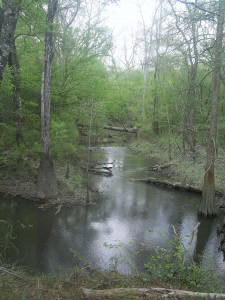
All Things Dry Creek! Dry Creek Baptist Camp Website Curt Iles Creekbank Stories Website Curt Iles Amazon Page There’s no place quite like Dry Creek, Louisiana. It’s where my roots are, the place where I grew up and where we raised our three boys. It’s the place I return to regain my balance and reset my inner compass. Dry Creek is where I come from. And the center of my Dry Creek solar system is the Old House at the end of Clayton Iles Road. The Old House at the End of the Road If it’s possible to love a house like a person, Then the Lord knows I love this old house. It’s a place that reminds me of family, And the things in life that really mean the most. It’s a place I return to when I’m lonely. . . . . . Or it seems I’ve lost my way. A place where I always feel welcome, As I sit down and think for a while. This old house is more than boards and nails Because it tells me of our past . . . As I walk through it, I’m reminded that The special people in our lives never last. Although they’re gone, I will remember How they still live on inside of me. Because this old house reminds me of who I am, And everything I ever want to be . . . No tears in the writer, No tears in the reader. I believe they’ll move you, too. Chapter “Why I Love Louisiana” from Where I Come From “Tell me who you are, and I’ll tell you where you’re from.” —Wallace Stegner I was born in Louisiana when dinosaurs still roamed the earth. Yes, I’m a Louisiana writer, and I’ve been around. The experts say, “Write about what you know.” So that’s what I do. I know Louisiana, and more importantly, I love Louisiana. I write about Louisiana because I know it. I’ve lived here all my life, and my roots go deep. My people began arriving here in the early nineteenth century, and we’ve been here ever since. In spite of my state’s many quirks and flaws, I write from the heart of a deep love of its people and their fascinating stories. Everyone’s got one if we take the time to stop and listen. My love of Louisiana overflows in my writing as I choose to share stories about our good, caring people, unique culture, and outdoor beauty. Someone else can write about our shortcomings. I’m often asked, “What is it you like best about Louisiana?” That’s easy: “How our people are big-hearted.” Big-hearted. We’re a state of big-hearted people. In Where I Come From, you’ll meet many of them. I believe you’ll fall in love with them just as I have. We also have vast expanses of big-hearted places as we make some memorable field trips. We Louisianians can also poke fun at ourselves and others. A few years ago, LSU played Ohio State for the national championship. A Tiger fan held up a sign: Faster players, better food, prettier women. Let me clarify this. I don’t write about the part of Louisiana most readers and tourists know. I write about the Pineywoods. Don’t get me wrong. I love the diversity of our state, with its rice paddies, canefields, New Orleans, Cajun culture, and expansive swamps; what other state could hold Mamou, Flatwoods, Tickfaw, and New Orleans in the same bowl of gumbo? We’re the only state “The Father of Waters” chooses to pass through on its way to the Gulf. I’ll put our river, the Mississippi, against any of the great rivers of the world. However, my calling isn’t to write about the well-known parts of our state. I write about the overlooked and still undiscovered western spine of Louisiana, known as No Man’s Land. My people come from this isolated forested area adjacent to the Texas border. In earlier history, No Man’s Land was known as the Neutral Territory, Neutral Strip, and my personal favorite, the Outlaw Strip. The strip got its name from the fact that anyone running from the law in Spanish Texas or French Louisiana could find a safe haven in the Outlaw Strip. This reputation continued even after the United States took ownership. So, remember when I brag about my ancestors arriving early in the Neutral Territory, you can surmise that some of them were running from something or someone back East. My ancestors chose to settle in this specific area of No Man’s Land, known as the Pineywoods. It’s a band of pines stretching across the belt line of Louisana. My hometown of Dry Creek sits dead center in those pines. As I said, it’s where my people come from. Let’s see if I can untangle this. I’m a Southern writer who lives in Louisiana’s Pineywoods and No Man’s Land. I’m in a good season of life to write this book and share its stories. They match up with my life philosophy: Stay curious. Be amazed. Share moving stories. These sixty-six chapters moved me deeply as I wrote them, sometimes to laughter, often to tears. No tears in the writer, No tears in the reader. I believe they’ll move you, too.
The Old House at the End of the Road
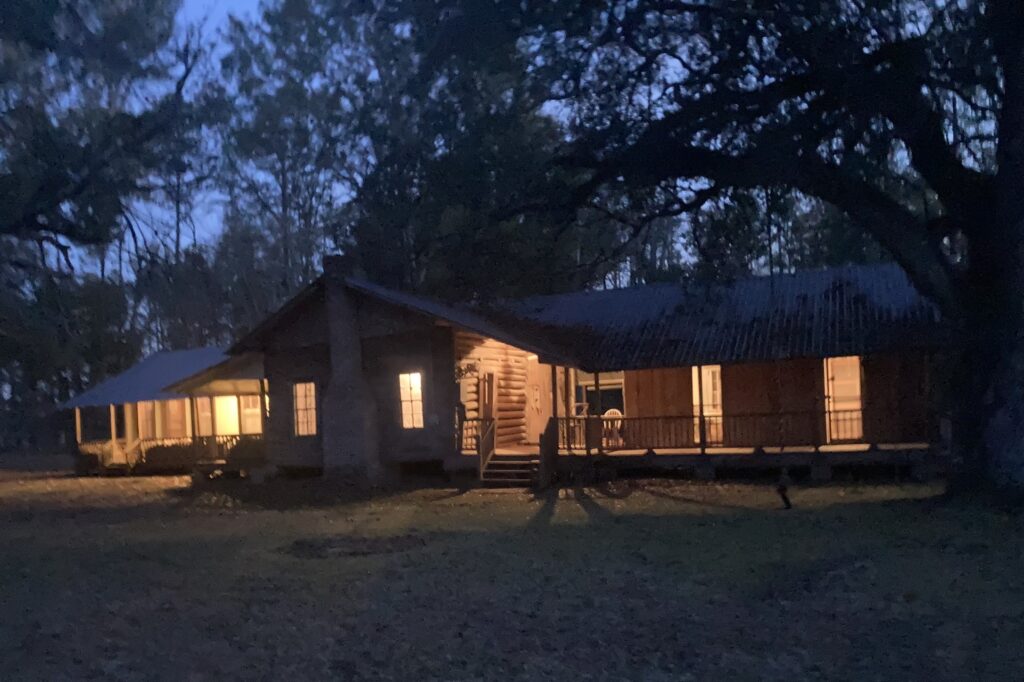
”The Old House at Night” 1963 tempera on cardboard by my uncle, Bill Iles. The Old House in Dry Creek. First constructed by my great-great grandparents circa 1892, this family home is my favorite spot in the world, the source of many of my stories, and my best writing muse. Below is the opening story from my second book, The Old House. ”The Old House at Night” 1963 tempera on cardboard by my uncle, Bill Iles. The Old House at the End of the Road If it’s possible to love a house like a person, Then the Lord knows I love this old house. It’s a place that reminds me of family, And the things in life that really mean the most. It’s a place I return to when I’m lonely. . . . . . Or it seems I’ve lost my way. A place where I always feel welcome, As I sit down and think for a while. This old house is more than boards and nails Because it tells me of our past . . . As I walk through it, I’m reminded that The special people in our lives never last. Although they’re gone, I will remember How they still live on inside of me. Because this old house reminds me of who I am, And everything I ever want to be . . . There it sits- surrounded on the east side by tall, long-leaf pines and along the west fence line by oak and hickory trees as the land slopes down to the swamp. Out in front is a dilapidated old barn, and behind this house to the south are overgrown fields- once bearing tall field corn and purple hull peas but now grown up in a tangle of briars, tallow trees, and weeds. In the middle of this sits the most special place on earth to me—The Old House. Built by my great-great-grandfather in 1892 on land he and his wife homesteaded, it is now vacant and slowly deteriorating the way homes do when not lived in. However, to me, it is a beautiful place of peace, reflection, and solitude. As the above poem states, it is the place where I go to get my bearings and remember what is really important to me. Recently, my sister frantically called me at work. “A woods fire is burning close to the Old House!” I ran to my truck and quickly drove to the Old House, which is next to my parents’ home. As I turned down their gravel road, I could see the dark smoke billowing up above the tree line. The one-mile drive down the road seemed much longer as I hurriedly drove, wondering how close the fire was to the most special house I know. I’ve always lived with the fear that the Old House would burn. I sped by the homes of my parents and two sisters and parked in the driveway of the Old House. I breathed a sigh of relief, seeing that the fire was much further away than my sister, Claudia, had thought. I was both relieved and thankful. As I sat in my truck looking at this original log house, built by five generations of my family, I was once again reminded why this is my favorite place in the entire world. I’ve gone far away over the years, but invariably, I return, in body and spirit, to the Old House at the end of the road. You see, the Old House is where I come to write. On a beautiful spring day like today, when the world is once again alive with the dazzling greens of early spring mixed with the colors of the azaleas, dogwoods, and honeysuckle, my heart yearns to sit here and write. On days like today, I write on the porch, sitting in the same rocking chair that “Pa,” my great-grandfather, sat in as he read Louis L’Amour books during the last years of his life. It’s the same porch where his son, my grandfather, would call up to our house, two hundred yards away, “Come on down. I’ve got a fresh pot of coffee.” Out front is the same yard where he would yell out his “pig call” each evening, and woods hogs would come tearing out of the swamp for the shelled corn they knew awaited them. During the chill of winter it is often too uncomfortable to sit on the porch, so I move inside to the middle bedroom. There by the double fireplace, I attempt to stay warm by sitting right up near the fire and doing what I love best- writing. There’s an art, which I’ve never quite mastered, of being up close to a fireplace without getting too hot. The trick is to get warm and toasty on the front of your body while your backside is freezing to death. The most important thing to remember is not to let your front side get too hot. Nothing burns worse than the front of your jeans sticking to your legs as you move away from the hot fire. During these cold days of winter, my fingers become numb as I type on the laptop, but I still love being here. The warmth and companionship of a fire, whether it is a blazing campfire in the Arkansas mountains or this fireplace, gives comfort and security to anyone fortunate to sit beside its warmth. Often, when I’ve camped in the woods, I’m amazed how a campfire unites a group of men- physically as they huddle together and emotionally as they begin to open up. Something about staring into a fire causes us to lose our inhibitions- somewhat like being under the influence of alcohol. I’ve seen tight-lipped men, who normally would never show outward emotion, gaze into the fire, and begin telling their deepest secrets. The eyes of a man staring into a campfire as he shares deep feelings from his heart
The Old House Comes Alive

The Old House Comes Alive Again I leave my mom’s home and walk the short distance to the Old House. It’s sunset and our homestead, built in 1892, stands starkly against the background of Crooked Bayou swamp. I hurry in from the cold and build a fire in the middle room fireplace, my favorite room, where I spent countless hours with my grandmother. The Old House is over 130 years old and hasn’t been occupied since the 1970s. Despite that, the old lady is in fair shape for her age. But it’s been dark, empty, and lonely for many years. Sitting by the roaring fire, I have an odd thought. Why don’t I go through the house and see which lights work? Amazingly, as I pull the light cords, every light, including the porch lights, comes on. I walk out in the front yard, and I’m amazed. The Old House is aglow with light. The Old House is alive . . . again. I can’t recall the last time I saw it like this. Alive again after all these years of darkness. I take a chair to the front yard and soak in that eerie time of day when dusk slides into nightfall. This gathering darkness only serves to illuminate the Old House. I recall, as a boy, coming out of the swamp after dark walking in the general direction of home until I saw the lights of the Old House. I now knew where I was. I was headed home. I return to my mesmerizing fire, carefully easing onto a rickety cowhide chair as my dog, Bandit, takes his place by the hearth. I have a vivid imagination. That’s where thirteen books and novels will lead you. What happens next isn’t a dream or vision. It’s just imagination from deep in my heart. It wasn’t real, but I wept like it was: I hear footsteps on the wooden porch. I step outside to see generations of my family emerging from the dark. They’re all healthy and alive again—several walk up from the swamp, smelling of squirrels and Garrett’s sweet snuff. Another shadow appears from the upland east forty carrying an armload of rich pine kindling. My grandfather walks by with a bushel of roasting ears. Headlights appear on the gravel road, and other ancestors arrive in old cars with fiddle cases, guitars, and homemade casseroles. They crowd into the places where I knew them best: the log room, the old kitchen, and the two bedrooms sharing a double fireplace. Most congregate on the dogtrot porch, where they tune their instruments. As always, it takes forever. My father, healthy again, stands among them, poised to launch into one of his old ballads. The aroma of dark roast Seaport coffee wafts from the kitchen. It’s mingled with the laughter of country women working together. As they come in and out, the sweet sound of swinging screen doors fills the air. They’re all here. I’m surrounded by my grandparents, great-grandparents, and a host of uncles, aunts, and cousins. I do not recognize several people, but they smile and seem to know me. I realize they’re the ancestors of this house I never knew. There are John and Sarah Wagnon, who built this old house, and their daughter Louise. They lived their entire lives here long before my time. These are the pioneers who homesteaded these eighty acres, built the log house, cleared the land, and laid the foundation for what the Old House is today. But the foundation they laid was much more than logs and boards. It’s a legacy passed down to me and the generations to follow. A legacy of the land. a legacy of enduring family ties, a legacy of love. Next, in my dream, other cars arrive. It’s my sons, their wives, and my nine grandchildren. They mix and mingle with family members they only knew by name or story. I think about the old Southern song, ‘Will the Circle be Unbroken?’ Tonight, that circle is complete at the Old House. We’re all here. I’m not sure how long this reunion lasts. I look up, and the fire has died down. Although the lights are on, the Old House is empty again. It’s just me and Bandit, but I don’t feel lonely or sad. I feel a warmth from the legacy of my deep roots in these piney woods. I cover the fire and walk through each room, pulling the switch cords until the Old House is once again dark. Before stepping away, I flip a porch light back on. Just in case someone is arriving late at the Old House. The Old House that sits on the edge of Crooked Bayou swamp. Curt Iles December 2023 Alexandria/Dry Creek, LA Postscript: Was it real? Of course not. But I really wept in front of the fireplace and out in the yard. I’m weeping at my keyboard as I type. It may not have been real, but it was special. It moved me beyond words. As they say, no tears in the writer. No tears in the reader.
The Big Rocker at Dry Creek Camp

2026 The Big Rocker at Dry Creek Camp A Love of the Land The Rocker at Dry Creek Camp “Do you think now that rocker is worth $1500?” “No, it’s worth more like $15,000.” It was a conversation I’ll always remember. Framed with a lesson I will not forget. My special friend Karan Robinson shoved a photo into my hand. “Don’t you think that’d look good on the front porch of the Camp Tabernacle?” The photo was of a huge rocking chair that held about six children. I smiled. There’s not much I wouldn’t do for Karan, the mother of Brad Robinson, and a trustee of Dry Creek Baptist Camp. We’d just finished another stage in the Tabernacle renovation at Dry Creek. The new front porch was filled with six wooden rockers and several “baby bear” matching rockers. Karan continued her sales pitch. “There’s a man in Arkansas who makes these giant chairs.” I asked the typical manager’s question. “How much would one cost?” “Fifteen hundred.” I grimaced. “Karan, I just don’t believe that’d be the best use of camp funds.” “Bro. Curt, It’d sure look good on the porch.” “Yes it would, but I’m not sure we can do it at this time. A month later, Karan drove up with a huge rocker on a trailer. Karen said, “Our church youth raised the money for the chair.” She pointed to the top of the rocker where it was engraved, “Dry Creek Baptist Camp.” “It belongs here.” I could only nod. She was so right. The staffers manhandled it into place on the Tabernacle front porch. Our first act was to make doorstops to place under the rockers so they wouldn’t move. It was heavy enough to pinch a toe off. Two months later, Karan and I stood watching two dozen squealing preteen girls crowded onto the rocker as a counselor snapped their photo. She eased up to me and, in the same grin her son Brad was famous for, and said, “Do you think now that rocker is worth $1500?” “No, it’s worth more like $15,000. In fact, it’s priceless.” The rocker, or as it is best known, “God’s Rocking Chair,” is an integral part of Dry Creek Camp. It’s probably the strongest symbol of what marketers call “Branding.” It is symbolic of what the Camp is about: A big God who has always worked at this place we love called Dry Creek Baptist Camp. A Camp that operated for one hundred years. Its doors have been open through tough times, the Great Depression, a devastating World War, hurricanes, and tornadoes. This Camp has a big God. He’s bigger than any of the above. I love to watch squealing campers crawling over the Big Rocker like cat squirrels, but I especially like to sit by it when the Campgrounds are quiet and still. I think of the refrain I’ve heard my entire life, “When I drive through those gates, I feel the presence of God.” That God is much too big and powerful to sit in anybody’s rocking chair, but this beautiful cedar rocker is symbolic of His presence and watch care. In the years since the Big Rocker arrived, I’ve helped my grandchildren up into the chair as well as several octogenarians. The Big Rocker was another big lesson for me. It’s a lesson that some things are priceless. Some expenses are not a true outlay, but an investment. Thanks, Karan for a good lesson on the economics of the heart. A lasting symbol of what makes Dry Creek Camp so special. I hope you make a visit to Dry Creek. You’ll always be welcome. And why you’re there, climb up in the Big Rocker. Curt Iles began attending Dry Creek as a child and worked every sweaty job to be found. In 1993, he became the manager of Dry Creek Baptist Camp until 2006. He still considers that time as one of the most fulfilling times of his life.