“I Hate Africa” Ch. 34 from ‘Trampled Grass’
We are humbled and honored that nearly 1000 readers like you are daily visiting our blog. If you enjoy what you read, please use one of the social media buttons (above) to spread the word. Thank you, Curt Iles Creekbank Stories: Stories Worth Telling We’re posting chapters from our new ebook, Trampled Grass, daily. You can download a copy at : Read sample chapters or purchase at Amazon. Read sample chapters or download at You can download the entire book as a PDF at creekbank.netby signing up for our Story Letter. Download the Snippet App for easy reading on your tablet or phone. You can subscribe to our monthly Story Letter, here. Is it a sin to have a “I Hate Africa Day”? I hope not. Because from time to time I don’t love Africa. There are some days when I long to be back at The Old House in Dry Creek. Back among the familiar and family touchstones of my fifty-eight years. I’ll admit it: There are times and days when I don’t love Africa. Recently I had an “I hate Africa Day.” Here’s a short recap: We were in northern Uganda. It’d been a long emotional day in a huge refugee camp. I’m not a picky eater but the supper that night featured a piece of chicken that was as tough as it was raw. I left hungry. The better guesthouses in the town were filled by UN and Aid workers. We stayed at a cheap guesthouse that was cheap for a reason. The rain really broke loose just as we lugged our packs in. My rain gear was in the bottom of a box in the back of the Land Cruiser. By the time DeDe and I got to the porch, we were soaked. The guesthouse wasn’t clean. In honor of the bathroom, I nicknamed it the “Sticky Floor Hotel.” Bob swore it operated part-time as a brothel. There was no hot water, but we hadn’t expected it. Electricity was spotty. Just like we expected. It was stifling under the mosquito net. Being hot or skeeter bit has no good options. I was wet. Tired. Hungry. And Hot. Not a good combination. I didn’t handle it well. The situation had gotten my goat. My bucket was full. And I was ready to dump it. I was unhappy and angry. But most of all, I was ashamed. Ashamed of my attitude. I was laying on the bed with the pattering rain on the tin roof. I didn’t have one ounce of gratitude or spiritual peace in me. We’d just left thousands of South Sudanese who had no shelter from the storm. I had a roof over my head and a bed to lie on. We’d watched a long line of pail-carrying women waiting for food. An equally snaky channel of yellow jerry cans and tall thin Dinka ladies hoping for clean water. Back at the Sticky Floor Hotel, I was being a bad sport. My wife, who is an angel, gave me as much space as our cramped room had. I’m not happy about it, but I was having an “I Hate Africa Day.” Or in this case, a Night. As I tried to sleep, I thought about Ol’ Paul and Silas in the Philippi jail. Singing at midnight. Then Shipwrecked Paul. He was cold. Tired. Wet. And hungry. Built a fire to dry out and got a snake bite. That’s reason for a full- fledged”I-Hate-The-Mediterranean-Day” (or Month.) Yet Paul used each occasion to share the Gospel and heal folks. I was acting more like Elijah after the Mt. Carmel episode. I was hunting a cave to hide in for a few days (or weeks.) But the sun came up the next morning. I went outside and made a pot of fresh coffee on our camping stove. A group of children came through the parking lot picking up peanut-sized pods that had fallen from a large tree. They reminded me of a flock of geese foraging over a rice field. “It’s what’s for breakfast! Collecting termite ants. They’re a crunchy African treat! The oldest child held up a bucket of the pods. He smiled and said in broken English, “Porridge for breakfast.” As the coffee water boiled, I began humming an old song, “Picking up PawPaws Putting them in your pocket.” I was back in love with Africa. 5 Take aways on a “I Hate Africa Day.” Those days and moments will come. Those times will pass. We should expect them, but not wallow in them. These times will hit us hardest when we are tired, wet, hungry, and hot/cold. In times like these, we must go back to Our Call. A young missionary so aptly told me, “In the end, our Call is to Him. Everything else is just geography.” It’s one’s Call that will keep you in the saddle when everything else screams to quit. Amen and amen.
“Storm Fatigue” Ch. 33 from ‘Trampled Grass’

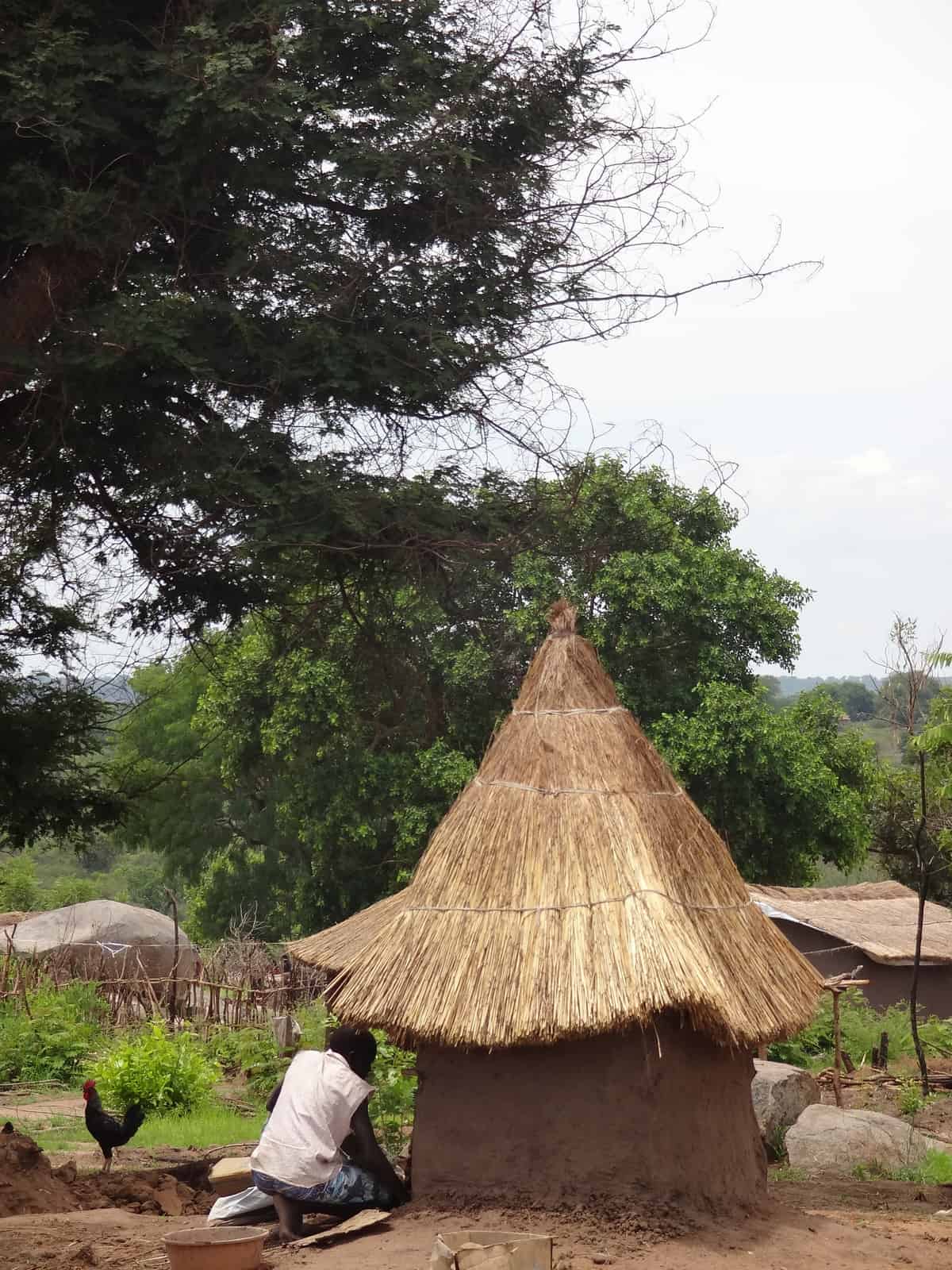
We are humbled and honored that nearly 1000 readers like you are daily visiting our blog. If you enjoy what you read, please use one of the social media buttons (above) to spread the word. Thank you, Curt Iles Creekbank Stories: Stories Worth Telling A word from Curt Fatigue. It means exhaustion. An inability (or desire) to stop. An unwillingness to not go on. A refusal to go back. Today’s story compares storm fatigue on two continents. I’ve seen this emotion on folks all along our Louisiana coast and beyond. From Venice to Grand Isle to Pecan Island to Holly Beach, Johnson’s Bayou and onto Texas. It followed the epidemic of hurricanes we experienced in the last decade. This past year, I saw that same shattered look in the eyes of Dinka, Nuer, Murle, Anuak, Bari, and more. The following story links those heartbroken people together. We’re posting chapters from our new ebook, Trampled Grass, daily. You can download a copy in four ways: Read sample chapters or purchase at Amazon. Read sample chapters or purchase at Smashwords. You can download a free PDF at creekbank.netby signing up for our Story Letter. Download the Snippet App for easy reading on your tablet or phone. You can receive our monthly Story Letter, here. Do you wish to be notified of future blog posts? Click here to subscribe to The Creek Blog. I’d suspected it when the tall Dinka woman was putting the finishing mud touches on a granary at Mirle Camp. She was planning on being here a long time. She had storm fatigue. I asked, “When will you go home?” “I won’t be going home.” She kicked at the red soil. “This is where I’ll be.” Most of these refugees had been here before. They’d filtered home in the years after the 2005 Comprehensive Peace Agreement. They’d left camps like Mirle. Or exile in Khartoum, northern Sudan’s capital. Shelters in Ethiopia and tukuls in the Kenya desert. Even many of those who’d settled in Europe or North America returned to help build the New Sudan. They came home full of optimism. They finally had their own country, free of the Arab Islamic North. Many of the younger ones had never been to South Sudan. All of their lives had been spent as refugees. Now, with their new country only two-and-one-half years old, civil war had erupted. Many of the refugees were back at places they’d never expected to see again. Had hoped not to see again. Their dreams shattered. Their hopes gone. I recall Poppa Pipe. That’s what I call him. One look at the photos above tells you all you need to knowabout his name. He’s Dinka from Upper Nile State—scene of the some of the worst of the fighting. Knowing the situation and his age, he’ll probably never touch the soil of South Sudan again. It’s storm fatigue. And it makes me think of Cameron Parish, Louisiana. Cameron Parish lies in the extreme southwest of our state, about seventy-five miles south of my piney woods hometown. But it’s a thousand miles away in culture and geography. It’s a beautiful, lonely place. Much of the parish is marshland with the population living on natural ridges called cheniers. It’s a haven for waterfowl, seafood, and fish. The small population consists of hardy Cajuns who love their homeland dearly and cling to their independent lifestyle. Cameronites are the kind of people that may be hard to get to know, but once you know them, easy to love. Up until 2005, Cameron Parish residents divided life into “Before and After the Storm.” The Storm was Hurricane Audry. The time was late June 1957. Books have been written about the hurricane and what happened. Over 600 people lost their lives when the storm swept in and the rising water trapped residents. Every family lost someone close. It changed Cameron Parish. Some folks moved north, never to return. Most returned and rebuilt their lives. Many, as insurance, bought homes in our upland inland area. A place to go when the storms came. I recall the lines of a song about the Cajuns, “Acadian Driftwood”: Some stayed on to finish what they started. They never parted, they’re just built that way. The next fifty years were mostly kind to Cameron Parish. Most hurricanes veered to the east or west. Several clipped the area but there was nothing like Audry. Life carried on as “before Audry” and “after Audry.” Until Summer 2005. Louisiana was dealt two blows on its eastern and western borders. Youknow all about Katrina and New Orleans. Katrina didn’t even bring rain to Cameron Parish. But rain came three weeks later when Hurricane Rita hit SW Louisiana. Cameron Parish was in the storm’s sights. Fortunately, there was no loss of human life. Older residents hadn’t forgotten Audry and evacuated early. After Rita, most returned to find their towns and villages were devastated. Even the marshes were changed forever. Salt water now existed where it had never been. They began rebuilding their churches, stores, schools, and homes. Everything was built according to new building codes, hopefully putting dwellings above the flood line. Then in 2008,Hurricane Ike came ashore to the west of Cameron Parish, directly striking Galveston, Texas. Even though the SW Louisiana coast was spared the strongest winds of Ike, the flooding was worse than Rita. Hundreds of newly constructed homes and businesses went under. This time Storm Fatigue set in. Many people had had enough. They just didn’t go back. That’s what we’re seeing in the South Sudan camps. Storm fatigue. They’d had enough. Observing the difficulty of refugee camp life, DeDe said it best, “For people to willingly live and stay here makes me wonder how horrible were the things they fled.” There is one group that still plans to return. It’s the young people. I’ve always loved teenagers and enjoyed being around them. Every refugee camp has a group of