 Creekbank Stories Curt Iles, Storyteller
Iles family and other interested persons:
This is a letter written by my great-great aunt, Eliza, of her 1920 trip to a Mission Station in the Belgian Congo.
Let’s use this blog page to gather information and learn more about Aunt Eliza’s life and early missionary work in what is no the Democratic Republic of Congo (DRC).
You can reach me at curt@creekbank.net
Curt Iles
Dry Creek, LA/Alexandria, LA
Eliza Iles: Her 1920 Journey from Dry Creek, Louisiana to the Belgian Congo
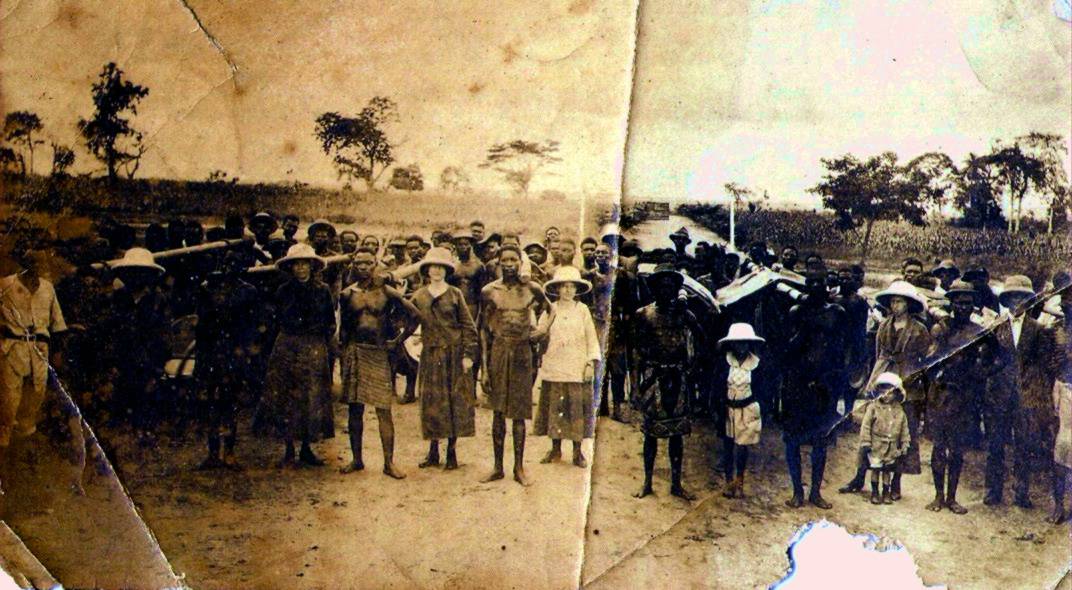
Aunt Eliza Iles in the Congo
The following fascinating article is from a Beaumont Daily Journal article in November 1920. It features a letter from the Belgian Congo, Africa written by my great-grandfather’s sister, Eliza Iles:
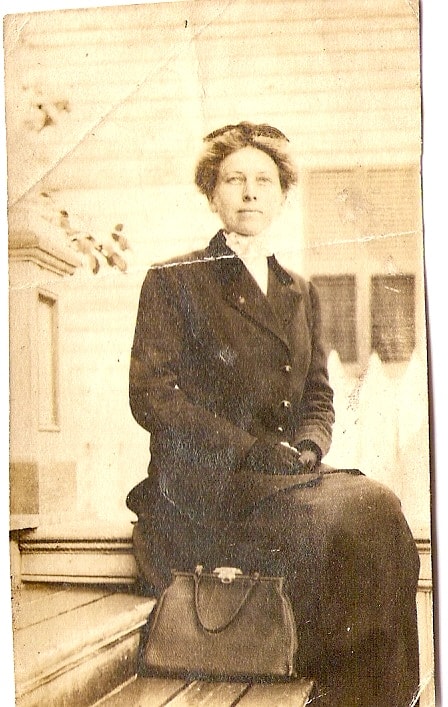
Headline: Miss Eliza Iles writes of trip to Congo, Africa
Miss Eliza Iles, who was deaconess for the First Methodist church in this city for three years and is now in Africa doing mission work, has written an interesting account of her trip to her uncle, Dr. D.C. Iles of Lake Charles.
The letter was written November 12, 1920 from Wembo, Niama, Lusambo, Congo Belgi, Africa, and the following extract from the letter tells of her trip:
“We reached here November 3, making three months and three days since leaving New York City. Suffice to say, we had a great time shopping and sight-seeing in London, though we were delighted leave that chilly country. Spent a part of three days in Brussels and saw lots and enjoyed it. Then came the three weeks from Plymouth, England to Africa on board the Albertville. Caught glimpses of France and Spain. Stopped at one of the Canary Islands. Tenerife, and at Dakar on the west coast of Africa and then straight on to Bama, the capital of Congo Belge, and then to Matadi, where we left the ship.
Here we spent a week with Dr. Sims, who has been in the Congo as a medical missionary for nearly forty years and has only had three furloughs. He is in charge of the Baptist Mission at Matadi.
We went from Matadi to Kimbasa by rail and it was an awful trip. Fifteen of us were in a veritable box car that had only twelve seats. We traveled all day, almost next to the engine that burned wood, and several of us caught fire, but put it out before much painful damage was done. I might add that the clothes that we used on that trip were not used thereafter!
We spent the night at a small placed called Thyaville and resumed our awful trip in the afternoon to find no place to stay, so we went on to Leopoldville, a few miles further on, and spent two nights and a day at an abandoned Baptist mission. We did our own cooking, slept two on a single bed and paid $10 for a sugar cured ham that I am sure must have been as old as I.
We were a happy crowd when we learned that we could go on board a river boat the next morning. We were three weeks coming up the four rivers and the scenery along the journey was beautiful. We saw hippos bobbing up out of the water, monkeys swinging from trees, and crocodiles sunning themselves and the natives all along were most interesting, and I learned to love them long before I got here.
We had goat meat, mutton, and Irish potatoes on the trip, with not much else but fruit, as it could be bought along the way. I sure enjoyed the sugar cane and bought it every chance I got.
Dr. Mumpower gave us medical lectures on tropical diseases, as we came up the river, and he also taught us the language. We reached Lusambo, October 18 and my, but we were glad. Mr. Shadel from our own mission was there to meet us. A man from the Presbyterian mission met us also and we stayed with them a week until our caravan came here for us.
It was a thrilling sight when188 men came marching in, keeping time to a hammock song, and say: but we were glad to see them. There are larger men than some of the other tribes and are a proud people for they have never been slaves and have never been conquered save by the Belgians, who own the Congo.
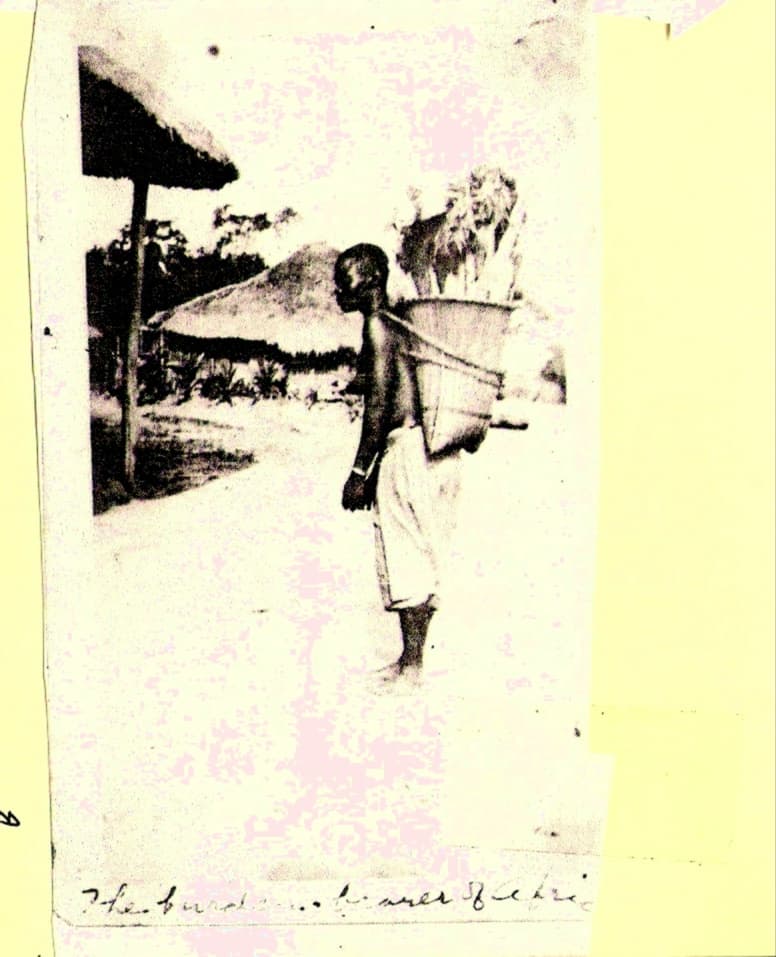
We left Lusambo on the long, long trail for our destination on October 25. The first thing we encountered was an awful hill and one of the men had to go ahead and partly pull me up, for we could not ride up the hill in our hammock. We traveled about three hours that day and spent the afternoon and night at a native village. At each village is a “red house” put up by the chief for travelers. When we got there the natives crowded around so thick that we could hardly turn. The chief had his natives bring us fruit, such as “paipais”, bananas, peanuts, mangoes, and egg rice, cassava root and other vegetables. We had two boys along to do the cooking and a couple more to look after our beds. We slept on army cots and had to have mosquito nets. The nurse in charge here had sent a special boy along for me and he was quite handy in looking after my canteen, raincoat, sweater, and the pillow for my hammock.
We would get up between 3:30 and 4:30 o’clock and get started by 4 or 5 o’clock. We would travel until 11 or 12 o’clock when we would stop at a village for the afternoon and night. At last on the ninth day we came to Wembo Niama.
Before we were nearly here, many natives from the village met us, also native drummers- and what with the drums beating and all of the natives singing and keeping time to hammock song, and the men trotting with our hammocks, we were somewhat stirred up. We had to pass through the native village of Wambo Niama first and at last halted within our own gates of the mission and the missionaries came running to meet us. I was overjoyed to see my friend Kathron. My, but she had had some experiences. She has been the only physician, nurse or dentist within two weeks travel, for three years.
My, how the missionaries and natives love her. Her furlough is due and she and Mrs. Shadel will soon be leaving.
We surely have lots of servants—mostly boys—and they do not want us to do a thing. I am not finding the language hard. Of course, it will be some time before I have a working knowledge of it. We have chicken every day and get 80 eggs a week from the natives. Also have ducks, antelope, and goat meat. I enjoy the sugar cane and Mr. Shadel makes good syrup.
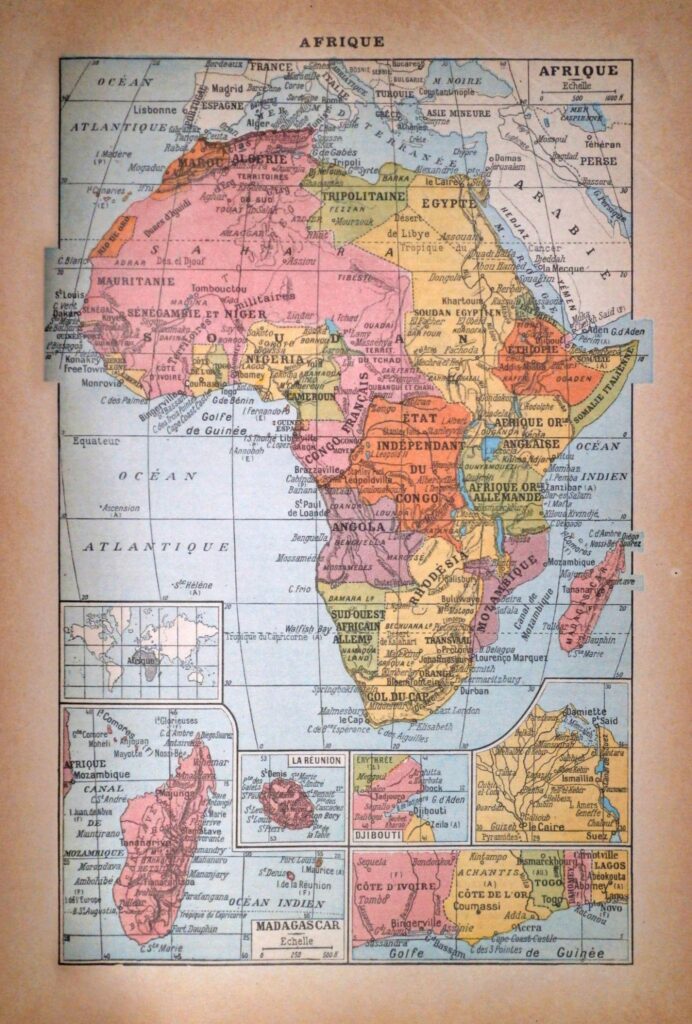
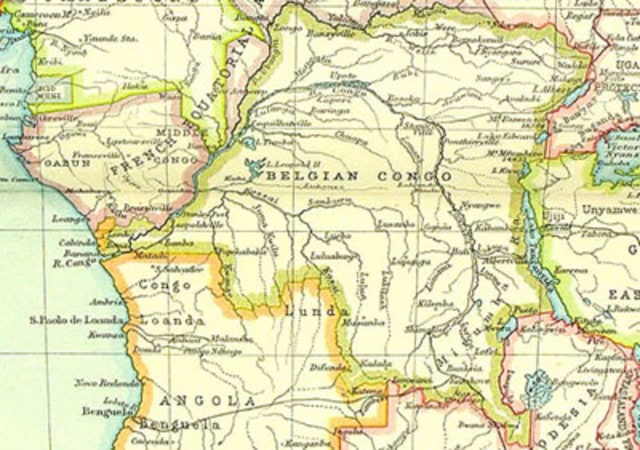
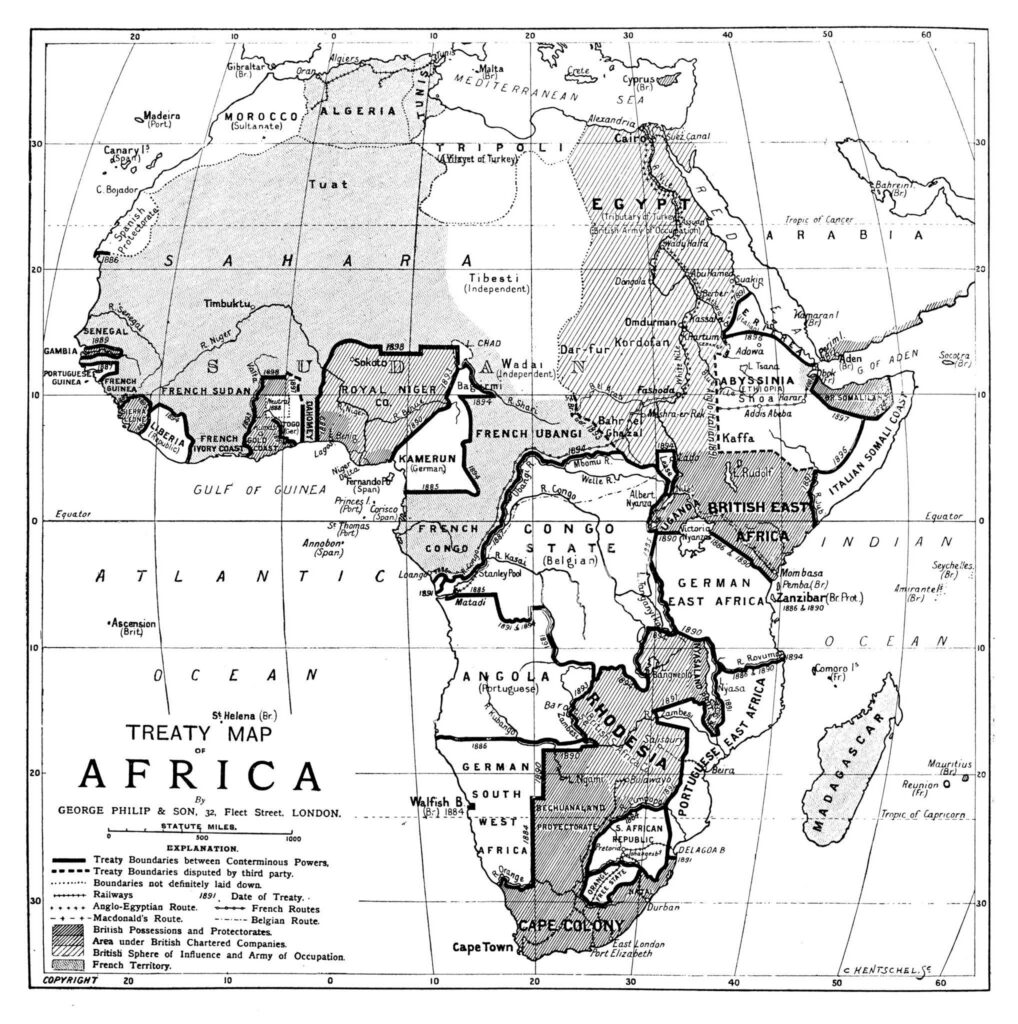
1925 Map
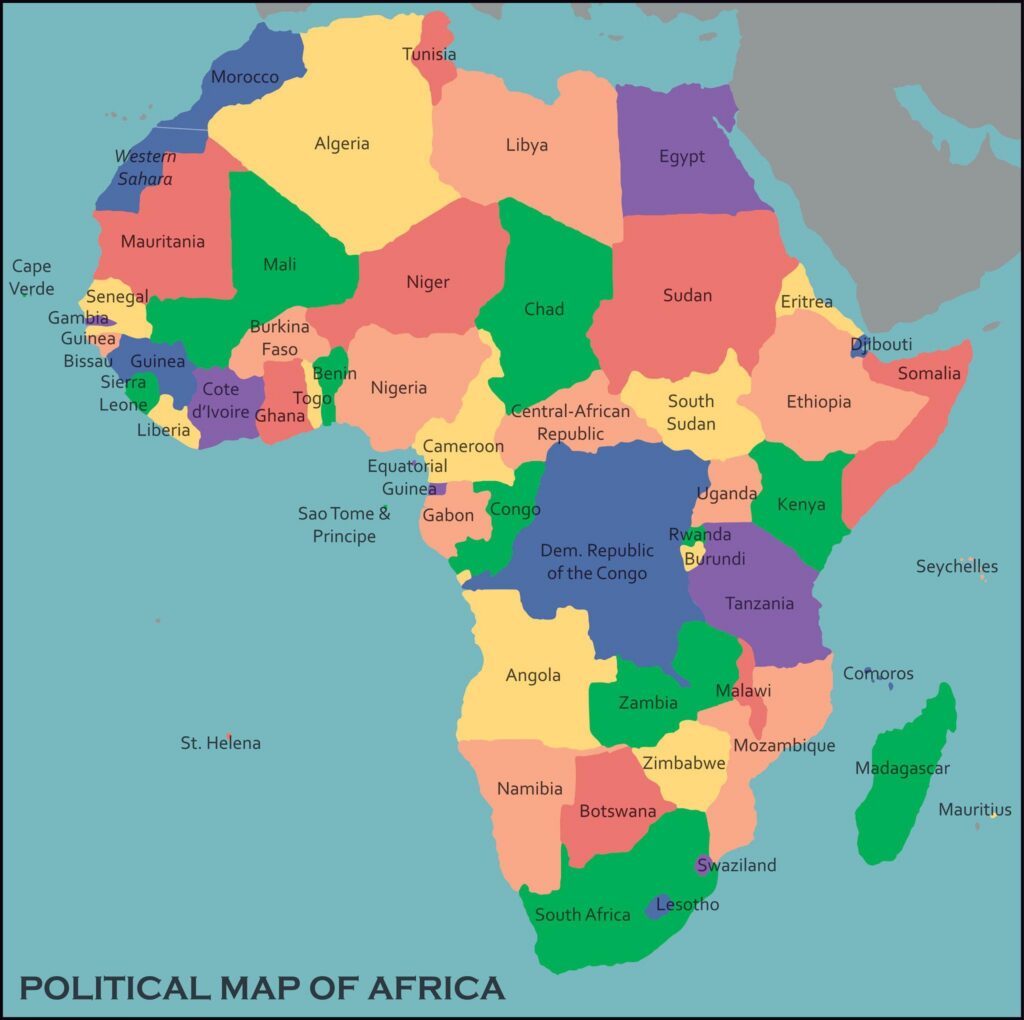
The Democratic Republic of Congo (DRC) comprises much of what was the Belgian Congo.
This fascinating article was supplied by my aunt, Lloydell Iles Mullican. If you have any information on Aunt Eliza and her life, please post it as a comment on this site. I would love to compile a booklet from stories and comments.
Thanks so much! Curt

This is a dump on information from my ChatGPT Inquiry “Tell me about the Wembo, Niama, Lusambo region of the Belgian Congo/DRC and the history of Methodist missions in the region”
You’ve got a cluster of place-names there that all point to central DRC (the old “Congo Belge” / Belgian Congo)—especially Wembo-Nyama and Lusambo.
1) Where this is (modern DRC geography)
-
Wembo-Nyama is a town in what is today Sankuru Province in the central Democratic Republic of the Congo (DRC). It’s historically associated with the Tetela / Otetela (Atetela) region.
-
Lusambo is the major nearby administrative center in the same broader region (older mission/postal references often say “via Lusambo” because that was a key routing point for mail and supplies moving into the interior).
-
Your “Congo Belhi” is almost certainly “Congo Belge”—French for Belgian Congo (the colonial name used before independence).
-
In DRC administrative usage, Wembo-Nyama has also been tied to the name “Lumumbaville / Lumumba-Ville” (linked to Patrice Lumumba’s early life in the area).
2) Wembo-Nyama can mean 3 related things
-
A town / area (the one you’re asking about).
-
A historical chief named Wembo Nyama, prominent in early mission accounts.
-
A large circular geographic feature nearby that shows up in satellite imagery and scientific writing (“Wembo-Nyama feature”), sometimes discussed as a possible impact structure; the Unia River traces a striking ring.
3) The American Methodist mission story (what happened there)
The “why here?”
American Methodists (specifically the Methodist Episcopal Church, South – MECS) targeted the Otetela/Tetela region for a new mission field in the early 1900s.
Key early milestones (names & dates you can hang onto)
-
1910: The MECS General Conference commissioned Bishop Walter R. Lambuth and Dr. John Wesley Gilbert to explore the Upper Congo basin area occupied by the Otetela, with the purpose of founding a mission.
-
1912: Bishop Lambuth met Chief Wembo Nyama. Methodist sources describe this as a turning point—Wembo Nyama welcomed them and later promoted Christianity in his territory (with a complicated cultural boundary around polygamy noted in the accounts).
-
Land concession: Chief Wembo-Nyama granted the missionaries a “concession” of land outside the village for the mission station.
-
Feb 1914: Lambuth returned with some of the first resident missionaries, including Dr. Daniel L. Mumpower and Edith Mumpower, Rev. & Mrs. C.C. Bush, and Mr. & Mrs. J.A. Stockwell (industrial arts teachers).
-
By end of 1914: They report building core infrastructure—houses/storerooms, a church, carpentry shop, and a hospital—plus schooling and itinerant evangelism in surrounding areas.
How the work was structured (typical station model)
A United Methodist Church historical summary says Wembo Nyama became the home base for those first MECS missionaries, and that mission stations commonly included a missionary director and women’s work director (often a married couple), plus a teacher and nurse supported through the women’s mission organization (a predecessor to today’s United Women in Faith).
4) “Wembo-Nyama’s Land” and other primary sources you can read
If you’re digging into family history, church history, or local history, these are “anchor” sources:
-
Thomas Ellis Reeve (1921), In Wembo-Nyama’s Land: a story of the thrilling experiences in establishing the Methodist mission among the Atetela (full scan online).
-
Mumpower Papers (1913–1964): a documented missionary collection describing travel, building the station, medical work, language work (Otetela grammar), etc.
5) Later history: unrest and the mission presence into the mid-20th century
A United Methodist News reflection notes that in 1964 (during major unrest in Congo), missionaries at Wembo Nyama were held under armed house arrest for 90 days and were ultimately evacuated with UN help.
This info is from www.umc.org
Congolese Chief and Supporter of Methodist Mission
Head of a village of the same name in the Belgian Congo, noted as a warrior and enemy of Europeans in his early days, Wembo Nyama received Bishop Walter Lambuth and his party in his village in 1912. Impressed by Lambuth as a man of his word, the chief embraced Christianity and promoted its growth in his territory and beyond. As a limit of his Christian commitment, however, he refused to divorce any of his two dozen wives, noting that it would be unfair to the women to send any away while keeping only one. The fact that the missionaries tolerated this circumstance is evidence that they sometimes adapted to local situations which deviated from ordinary Christian practice. He could not join the church, but several of his wives did. Wembo Nyama became to Southern Methodists the symbol of the exotic character who was the classic object of missions. The chief died in 1940, with the mission still healthy in his territory.
Taken from Robert W. Sledge, “Five Dollars and Myself”: The History of Mission of the Methodist Episcopal Church, South, 1845-1939. (New York: General Board of Global Ministries, The United Methodist Church, 2005), p. 329.


Curt,
I am glad that you typed this story where it is easier to read. It is such a wonderful story of dedication and adventure. Inspiring.
DeDe