Creekbank Stories Curt Iles, Storyteller
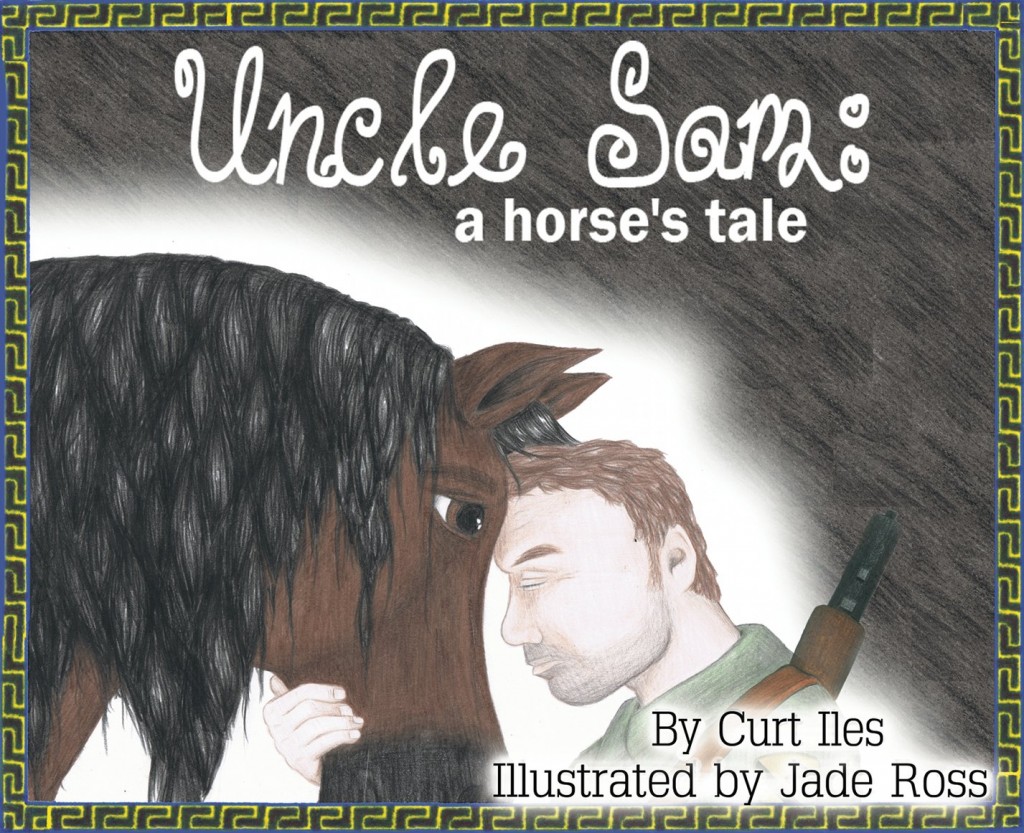
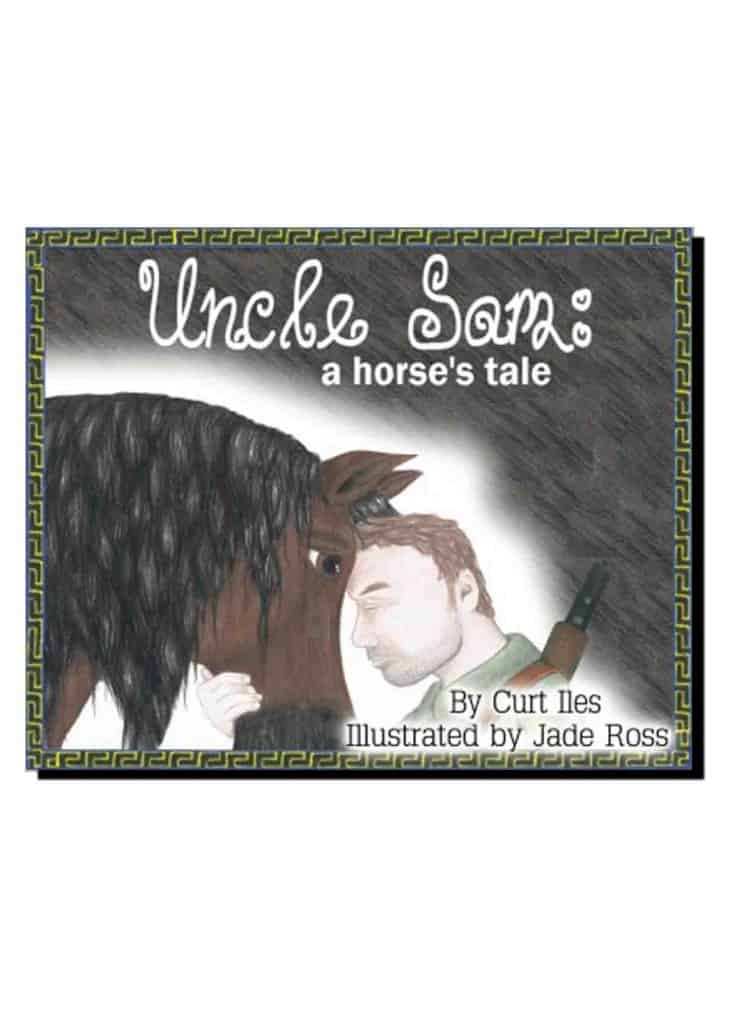
| Lesson Guides for Grades 3-4-5 Uncle Sam: A Horse’s Tale by Curt Iles
Uncle Sam is available as an Amazon paperback, Kindle e-book, and Audible audiobook. To learn more about the story behind Uncle Sam, visit xxxxx Thanks to Patty Taylor for designing these study units for Grades 3, 4, and 5.
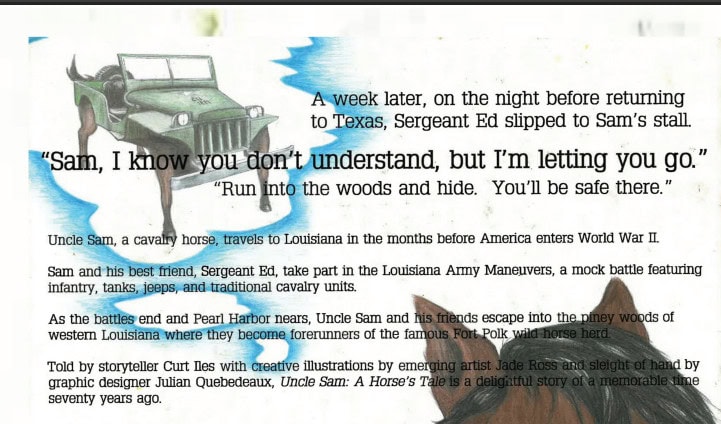
Uncle Sam is the story of a grizzled Calvary soldier freeing his horse at the end of the 1941 La. Manuevers. Uncle Sam: A Horse’s Tale Written by: Curt Iles Illustrated by: Jade Ross Nugent Graphic Design: Julian Quebedeaux Lesson Guide created based off Louisiana State Standards for Third Grade Created by Patty Taylor |
||||||||||||||||||||||||||||||
| Grade Level: 3 | Teacher: | |||||||||||||||||||||||||||||
| Brief Overview of Lesson | ||||||||||||||||||||||||||||||
This lesson uses the book, Uncle Sam: A Horse’s Tale to support and integrate Grade 3 English Language Arts and Social Studies instruction aligned to the Louisiana Student Standards. The overall goal of the lesson is for students to develop reading comprehension and speaking/listening skills while understanding how life changes over time due to historical and technological advancements. Through a teacher-led read-aloud, collaborative discussions, and the completion of a selected illustration activity, students will analyze the text, build vocabulary, and analyze characters.Louisiana ELA standards are supported by engaging students in purposeful discussions, responding to text-based questions, and demonstrating understanding through speaking and writing. It also aligns with Louisiana Social Studies standards by helping students identify historical changes over time and understand cause-and-effect relationships in history. These activities connect to the larger goals of literacy and social studies by strengthening critical thinking, communication, and historical awareness while fostering empathy and social-emotional learning, preparing students for deeper analysis and inquiry in future lessons. |
||||||||||||||||||||||||||||||
| Relevance | ||||||||||||||||||||||||||||||
| Uncle Sam: A Horse’s Tale connects historical change to student experiences, such as adapting to new routines, technology, or roles. By exploring change through the perspective of Uncle Sam, the story supports comprehension, and empathy for learners. The lesson builds on students’ prior knowledge and abilities by using discussion, visuals, and illustration activity, allowing students to demonstrate understanding through speaking, writing, or drawing. Partner/small-group activities promote peer interaction and support diverse learning needs.Peer and Social Interactions Structured partner talk/small-group activities allow students to learn collaboratively, practice listening and speaking skills, and develop social competence. These interactions support Social Emotional Learning by encouraging respectful communication and shared problem-solving.Language & Culture The lesson provides verbal modeling, sentence frames, and discussion norms to support students from diverse language backgrounds. By emphasizing storytelling and discussion, the lesson honors oral language traditions and cultural ways of sharing knowledge.Family & Community Connections Students are encouraged to relate historical change in the story to changes in their families or communities (e.g., technology, transportation, jobs). This connection validates family experiences and community history as valuable sources of knowledge.The historical theme allows teachers to reference local or regional history, such as Louisiana’s agricultural past, military connections, or changes in transportation, making the lesson culturally and geographically relevant. |
||||||||||||||||||||||||||||||
| Louisiana State Standards
English Language Arts – Louisiana Student Standards (http://www.louisianabelieves.com/resources/library/academic-standards) |
||||||||||||||||||||||||||||||
: Reading Literature (Historical Fiction)
Vocabulary & Language (Language Strand)
Speaking & Listening (Discussion Skills)
|
||||||||||||||||||||||||||||||
| Social Studies – Louisiana Student Standards (http://www.louisianabelieves.com/resources/library/academic-standards) | ||||||||||||||||||||||||||||||
History & Historical Thinking
Civics & Cultural Understanding
Geography & Contextual Awareness
|
||||||||||||||||||||||||||||||
| Student Objectives | ||||||||||||||||||||||||||||||
| Two objectives are provided, one simple and one complex, both aligning with the Louisiana State Standards above.
As a result of reading the book, Uncle Sam: A Horse’s Tale, students will be able to:
Objective 1: Vocabulary Development (RL.3.4, L.3.4) Objective 2: Reading Comprehension: RL.3.1, RL.3.2 TSW retell key events from Uncle Sam: A Horse’s Tale in correct order, including the beginning, middle, and end, using details from the text to show understanding of the story’s main ideas. Objective 3: Character Analysis RL 3.3. TSW explain how change affected Uncle Sam and how he adapted to changes in his role by describing how those changes affected him and identifying ways he adapted, using examples from the text to support their explanation Objective 4 — Speaking & Listening (SL.3.1) TSW discuss Uncle Sam: A Horse’s Tale by taking turns speaking, listening attentively to peers, and responding appropriately during partner and whole-group discussions, demonstrating respectful communication and discussion skills. Objective 5 — Historical Change Over Time (3.H.1, 3.H.7) TSW compare how the Army used horses in the past and vehicles today by completing a “Then and Now” chart.
|
||||||||||||||||||||||||||||||
| Vocabulary | ||||||||||||||||||||||||||||||
|
||||||||||||||||||||||||||||||
| Relevance | ||||||||||||||||||||||||||||||
| Reading Uncle Sam: A Horse’s Tale is relevant for Louisiana third-grade students because it connects historical change in Louisiana to student experiences, they already understand, such as adapting to new routines, technology, or roles. By exploring change through the perspective of Uncle Sam, the story supports comprehension, empathy, and engagement for young learners. The lesson builds on students’ prior knowledge and abilities by using discussion, visuals, and, allowing students to demonstrate understanding through speaking, writing, or drawing. Partner and small-group activities promote peer interaction and support diverse learning needs, including students with learning or communication challenges.Peer and Social Interactions Structured partner talk and small-group activities allow students to learn collaboratively, practice listening and speaking skills, and develop social competence. These interactions support Social Emotional Learning by encouraging respectful communication, perspective-taking, and shared problem-solving.Language & Culture The lesson provides verbal modeling, sentence frames, and discussion norms to support students from diverse language backgrounds. By emphasizing storytelling and discussion, the lesson honors oral language traditions and cultural ways of sharing knowledge.Family & Community Connections Students are encouraged to relate historical change in the story to changes in their families or communities (e.g., technology, transportation, jobs). This connection validates family experiences and community history as valuable sources of knowledge.Community Resources The historical theme allows teachers to reference local or regional history, such as Louisiana’s agricultural past, military connections, or changes in transportation, making the lesson culturally and geographically relevant. |
||||||||||||||||||||||||||||||
| Rationale | ||||||||||||||||||||||||||||||
| Uncle Sam: A Horse’s Tale enhances student learning in Louisiana by supporting state student standards while connecting content to students’ lives, history, and values. The story strengthens ELA skills such as comprehension, vocabulary development, speaking, and listening through narrative text that is accessible and engaging for third graders. By reading from the perspective of an animal, students practice empathy, infer character feelings, and discuss cause-and-effect relationships, which aligns with Louisiana’s emphasis on close reading, discussion, and text-based understanding.The book also supports Louisiana Social Studies Standards by helping students understand historical changes over time, particularly how advancements in technology affect people, animals, and communities. This theme connects well to Louisiana’s agricultural, military, and transportation history, thus making connections with Louisiana’s role in World War II and making learning local history relevant. Additionally, the story promotes social-emotional learning by encouraging students to reflect on change, adaptability, and respect for others’ roles—skills that support classroom community, resilience, and responsible citizenship, all of which are priorities in Louisiana classrooms. | ||||||||||||||||||||||||||||||
| Step-by-Step Lesson Procedures | ||||||||||||||||||||||||||||||
Lesson Progression:
Students Will:
Students Will:
Teacher Will:
Comprehension Questions by Page Page 1 — Title & Introduction
Page 2 — Setting the Scene
Page 3 — Army Maneuvers
Page 4 — A Big Change
Page 5 — The Escape
Page 6 — New Life Begins
Page 7 — The Wild Herd
Page 8 — Reflection & Ending
Additional Higher-Order Discussion Questions May be used for small-group talk or deeper whole-class discussion during or after the read-aloud (aim every ~10–12 minutes):
Students may choose to illustrate choice of activity.
|
||||||||||||||||||||||||||||||
| Teacher Instructional Resources and Curriculum Materials | Student Instructional Resources and Curriculum Materials | Teacher Technology Resources
and Materials |
Student Technology Resources
and Materials |
|||||||||||||||||||||||||||
|
|
|
|
|||||||||||||||||||||||||||
| Assessments (informal and formal) | ||||||||||||||||||||||||||||||
| Whole Group:
Informal: Listening skills and Discussion Formal: Exit Ticket Small Group: Informal: Shoulder talk; Pair and Share Guided Practice: Informal: Class Discussion Formal: Class Discussion Individual Practice: Informal: Choice of Illustration Activity Formal: Exit Ticket |
||||||||||||||||||||||||||||||
| Differentiation by Learner Needs | ||||||||||||||||||||||||||||||
IEP
|
ELL
|
Enrichment
|
||||||||||||||||||||||||||||
| Research-based Instructional Strategies | ||||||||||||||||||||||||||||||
| Evidence-Based Instructional Strategies, Resources, and Technological Tools Implemented
In this lesson, several evidence-based instructional strategies were intentionally implemented to support student learning and mastery of both ELA and social studies standards:
When available, technology tools such as a document camera or interactive whiteboard were used to display the text, model the student activity, and visually support instruction. |
||||||||||||||||||||||||||||||
Student Assessment Rubric – Uncle Sam: A Horse’s Tale (Grade 3) |
||||
| Student Name: ______________________ Date: ____________ Teacher: ____________________ | ||||
| Criteria | 4 – Exceeds Expectations | 3 – Meets Expectations | 2 – Developing | 1 – Beginning |
| Understanding of Historical Change | Clearly explains multiple accurate changes between past and present | Explains at least one accurate change | Partially explains a change | Limited or incorrect explanation |
| Then and Now Comparison | Compares past and present with clear details | Shows a basic comparison | Comparison is unclear | No comparison shown |
| Speaking & Listening | Actively participates and responds respectfully to peers | Participates appropriately | Limited participation or listening | Does not participate appropriately |
| Task Completion | All work is complete, clear, and detailed | Work is complete | Work is partially complete | Work is mostly incomplete |
EXIT TICKET:
Name: ___________________________________________
Date_____________________________________________
Directions: Answer the question below before leaving class.
What is one thing you learned today from reading Uncle Sam: A Horse’s Tale:
GRADE 4
| Uncle Sam: A Horse’s Tale
Written by: Curt Iles Illustrated by: Jade Ross Graphic Design:Julian Quebedeux Lesson Guide created based off Louisiana State Standards for Fifth Grade |
||||||||||||||||||||||||||||||||
| Grade Level: 4 | Teacher: | |||||||||||||||||||||||||||||||
| Brief Overview of Lesson | ||||||||||||||||||||||||||||||||
This lesson uses the book, Uncle Sam: A Horse’s Tale to support and integrate Grade 4 English Language Arts and Social Studies instruction aligned to the Louisiana Student Standards. The overall goal of the lesson is for students to develop reading comprehension and speaking/listening skills while understanding how life changes over time due to historical and technological advancements. Through a teacher-led read-aloud, collaborative discussions, and the completion of a selected illustration activity, students will analyze the text, build vocabulary, and analyze characters.Louisiana ELA standards are supported by engaging students in purposeful discussions, responding to text-based questions, and demonstrating understanding through speaking and writing. It also aligns with Louisiana Social Studies standards by helping students identify historical changes over time and understand cause-and-effect relationships in history. These activities connect to the larger goals of literacy and social studies by strengthening critical thinking, communication, and historical awareness while fostering empathy and social-emotional learning, preparing students for deeper analysis and inquiry in future lessons. |
||||||||||||||||||||||||||||||||
| Relevance | ||||||||||||||||||||||||||||||||
| Uncle Sam: A Horse’s Tale connects historical change to student experiences, such as adapting to new routines, technology, or roles. By exploring change through the perspective of Uncle Sam, the story supports comprehension, and empathy for learners. The lesson builds on students’ prior knowledge and abilities by using discussion, visuals, and illustration activity, allowing students to demonstrate understanding through speaking, writing, or drawing. Partner/small-group activities promote peer interaction and support diverse learning needs.
Peer and Social Interactions Language & Culture Family & Community Connections The historical theme allows teachers to reference local or regional history, such as Louisiana’s agricultural past, military connections, or changes in transportation, making the lesson culturally and geographically relevant. |
||||||||||||||||||||||||||||||||
| Louisiana State Standards
English Language Arts – Louisiana Student Standards (http://www.louisianabelieves.com/resources/library/academic-standards) |
||||||||||||||||||||||||||||||||
Reading Literature
Integration of Knowledge
Writing
Speaking & Listening
|
||||||||||||||||||||||||||||||||
| Louisiana State Standards
Social Studies – Louisiana Student Standards (http://www.louisianabelieves.com/resources/library/academic-standards) |
||||||||||||||||||||||||||||||||
| Grade 4 focuses on building historical thinking skills (often tied to the “Ancient World”), but practices and skills align well with this Louisiana historical text.
· 4.1 – Create/use chronological sequences (timeline of events in the story). · 4.2 – Use primary & secondary sources to analyze content and identify facts/opinions. · 4.3 – Explain connections between ideas, events, and developments. · 4.4 – Compare and contrast events and developments. · 4.5 – Construct claims supported with evidence. · 4.6 – Use geographic representations (maps of Louisiana, Fort Polk region). |
||||||||||||||||||||||||||||||||
| Student Objectives | ||||||||||||||||||||||||||||||||
| Objectives align with the Louisiana State Standards provided on pages 2 and 3.
As a result of reading the book, Uncle Sam: A Horse’s Tale, students will be able to:
Objective 1: (RL.4.1, RL4.4, SS.4.2, SS.4.3, SS.4.5)
Objective 2: (RL.4.7, RI.4.7, SS.4.2, SS.4.6) TSW interpret illustrations, photographs, or other historical representations to identify how horses were used in military service.
Objective 3: (RI.4.3, RI.4.9, SS.4.3, SS.4.4) TSW describe how technological advances changed military transportation and daily life by comparing the use of horses to mechanized vehicles.
Objective 4: (RL.4.9, SS4.2, 4.3) TSW explain how the story connects to real historical events in Louisiana (Louisiana Maneuvers, cavalry training, Fort Polk) using information from the text and supporting sources.
Objective 5: (RI.4.9, W.4.2, SS.4.1, SS. 4.4, SS.4.5) TSW compare how the Army used horses in the past and vehicles today by completing a “Then and Now” chart.
|
||||||||||||||||||||||||||||||||
| Vocabulary | ||||||||||||||||||||||||||||||||
|
||||||||||||||||||||||||||||||||
| Relevance | ||||||||||||||||||||||||||||||||
|
Reading Uncle Sam: A Horse’s Tale is relevant for Louisiana fifth-grade students because it connects historical change in Louisiana to student experiences, they already understand, such as adapting to new routines, technology, or roles. By exploring change through the perspective of Uncle Sam, the story supports comprehension, empathy, and engagement for young learners. The lesson builds on students’ prior knowledge and abilities by using discussion, visuals, and allowing students to demonstrate understanding through speaking, writing, or drawing. Partner and small-group activities promote peer interaction and support diverse learning needs, including students with learning or communication challenges.
Peer and Social Interactions Language & Culture Family & Community Connections Community Resources
|
||||||||||||||||||||||||||||||||
| Rationale | ||||||||||||||||||||||||||||||||
|
Uncle Sam: A Horse’s Tale enhances student learning in Louisiana by supporting state student standards while connecting content to students’ lives, history, and values. The story strengthens ELA skills such as comprehension, vocabulary development, speaking, and listening through narrative text that is accessible and engaging for third graders. By reading from the perspective of an animal, students practice empathy, infer character feelings, and discuss cause-and-effect relationships, which aligns with Louisiana’s emphasis on close reading, discussion, and text-based understanding.
The book also supports Louisiana Social Studies Standards by helping students understand historical changes over time, particularly how advancements in technology affect people, animals, and communities. This theme connects well to Louisiana’s agricultural, military, and transportation history, thus making connections with Louisiana’s role in World War II and making learning local history relevant. Additionally, the story promotes social-emotional learning by encouraging students to reflect on change, adaptability, and respect for others’ roles—skills that support classroom community, resilience, and responsible citizenship, all of which are priorities in Louisiana classrooms. |
||||||||||||||||||||||||||||||||
|
Step-by-Step Lesson Procedures |
||||||||||||||||||||||||||||||||
| Lesson Progression:
1. Present the lesson objectives on a Smartboard or whiteboard and read aloud. 2. Review vocabulary and definitions with students. Read the new vocabulary word with the definitions. Continue to show on Smartboard or whiteboard. 3. Explain relevance: “We all experience changes—new schools, new technology, new rules. This story helps us understand how people and animals adapt to change.” 4. Connect to the unit: “This lesson helps us understand relationships, history and how things change over time.” Students Will: · Listen to objectives. · Look at the posted objectives. · Give a thumbs-up to show understanding or ask questions for clarification.
5. HOOK: “Why do you think an author would choose a horse to tell a true historical story instead of a soldier or a general?”
“If animals could talk and tell true stories from history, what kinds of details do you think they would include that people might not think are important?”
Students Will: · Discuss ideas with a partner (table groups). · Share responses for class discussion. Teacher Will:
Comprehension Questions by Page
Page 1 and 2 — Title, Introduction, and Setting the Scene
Page 3 — Army Maneuvers
Page 4 — A Big Change
Page 5 — The Escape
Page 6 — New Life Begins
Page 7 — The Wild Herd
Page 8 — Reflection & Ending
Journal Prompts
1. Uncle Sam tells a true historical story from an animal’s point of view. How does his perspective help you better understand what life was like during the Civil War? Use at least two details from the text to support your thinking. 2. Throughout the story, Uncle Sam experiences change—from Army life to freedom in the wild. Which change do you think was the most difficult for him, and why? Explain your answer using evidence from the story. 3. Think about the lesson or message the author wants readers to learn from Uncle Sam’s experiences. How can this lesson still apply to people today? Connect the story to real life or history in your response.
Students will complete the attached worksheet – “Then and Now” 10. Closing · Gather students together. · Facilitate reflection. How does hearing a historical story from an animal’s point of view change the way you understand the events and emotions of the Civil War? Explain your thinking using examples from the text. · Uncle Sam experiences loyalty, loss, and freedom throughout the story. Which of these ideas do you think is most important to the author’s message, and why? Support your answer with details from Uncle Sam’s experiences.
|
||||||||||||||||||||||||||||||||
| Teacher Instructional Resources and Curriculum Materials | Student Instructional Resources and Curriculum Materials | Teacher Technology Resources
and Materials |
Student Technology Resources
and Materials |
|||||||||||||||||||||||||||||
| · Book – Uncle Sam: A Horse’s Tale
· Worksheet “Then and Now”
|
· Writing instruments
· Worksheets
|
· Document Camera
· Interactive Smart Board (if needed) |
· Use of Interactive Smart Board (if needed) | |||||||||||||||||||||||||||||
| Assessments (informal and formal) | ||||||||||||||||||||||||||||||||
| Whole Group: Individual Practice:__________________________________________
Informal: Listening skills and Class Discussion Formal: Then and Now Worksheet Formal: Exit Ticket Small Group: Informal: Shoulder talk; Pair and Share Formal: Class Discussion
|
||||||||||||||||||||||||||||||||
| Differentiation by Learner Needs | ||||||||||||||||||||||||||||||||
IEP
|
ELL
|
Enrichment
|
||||||||||||||||||||||||||||||
| Research-based Instructional Strategies | ||||||||||||||||||||||||||||||||
To support fifth-grade students in meeting both English Language Arts and social studies standards, this lesson incorporates multiple research-based, evidence-based instructional strategies designed to promote comprehension, critical thinking, and engagement:
When available, instructional technology such as a document camera or interactive whiteboard is used to display the text, model student tasks, highlight key details, and provide visual support to enhance learning.
|
||||||||||||||||||||||||||||||||
Name: ________________________________________________ Date: _____________________________ Class: ___________
Then and Now – Uncle Sam: A Horse’s Tale
Directions: Using details from the story and illustrations, compare how the Army used horses in the past and how it uses vehicles today. Write complete and thoughtful responses.
| Category | THEN (Past) | NOW (Present) |
|
Transportation
|
||
|
Role of Horses
|
||
|
Technology Used
|
||
|
Impact on Uncle Sam
|
||
|
Reason for Change
|
Student Assessment Rubric – Uncle Sam: A Horse’s Tale (Grade 5) |
||||
|
Student Name: ______________________ Date: ____________ Teacher: ____________________ |
||||
| Criteria | 4 – Exceeds Expectations | 3 – Meets Expectations | 2 – Developing | 1 – Beginning |
| Understanding of Historical Change | Clearly explains multiple accurate changes between past and present | Explains at least one accurate change | Partially explains a change | Limited or incorrect explanation |
| Then and Now Comparison | Compares past and present with clear details | Shows a basic comparison | Comparison is unclear | No comparison shown |
| Speaking & Listening | Actively participates and responds respectfully to peers | Participates appropriately | Limited participation or listening | Does not participate appropriately |
| Task Completion | All work is complete, clear, and detailed | Work is complete | Work is partially complete | Work is mostly incomplete |
EXIT TICKET:
Name: ___________________________________________
Date_____________________________________________
Directions: Answer the question below before leaving class.
What is one thing you learned today from reading Uncle Sam: A Horse’s Tale.
GRADE 5
Uncle Sam: A Horse’s Tale
Written by: Curt Iles
Illustrated by: Jade Ross
Graphic Design:Julian Quebedeux
Lesson Guide created based off Louisiana State Standards for Fifth Grade
Grade Level: 5 Teacher:
Brief Overview of Lesson
This lesson uses the book, Uncle Sam: A Horse’s Tale to support and integrate Grade 5 English Language Arts and Social Studies instruction aligned
to the Louisiana Student Standards. The overall goal of the lesson is for students to develop reading comprehension and speaking/listening skills
while understanding how life changes over time due to historical and technological advancements. Through a teacher-led read-aloud, collaborative
discussions, and the completion of a selected illustration activity, students will analyze the text, build vocabulary, and analyze characters.
Louisiana ELA standards are supported by engaging students in purposeful discussions, responding to text-based questions, and demonstrating
understanding through speaking and writing. It also aligns with Louisiana Social Studies standards by helping students identify historical changes
over time and understand cause-and-effect relationships in history. These activities connect to the larger goals of literacy and social studies by
strengthening critical thinking, communication, and historical awareness while fostering empathy and social-emotional learning, preparing students
for deeper analysis and inquiry in future lessons.
Relevance
Uncle Sam: A Horse’s Tale connects historical change to student experiences, such as adapting to new routines, technology, or roles. By exploring
change through the perspective of Uncle Sam, the story supports comprehension, and empathy for learners. The lesson builds on students’ prior
knowledge and abilities by using discussion, visuals, and illustration activity, allowing students to demonstrate understanding through speaking,
writing, or drawing. Partner/small-group activities promote peer interaction and support diverse learning needs.
Peer and Social Interactions
Structured partner talk/small-group activities allow students to learn collaboratively, practice listening and speaking skills, and develop social
competence. These interactions support Social Emotional Learning by encouraging respectful communication and shared problem-solving.
Language & Culture
The lesson provides verbal modeling, sentence frames, and discussion norms to support students from diverse language backgrounds. By emphasizing
storytelling and discussion, the lesson honors oral language traditions and cultural ways of sharing knowledge.
Family & Community Connections
Students are encouraged to relate historical change in the story to changes in their families or communities (e.g., technology, transportation, jobs).
This connection validates family experiences and community history as valuable sources of knowledge.
The historical theme allows teachers to reference local or regional history, such as Louisiana’s agricultural past, military connections, or changes in
transportation, making the lesson culturally and geographically relevant.
2
Louisiana State Standards
English Language Arts – Louisiana Student Standards (http://www.louisianabelieves.com/resources/library/academic-standards)
Reading Literature (Historical Fiction)
RL.5.1 – Quote accurately from a text when explaining what the text says explicitly and when drawing inferences.
RL.5.2 – Determine a theme of a story, drama, or poem from details in the text, including how characters in a story or drama respond to
challenges or how the speaker in a poem reflects upon a topic; summarize the text.
RL.5.3 – Compare and contrast characters, settings, or events using specific details.
RL.5.4 – Determine the meaning of words and phrases as they are used in a text, including figurative language.
RL.5.5 – Explain how a series of chapters, scenes, or stanzas fit together to provide the overall structure of a story.
RL.5.7 – Analyze how visual and multimedia elements contribute to the meaning, tone, or aesthetics of a text.
Writing (W)
W.5.2 – Write informative/explanatory texts to examine a topic and convey ideas clearly.
W.5.8 – Recall information from experiences or gather information from print and digital sources; take brief notes on sources and sort
evidence into provided categories.
Speaking & Listening (SL)
SL.5.1 – Engage effectively in collaborative discussions, building on others’ ideas and expressing ideas clearly.
SL.5.4 – Report on a topic or text or present an opinion, sequencing ideas logically and using appropriate facts and details.
Language (L)
L.5.1 – Demonstrate command of standard English grammar and usage when writing or speaking.
L.5.2 – Demonstrate command of standard English capitalization, punctuation, and spelling.
L.5.4 – Determine or clarify the meaning of unknown and multiple-meaning words using context clues and reference materials.
L.5.6 – Acquire and use grade-appropriate academic and domain-specific vocabulary
Louisiana State Standards
Social Studies – Louisiana Student Standards (http://www.louisianabelieves.com/resources/library/academic-standards)
5.1 – Create and use a chronological sequence of related events to compare developments and describe instances of change and continuity.
5.2.C – Compare and contrast multiple sources
5.4 – Compare and contrast events and developments in world history.
3
Student Objectives
Objectives align with the Louisiana State Standards provided on pages 2 and 3.
As a result of reading the book, Uncle Sam: A Horse’s Tale, students will be able to:
1. Summarize Uncle Sam: A Horse’s Tale and identify a theme by citing details that show how change and progress affect individuals.
2. Compare and contrast how the U.S. Army used horses in the past and vehicles today by completing a “Then and Now” chart that explains the
impact of technological change.
3. Explain how technological advances changed military practices by using historical vocabulary and evidence from the text and visuals to
support their ideas.
Objective 1: (RL.5.2, SS 5.2.C)
TSW explain how horses contributed to U.S. military history by describing Uncle Sam’s role using appropriate historical vocabulary.
Objective 2: (RL.5.7 SS. 5.2.C)
TSW interpret illustrations, photographs, or other historical representations to identify how horses were used in military service.
Objective 3: (RL.5.3, SS.5.2.C)
TSW describe how technological advances changed military transportation and daily life by comparing the use of horses to mechanized vehicles.
Objective 4: (RL.5.1, SS.5.1)
TSW utilize information from a literary text and supplemental historical sources to research a topic related to U.S. military history.
Objective 5: (RL.5.3, W.5.2, SS.5.1, SS. 5.2.C)
TSW compare how the Army used horses in the past and vehicles today by completing a “Then and Now” chart.
4
Vocabulary
Calvary Soldiers who ride horses.
Calvary horses Horses ridden by the soldiers assigned to the Calvary.
Maneuvers Practice training and battles where soldiers learn how to move and fight.
Louisiana Maneuvers Practice training and battles that happened in Louisiana before World War II.
Mechanized Using machines (such as jeeps and tanks) instead of animals.
Wild herd A group of untamed animals living together.
Pasture A field where animals eat grass.
Vocabulary Activities: Choose three vocabulary words and draw a picture.
Write a paragraph using three vocabulary words.
Using sentence structure cards, create sentences using new vocabulary words.
5
Relevance
Reading Uncle Sam: A Horse’s Tale is relevant for Louisiana fifth-grade students because it connects historical change in Louisiana to student
experiences, they already understand, such as adapting to new routines, technology, or roles. By exploring change through the perspective of Uncle
Sam, the story supports comprehension, empathy, and engagement for young learners. The lesson builds on students’ prior knowledge and abilities by
using discussion, visuals, and allowing students to demonstrate understanding through speaking, writing, or drawing. Partner and small-group
activities promote peer interaction and support diverse learning needs, including students with learning or communication challenges.
Peer and Social Interactions
Structured partner talk and small-group activities allow students to learn collaboratively, practice listening and speaking skills, and develop social
competence. These interactions support Social Emotional Learning by encouraging respectful communication, perspective-taking, and shared
problem-solving.
Language & Culture
The lesson provides verbal modeling, sentence frames, and discussion norms to support students from diverse language backgrounds. By emphasizing
storytelling and discussion, the lesson honors oral language traditions and cultural ways of sharing knowledge.
Family & Community Connections
Students are encouraged to relate historical change in the story to changes in their families or communities (e.g., technology, transportation, jobs).
This connection validates family experiences and community history as valuable sources of knowledge.
Community Resources
The historical theme allows teachers to reference local or regional history, such as Louisiana’s agricultural past, military connections, or changes in
transportation, making the lesson culturally and geographically relevant.
Rationale
Uncle Sam: A Horse’s Tale enhances student learning in Louisiana by supporting state student standards while connecting content to students’ lives,
history, and values. The story strengthens ELA skills such as comprehension, vocabulary development, speaking, and listening through narrative text
that is accessible and engaging for third graders. By reading from the perspective of an animal, students practice empathy, infer character feelings, and
discuss cause-and-effect relationships, which aligns with Louisiana’s emphasis on close reading, discussion, and text-based understanding.
The book also supports Louisiana Social Studies Standards by helping students understand historical changes over time, particularly how
advancements in technology affect people, animals, and communities. This theme connects well to Louisiana’s agricultural, military, and
transportation history, thus making connections with Louisiana’s role in World War II and making learning local history relevant. Additionally, the
story promotes social-emotional learning by encouraging students to reflect on change, adaptability, and respect for others’ roles—skills that support
classroom community, resilience, and responsible citizenship, all of which are priorities in Louisiana classrooms.
6
Step-by-Step Lesson Procedures
Lesson Progression:
1. Present the lesson objectives on a Smartboard or whiteboard and read aloud.
2. Review vocabulary and definitions with students. Read the new vocabulary word with the definitions. Continue to show on Smartboard or
whiteboard.
3. Explain relevance: “We all experience changes—new schools, new technology, new rules. This story helps us understand how people and
animals adapt to change.”
4. Connect to the unit: “This lesson helps us understand relationships, history and how things change over time.”
Students Will:
Listen to objectives.
Look at the posted objectives.
Give a thumbs-up to show understanding or ask questions for clarification.
5. HOOK: “Why do you think an author would choose a horse to tell a true historical story instead of a soldier or a general?”
“If animals could talk and tell true stories from history, what kinds of details do you think they would include that people might not
think are important?”
Students Will:
Discuss ideas with a partner (table groups).
Share responses for class discussion.
Teacher Will:
6. Introduce the book Uncle Sam: A Horse’s Tale.
7. Review:
a. Author (writes the story)
b. Illustrator (draws the pictures)
c. Digital illustrator (creates pictures using technology)
8. Conduct a whole group read-aloud, pausing to:
a. Explain vocabulary using visuals on Smartboard
b. Model thinking aloud
c. Ask comprehension questions and provide thoughtful reflection.
7
Comprehension Questions by Page
Page 1 and 2 — Title, Introduction, and Setting the Scene
What does the title Uncle Sam: A Horse’s Tale suggest about the point of view of the story?
Where are Uncle Sam and his rider traveling, and what is their purpose? Use details from the text.
How does Uncle Sam likely feel about this journey? Cite specific words or phrases that reveal his emotions.
How does Uncle Sam’s experience as an animal help readers understand what it might feel like to “belong” during a time of war?
Page 3 — Army Maneuvers
Which words or actions in the text show that Sgt. Ed values and respects Uncle Sam?
How does Sgt. Ed’s statement help develop Uncle Sam’s sense of pride and loyalty?
Why is trust especially important between a soldier and a horse during wartime? Support your answer using details from both the text and
the illustration.
Page 4 — A Big Change
What major decision does the Army make, and how does it change Uncle Sam’s life?
How does Uncle Sam’s reaction help readers understand the emotional impact of this decision on animals involved in war?
Why might this change be especially difficult for horses compared to humans?
Page 5 — The Escape
What decision do Uncle Sam and the other horses make, and what events lead up to it?
Analyze the causes that led the horses to escape. Which reasons seem most important, and why?
How does this moment move the story forward or change its direction?
Page 6 — New Life Begins
Where do the horses go after escaping, and how does their environment affect their daily lives?
What details show how the horses must adapt to survive without humans?
How does seeing this experience through Uncle Sam’s perspective deepen your understanding of freedom?
Page 7 — The Wild Herd
What does the term wild herd mean in the context of the story?
Compare life in the wild herd with life in the Army. What are the advantages and challenges of each?
What inferences can you make about what the horses must do to stay safe and survive together?
Page 8 — Reflection & Ending
What is a central message or theme of Uncle Sam: A Horse’s Tale? How is it developed through Uncle Sam’s experiences?
Think about a time when you faced a major change. How does Uncle Sam’s response help you reflect on your own experience?
8
Journal Prompts
1. Uncle Sam tells a true historical story from an animal’s point of view. How does his perspective help you better understand what life
was like during the Civil War? Use at least two details from the text to support your thinking.
2. Throughout the story, Uncle Sam experiences change—from Army life to freedom in the wild. Which change do you think was the
most difficult for him, and why? Explain your answer using evidence from the story.
3. Think about the lesson or message the author wants readers to learn from Uncle Sam’s experiences. How can this lesson still apply to
people today? Connect the story to real life or history in your response.
9. Individual Practice
Students will complete the attached worksheet – “Then and Now”
10. Closing
Gather students together.
Facilitate reflection. How does hearing a historical story from an animal’s point of view change the way you
understand the events and emotions of the Civil War? Explain your thinking using examples from the text.
(Focus: point of view, historical empathy, text evidence)
Uncle Sam experiences loyalty, loss, and freedom throughout the story. Which of these ideas do you think is most important to the
author’s message, and why? Support your answer with details from Uncle Sam’s experiences.
Teacher Instructional Resources and
Curriculum Materials
Student Instructional Resources
and Curriculum Materials
Teacher Technology Resources
and Materials
Student Technology Resources
and Materials
Book – Uncle Sam: A Horse’s
Tale
Worksheet “Then and Now”
Writing instruments
Worksheets
Document Camera
Interactive Smart Board (if
needed)
Use of Interactive Smart Board (if
needed)
Assessments (informal and formal)
Whole Group: Individual Practice:__________________________________________
Informal: Listening skills and Class Discussion Formal: Then and Now Worksheet
Formal: Exit Ticket
Small Group:
Informal: Shoulder talk; Pair and Share
Formal: Class Discussion
Differentiation by Learner Needs
9
IEP
Sentence frames provided
Teacher or peer can scribe
ELL
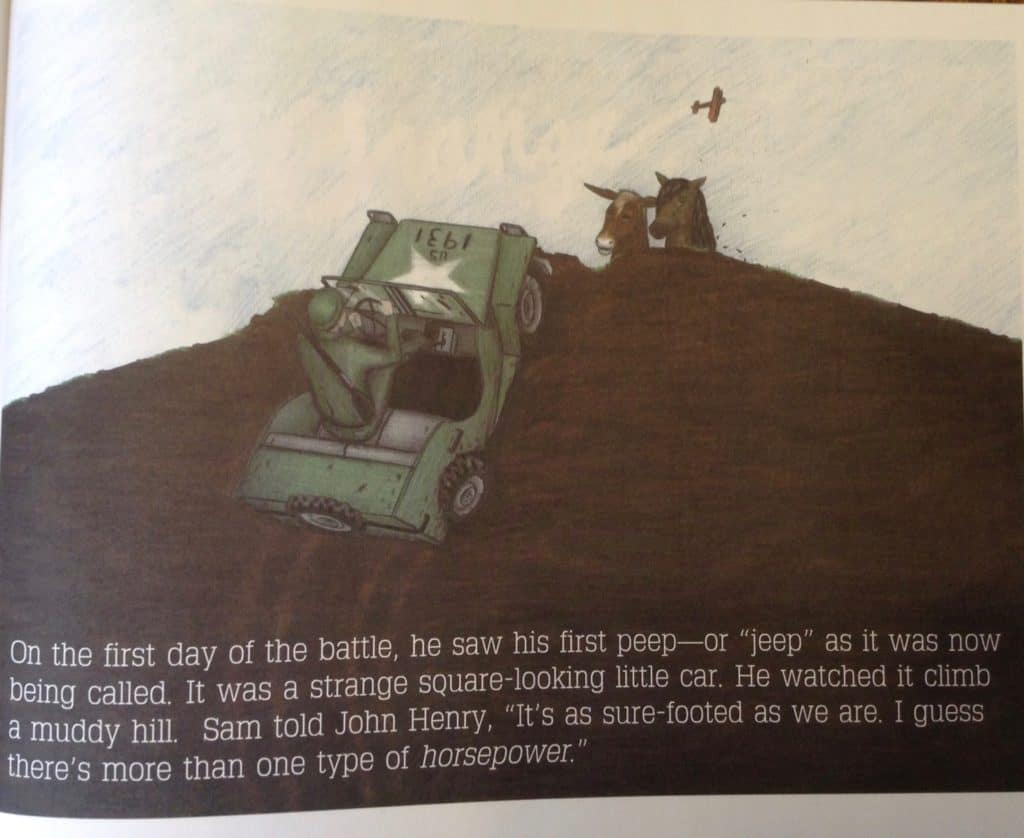
Add picture cards (horse / jeep)
Model answers orally before writing
Enrichment
Add a reason why the change happened
Write two complete comparison sentences
Research-based Instructional Strategies
To support fifth-grade students in meeting both English Language Arts and social studies standards, this lesson incorporates multiple research-
based, evidence-based instructional strategies designed to promote comprehension, critical thinking, and engagement:
Interactive Read-Aloud with Guided Discussion
The teacher models fluent reading and historical thinking while pausing to ask text-dependent questions, clarify meaning, and guide students
in making inferences and connections to historical context.
Think-Pair-Share and Turn-and-Talk
Students are given structured opportunities to think independently, discuss their ideas with a partner, and share responses with the class,
supporting oral language development and deeper comprehension.
Text and Illustration Analysis
Students examine selected illustrations alongside the text to analyze how visual elements contribute to understanding character perspective,
setting, and historical events.
Explicit Vocabulary Instruction with Visual Supports
Key academic and domain-specific vocabulary is taught directly using student-friendly definitions, visuals, and context clues to strengthen
reading comprehension.
Differentiated Instruction
Instruction is differentiated through choices in student responses (written, oral, or visual), the use of sentence frames, and visual supports to
meet diverse learning needs.
Collaborative Learning Opportunities
Students engage in peer discussions and partner activities to build understanding through shared thinking and collective problem-solving.
When available, instructional technology such as a document camera or interactive whiteboard is used to display the text, model student tasks,
highlight key details, and provide visual support to enhance learning.
Name: ________________________________________________ Date: _____________________________
Class: ___________
10
Then and Now – Uncle Sam: A Horse’s Tale
Directions: Using details from the story and illustrations, compare how the Army used horses in the past and how it
uses vehicles today. Write complete and thoughtful responses.
Category THEN (Past) NOW (Present)
Transportation
Role of Horses
Technology Used
Impact on Uncle Sam
Reason for Change
Student Assessment Rubric – Uncle Sam: A Horse’s Tale (Grade 5)
Student Name: ______________________ Date: ____________ Teacher: ____________________
11
Criteria 4 – Exceeds
Expectations
3 – Meets Expectations 2 – Developing 1 – Beginning
Understanding
of Historical
Change
Clearly explains
multiple accurate
changes between
past and present
Explains at least one
accurate change
Partially explains a
change
Limited or incorrect
explanation
Then and Now
Comparison
Compares past and
present with clear
details
Shows a basic
comparison
Comparison is unclear No comparison shown
Speaking &
Listening
Actively participates
and responds
respectfully to peers
Participates appropriately Limited participation or
listening
Does not participate
appropriately
Task
Completion
All work is
complete, clear, and
detailed
Work is complete Work is partially
complete
Work is mostly
incomplete
EXIT TICKET:
Name: ___________________________________________
Date_____________________________________________
Directions: Answer the question below before leaving class.
What is one thing you learned today from reading Uncle Sam: A Horse’s Tale.