Creekbank Stories

This Land Ain’t for Sale

Give me land, lots of land. Give me land, Lot’s of land, But don’t fence me in.     “This land’s their burying ground. They fightin’ o’er their burying ground.” -John Lee Hooker   One of the things that first astounded me about Africa was the land for sale signs. I stand corrected. The signs actually read, “This land is not for sale.” They’re everywhere. They outnumber actual “For Sale” signs five to one. This plot is not for sale. This house is not for sale by owner. There’s a reason for this: Land title is a very complicated issue in Africa, especially Uganda. Many homes and tukuls (huts) are built on land with no clear title. If you squat on a piece of land, it may eventually become yours. Even more confusing, many plots or compounds have multiple titles. Three individuals may have a clear title deed to the same parcel. That’s when the trouble starts. Someone puts a For Sale sign up on a piece of land, knowing there is an absentee owner. The new buyer purchases, seemingly in good faith, this spot for the family’s dream tukul only to learn it belongs to a woman in Kampala, a nearby church, and eight children who inherited it from their father. Each owner has a clear title. You’ve got a mess. Sadly, the latest buyer has probably lost their money, especially if any of the other owners have political clout. None of the owners will ever build on this plot. The only winner is the scoundrel who sold you the land. He’s probably the same rascal who sold to the others. Let the buyer beware. So to avoid these phantom sales, the owner posts signs that this land is not for sale, regardless of what any silver-tongued devil says. Africa has no copyright on land disputes. It seems to plague every culture, country and continent. Nor is it a recent development. Over three thousand years ago, Uncle Abraham left his land to calm a simmering dispute with his nephew Lot. I’ve seen various Louisiana land fights. Many involve neighbors. Friends who become enemies over the placement of a fence. Sadly, the worst land squabbles are inter-familial. Siblings at each other’s throats over family land. Few end well. Sadly, I’ve attended funerals where close family sat apart and refused to speak due to a hurt in the past related to succession and inheritance. I’ve always been fascinated with land. My dad was a land surveyor. Although I didn’t follow his profession, I inherited his love of the land and keen eye for geography. I love the 120 acres I share with my Iles kin. Two houses I love deeply—The Old House (circa 1892) and the Clayton and Mary Iles home (circa 1960) sit on this land. That land was homesteaded by my great great grandparents in the late 19th It’s special. But no more special than my family. Like Abraham, I hope I’d walk away before splitting kin. The family land I share in Dry Creek contains about twelve acres that is truly mine. My dad’s grandmother gave forty acres of homestead to him. My parents split it among my two sisters and me. My sisters, Colleen and Claudia, live on their parcel. My acreage sits back near the edge of the swamp. I’ve planted it in longleaf pines. That’s how it was when John Wesley Wagnon homesteaded it. I look forward to walking that land again in 2016. Checking my pines. Looking for deertracks. Picking a place for my fire ring and tent. As I walk the firelanes, I hope to remember that I don’t really own this land. It’s just on loan from God.I wish to be a good steward during my thin wisp of vapor.In fact, I don’t own this land. It owns me. I may put up a sign. This land is not for sale. Not because I’m worried about anyone selling it out from under me. Just a reminder that it’s family land. Land passed on to me that I’ll pass on to my sons and their children. Sell it? There’s not enough money in the world. This land ain’t for sale. My idea of a good time Is walking my property line And knowing the mud on my boots is mine. -Toy Caldwell   “Property Line” Tomorrow, I’ll share my favorite Dry Creek story about land disputes.  It’s called,  “The Friendship Lane” and is an inspiring tale of two families who knew what really mattered. [gravityform id=”5″ title=”true” description=”true”]

Homesick Water

I’m sure every road-weary man around that wilderness campfire never forgot the moment. That sacred moment. A gift of love delivered at great risk and cost. Homesick Water   It’s strange the things you miss on an extended sojourn. That’s especially true in Africa. The big question when a teammate is making trip to the U.S is, “Where’s the first place you’re going to eat?” Chick Filet or Logan’s? BK or a Big Mac? For me, it has a Louisiana flavor. Foreman’s sausage and boudin. Fried chicken at Fausto’s. A seafood platter at D.I.’s. with a Cajun band chank-chanking in the background. Crawfish. It’s been three years. It’ll be four before I’m home during crawfish season.   The tastes of home. My Mom’s steak and gravy. Always the Prodigal’s returning meal. Mom, don’t forget the Dry Creek chocolate pie and your homemade yeast rolls.   Sometimes, it’s a drink. A hot cup of Community coffee. I’ve had friends bring Community over here. It was good, but it’s best under the pines at the table with those you’ve loved the longest and best.   The desired drink can be water. Hometown water. I call it homesick water. There’s something about hometown water. I grew up on well water. Dry Creek water. That’s an oxymoron if ever there was.  I’ve every old joke about my hometown of Dry Creek. But Dry Creek water is special. We had out own personal well operated by an electric pump. Water wells are lots of trouble. They become waterlogged. You had to prime them. Freezes and wrapping the pipes and running a extension cord and electric bulb to heat the well. But it was the best water ever.   I always sniggered at my Shreveport grandparents bringing plastic jugs of their city water to Dry Creek. It astounded me that they preferred this chlorinated fluorided citified water over ours. A few years later, I was equally amused that brought empty jugs from Shreveport, filled them with Dry Creek water before returning north.   There’s an overlooked story in the Bible about homesick water. It involves King David. He’s a feast or famine monarch.  Either things are great or he’s in trouble. As this story begins, he’s the latter. On the run from his erstwhile enemies the big bad Philistines. A fugitive. Fleeing with his band of merry loyal warriors. One night, David and his closest allies, are camped in the wilderness. Sitting around a campfire. Telling stories. Missing home. In David’s case: Bethlehem. Exiled from home. An uncertain future. He was just plain homesick. The men in the campfire circle talked about what they missed. The King mentioned a little comfort food. Rather comfort water. Not just for any water. But home water. Campfires make you reminisce. And often you talk about things you miss. Water is a precious resource among refugees. I once camped at the foot of Mt. Katadhin, the northern terminus of the Appalachian Trail. My campmates were a scraggly lot of thru-hikers who’d walked from Georgia to reach this spot. That’s over 2000 miles. They say 5 million steps. The next day would end their journey. They didn’t talk much about the miles they’d covered. They discussed the food they were going to eat off the trail. One of them said, “I’m going to eat so much ice cream, it’ll make my Momma fat.”   King David, who was a refugee at this moment,  didn’t mention ice cream. He probably licked his lips, “Boy, if only someone would bring me a jug of that water from the well in my hometown of Bethlehem.” It seemed an off hand remark. I don’t thing he meant for his men to act. But he was the king. As is, “Your wish is my command.” I wonder if he noticed three of his bravest warriors slip away into the darkness. I’m not sure how far it was. Or how long it took. Was it all stealth or hand-to-hand combat to pass twice through enemy lines. But they returned proudly holding a jug of that hometown home well water. I’d like to have seen David’s reaction. “What’s that, men?” One of them handed it to their king. “A jug of your Bethlehem well water.” I’d like to have seen their faces when King David poured it out on the ground. “I cannot drink this water. It’s sacred. It represents the blood of these men.” He poured it out. The scriptures elaborate, as to the Lord. A drink offering. I’d like to have been there. A holy moment. A sacred moment among a group of violent men. Knowing David, I imagine there were tears. Men among men. Around a campfire. One of my favorite places to be. I’m sure every road-weary man around that wilderness campfire never forgot the moment. That sacred moment. A gift of love delivered at great risk and cost. Home water. Home sick water. I can taste it now. You can read this obscure but stirring story in II Samuel 23. Receive notification when new blog posts are published. If you enjoyed this story please share it with the social media buttons at top of the post. Subscribe to our monthly Story Letter and weekly podcast. . Follow us on: Curt’s Facebook Enjoy our Boards on Pinterest Twitter:  @curtiles    #UpCountry  #goChadan The Creekbank AmazonPage Instagram curtiles We always enjoy hearing from readers like you. [gravityform id=”5″ title=”true” description=”true”]

The Week That Was: Wow!

A Word from Curt It’s Saturday. Always a good time to look at the past week. Here are photos from the week that was in Africa. Tucked in is a story you’ll enjoy:  3 Apes I’ve Known. Enjoy! DeDe with our friends Kristen and Mary Margaret in Nairobi. 3 Apes I’ve Known Monkeys can be cute. They’re always interesting. But any African will tell you they’re trouble. I have three friends that illustrate this. Bad bad Leroy Brown Baddest man in the whole dang town. Badder than old King Kong Meaner than a junk yard dog. -Jim Croce. Bad Bad Leroy Brown. I’ve been with BBLB numerous times. He’s been more rambunctious each time. BBLB lives at the Nile Ferry Crossing at Paara in Murchison Falls NP.   He’s the Alpha Male of a large baboon troop on the north bank of the long river. He’s a bluff, aggressive, robber baron. Ask Charlie Bailey, Todd Burnaman, Ken Farmer, Ethan Bossier, Colleen Glaser, Ask the German lady who left her window down. She’d turned her back on her car and instantly Leroy was in the open window, pilfering a loaf of bread quicker than you could say, “Jim Croce.” I pointed and stuttered.   “Lady. Lady. Baboon. Baboon.” Todd can really imitate my early warning system call. I’ve seen Leroy steal milk, sandwiches, tear open roof top carriers. He went after Aaron Watkins then grabbed my car door with his grimy little hand. It was a pitched battle to close it. He was strong.   Leroy does understand what a rock is. I try to keep one handy at the ferry. A worker there said, “He’s not scared of a Mzungu but when we pick up a rock he knows we mean business.” I’ll be back in Leroy’s territory in July. Can’t wait to introduce John Gray to Leroy Brown. Look for an update.   “Paara” means hippo in the local Alur language. We usually have several close encounters with hippos during our visit. Nothing like this. I need your help: Could someone Photoshop Charlie Bailey’s head (on the boy not the hippo).     Meet Snag   Snag is a second cousin once removed (does anyone understand this?) from Bad Bad Leroy Brown. Snag lives along the highway at Karuma Falls, another crossing on the Nile. He and his family run a business on the north side of the river. Chasing Baboons: The Confusing Nile River. First of all, experts still dispute the actual source of the Nile.  Some trace it to small streams in Rwanda/Burundi that flow into Lake Victoria. Most agree that the real Nile begins on the NE shore of Uganda at the town of Jinja. The Nile flows north at its source, but during its journey to Lake Albert it flows west. Repeat this three times: The Upper Nile is in the Southern portion of Central Africa. The Lower Nile is where it flows out of Egypt into the Mediterranean. The Victoria Nile is the section from its origin (Lake Victoria, Uganda) to Lake Albert. From there it’s known (you guessed it) as the Albert Nile. As it enters South Sudan, it becomes the White Nile. And at Khartoum, Sudan, it joins with the Blue Nile and becomes the Big Nile. Then it flows 1000 miles through the world’s largest desert with no tributaries or reinforcements, feeds XXXx million people in Egypt and spits in the eye of the Sahara as it flows into the sea. Now that’s a River. And along its Upper Section at one of the world’s most beautiful spots, Snag intimidates traveler and tourists who stop for a picnic or photo. Snag harassed my sister Colleen into getting in the the truck, locking the door, and eating her sandwich in peace. Some of us aren’t as prudent and choose to eat our sandwich with one hand and the proverbial rock in the other. Snag is easy to spot. He didn’t have the benefit of an orthrodonist during his baby ape days. If you meet him, you won’t forget him. Meet B.B.   Urban apes are just as much trouble. In fact, truly wild apes are afraid of humans and fade into the bush/forest before you see them. It’s when they lose their fear of humans, and learn to enjoy leftovers that they become aggressive and  even dangerous. I’d compare it to the black bears in the Smokeys. I’ve got some good bear stories from hiking there. But that’s another mammal on another continent that’ll have to wait for another blog. Our hometown of Entebbe is the site of Uganda’s International Airport. Many non-Africans live and work in the area. They (we) always are enthralled with the Vervet monkeys found throughout the city. Until we have a close encounter of the real kind. At a hotel, I recently saw a vervet snatch a banana off a man’s breakfast plate in the time it’d take to say “Idi Amin.” Vervets are sneaky. They’ll steal into a house and expertly smash and grab. I was at a Nile River hotel, enjoying a sunny afternoon with my door open. Two vervets stuck their head in and before I could say, “Dr. Livingstone, I presume” one had cleaned out the sugar packets by the coffee pot. Definitely an inside job. He knew right where the goodies were. It wasn’t his first rodeo.   The vervet in the photo lives along Entebbe’s main highway. I see him often while walking and always give him a wide berth. I’ve named him “B.B.” and it’s not because he plays the guitar. Rest in peace, B.B. King. You were always a favorite. I’m so sorry your family is fighting over your legacy before your body’s in the ground. Sounds like the theme of a good Blues song. Back to B.B. the Vervet Monkey, it was easy to name him. If you examine his photo, you’ll parse what his initials are for. And B.B. will jump off that post and snatch a

At Garissa Part III

Tested faith can become stronger faith.   A word from Curt Today concludes the third part of a story,  “At Garissa.” It’s built around a recent tragedy in Kenya where Al Shabab terrorists killed nearly 150 college students. It is a harrowing story that has shook this part of East Africa. In Part I, I spoke of tough questions I’ve had about how and why a powerful God would allow this killing of innocents simply because they were non-Islamic and/or Jesus-followers.  It’s a transparent examination of my heart and faith. Tested faith can become stronger faith. Part II is an essay on what to do with our doubts.  The choice is to tamp them down, feed them, or bring them out in the open to Jesus. It’s a reminder that health, wealth, or even life isn’t promised to followers of Jesus. However, we are promised his presence and when it comes down to it, that is enough. I’m nervous sharing Part III.  It examines the question of why pure evil seems so rampant in our part of Africa. I’ve now made six short term trips to Africa as well as lived here for two and one half years.  I’ve seen the results of violence and strife in Rwanda, Ethiopia, DR Congo, Liberia, as well as our current area of South Sudan and Chad. We’ve also the very best of each of these countries. Forgiveness returned for hatred. Optimism where hope seems forlorn. The grace of God extended across tribal and cultural lines. We often use the term,  T.I.A.  This is Africa. But T.I.A can also mean This is America.  My home country, that I love so dearly, is not within its own instances of evil. It just seems it is so much more out in the open. In the U.S. it can be subtle but just as deadly.  And our country’s history, while positive in so many ways, reveals how we’ve treated so poorly those in the minority. I won’t ask you to enjoy today’s post.  But it is an important part of our journey. And tomorrow, we’ll return to the lighter side with my 3 favorite Ape Stories.  You’ll enjoy meeting B.B., Bad Bad Leroy Brown, and Snag.   We’ll also share photos and tidbits from the past week in Africa. To my early readers:   I depend (and welcome) on you to quickly notify me of any errors, glitches, or confusion in my blogs. Simply post a comment and we’ll correct ASAP. At Garissa  Part 3   The Garissa incident is the tip of the iceberg on a bigger question: Why is there such raw evil in our part of Africa? The pure evil. Going into a school and killing innocent helpless human on account of their religious beliefs. Cowardly Unadulterated Evil. There are a lot of strong words I could use. Islamic extremism is evil. I live between two of the extreme elements. Al Shabab to our east causing murder and mayhem in Kenya, Uganda, Somalia, and beyond. As I’m writing this, I can look out the window in Nairobi and see Westgate Mall where a similar group killed over sixty innocents in a similar act. Recently in our Ugandan capital city of Kampala, a hooded assassin murdered a government prosecutor on the streets. Her crime? She was chief prosecutor on the ongoing trial of the Al Shabab attacks in Uganda during the 2010 World Cup. They killed her in front of two of her children. This is what we live on the edge of in East Africa. Turning to Western Africa, there is Boko Haram. During our recent sojourn in Chad, I felt the ripples of this evil group. Once again, killing in a cowardly way. Hiding behind masks. I’ve lived among Islam for over two years. Most Muslims are peaceable hardworking citizens. But there is a cancerous perversion of this religion that is purely evil. It’s no better or worse than what happened in so-called Christian Rwanda. Pure evil. What’s still happening in Democratic Congo as an outgrowth of Rwanda. Pure evil.   Genocide in Sudan, Darfur, Central African Republic. Pure evil. The blood diamond wars of Liberia and Sierra Leone. Greed mixed with pure evil. The evil of an ill-named group called “The Lord’s Resistance Army.” The LRA. They’ve let a trial of blood across Uganda, South Sudan, Congo, and Central African Republic. Claiming goals of building a government on the Ten Commandments, they’ve kidnapped children. Making them kill parents or siblings to harden them into child soldiers with no place to go back. The terrible war-time practice of raping woman as a tool of war. Pure evil beyond words. The selfish civil war in South Sudan. Killing someone because of the tribal markings on their forehead. Dozens of reasons for this ongoing conflict but one suffices: Pure Evil. I want my way and this country can go to hell if I don’t get it. It’s sin. Jesus was correct. “The thief comes to kill, steal, and destroy.” The thief, Satan, is here. And he’s hard at work. I see the results of his kill/steal/destroy strategy in refugee camps and IDP facilities. They’re the innocent trampled grass from the elephant’s fighting. I’ve come to believe that the only solution to South Sudan’s war is the power and peace of the Prince of Peace, Jesus. Why is this part of Africa I love seemingly so eager to embrace violence and senseless killing? I don’t know. What does God allow this? Once again, I have no answer. Finally, I return to that classroom at Garissa University where the three girls are kneeling. One pleads, “Jesus, save me” and see dies in a hail of bullets.   Did her final words make her a martyr? Secondly, and most importantly, was this a salvation prayer? Hopefully, she had made this decision to follow/trust/call on Jesus years ago. Hopefully, it was the pattern in her life: turning to Jesus in every crisis as well as every opportunity. Mere words don’t

At Garissa Part II Where to Take our Doubts

        It’s a decision. Where do we take our doubts and questions? We can keep them bottled up and stew in our own juices. Or we can take them to Jesus. It’s a decision. A word from Curt Wow.  Yesterday, we began a three part essay on trying to understand evil and tragedy and God’s providence. If you missed it, read At Garissa Part 1 Thanks to all who commented and shared yesterday’s article. To our early readers:   I depend (and welcome) on you to quickly notify me of any errors, glitches, or confusion in my blogs. Simply send me a message/comment and we’ll correct  ASAP. At Garissa Part II What about Doubts? As I look squarely at my questions on why God would allow a team of killers to murder nearly 150 Kenyan students due to their allegiance to Jesus (or lack of allegiance to Islam) I go back to a quote of another Jesus follower who bravely dealt with doubts and despair. Charles H. Spurgeon, England’s “Prince of Preachers” was like me in being prone to depression.  He is attributed with this statement: God is too strong to be confused. And too kind to be cruel. So when I cannot trace his hand. I simply trust his heart. That’s where I’m at. I do trust Him. Jesus has never disappointed me in my forty-plus years of following him. Like Peter, when the crowds began leaving Jesus, I have nowhere else to turn. “Master, we’ve left everything to follow you.  Where would we go? You have the words of life.” Peter was all in. No plan B. The ships had been sold. The decision made. I have decided to follow Jesus. No turning back, no turning back. That’s where I’m at. And I’m completely at peace with that.In spite of doubts, questions, and confusion. No turning back. No turning back.  Where do we take our doubts? When we are shaken by the world, we run with our questions to God. Like any good Father, he doesn’t mind our approach, even with our doubts and fears. As a Dad, it never bothered me when our boys questioned us about a rule, event, or decision. I think God is big enough to take on our questions. After Brad Robinson’s untimely death during Summer 1999, a wise Christian counselor told our grieving Dry Creek Camp family,  “You’ve got lots of questions.  Take them to God.  He’s a big boy and can handle them.” At first, her way of putting it offended me: “God’s a big boy.” But her concept was right.  We take our questions to him. He is big enough to take our doubts, fears, and words. In fact, he wants to hear from us. It doesn’t guarantee easy or quick answers. But it’s a good place to take them. And leave them.  (Not an easy task but a necessary one). “Lord, I believe.  Help my unbelief.”  What a fine prayer by a desperate man who ran to Jesus for relief of a dying son. It wasn’t swatted away by Jesus. It was answered with grace and power. Jesus. He’s the image of the invisible God whom I believe takes on our doubts in the same way. Whether it’s a school tragedy in Kenya or Colorado. A natural disaster in Nepal, Indonesia, or New Orleans, we can approach our Savior. “Come unto me that you that are heavy-laden and I will give you rest.” No answers are guaranteed but the peace of God, a peace that “passes understanding” is waiting. At Garissa  Part 3 tomorrow: Why does pure evil seem so rampant in Africa?   Receive notification when new blog posts are published. If you enjoyed this story please share it with the social media buttons at top of the post. Subscribe to our monthly Story Letter and weekly podcast.. Follow us on: Curt’s Facebook Enjoy our Boards on Pinterest Twitter:  @curtiles    #UpCountry  #goChadan The Creekbank AmazonPage Instagram curtiles We always enjoy hearing from readers like you. [gravityform id=”1″ title=”true” description=”true”]      

At Garissa Part I

It’s only in the testing of our personal faith that it becomes more solid.     A note from Curt I’m in the last days of exile in Kenya. Ready to get back to our Ugandan home. Thanks to all who prayed for us during my illness.  I’m feeling better than ever and full of gratitude. For the next three days, I’ll be sharing a post entitled “At Garissa.” It’s as transparent as I’ve ever been. As you read it, don’t think I’ve lost my faith. My faith in the goodness and power of God is stronger than ever. It’s only in the testing of our personal faith that it becomes more solid. Africa will test your faith like nothing else. We’ve seen the good, the bad, and the ugly and everyday is a privilege to serve here. At Garissa Part 1 Statistics don’t move us like a story. We glance at the headline. “147 dead in terrorist attack in Kenyan school.” But it’s easy to be callused to far away events. A quick news cycle moves on to the next tragedy, scandal, or disaster. But a personal story is different. A story has the potential to bore into our heart. That’s why I’m been troubled since last month’s event in Kenya. As I’ve read about the Al Shabab attack on Garissa University in NE Kenya, one story has stood out. A lone survivor told it. All of the others who were present are dead. Terrorists and students alike. An armed gunman stood over three kneeling Kenyan students. Three girls, among hundreds, caught in the wrong place at the wrong time. As they pled for their lives, one cried out, “Save me, Jesus.” That was when the Islamist gunman killed her and the other two. Within a few hours, the terrorist was also dead “Save me, Jesus.” Her life ended in a plea. A prayer. A prayer to the Jesus whom I love, serve, and believe is the all-powerful Son of God. I’m going to be transparent. I’ve struggled with this since read about the killings. I have a very creative imagination. It’s the source of all kinds of stories, tales, and illustrations. When I’m writing a novel, I can see it all happening.There’s a movie playing in my head as my fingers type. That vivid imagination also can haunt me. It was as if I was there at Garissa.  There watching the last moments of that girl’s life. “Save me, Jesus.” I’m working through a few deep things. Because expression—through writing—is my therapy, I’m sharing them.They may never see the light of day. Only my closest family may see this. Author’s note: after much revision and prayer, I feel led to share this. There are questions I have. 1. Why didn’t Jesus answer her prayer?  If Jesus is who He says he is, he has the power to stop or cause any situation. The student asked him to save her.If He could, why didn’t He?First of all, I believe he could have and can. The Lord’s arm is not shortened. He has no limitations. I do not believe, like the Deists, in a God who wound up the universe like an alarm clock ,then stepped away.So I believe God/Jesus could’ve stopped the massacre.But he chose not to. Back to the question, why didn’t he? I have no simple answer to this. I figure my answer might not come until I reach the other side of the curtain.I suspect when I get there, no explanations will be needed.But on this earthly side of the curtain, I’m troubled.So I search the scriptures.I pray to this same Jesus.   Here’s what I feel the Bible reveals: God does often choose to rescue. The Bible is chock full of “Save me, Jesus” prayers that were answered: Peter    “Lord, save me.”   A sinking man on the sea.  Answered. Blind Man Bart   “Lord, I want to see.”  Sight returned. Midnight in the prison.  Singing. Praying. Earthquake. Release.   But, sometimes God chooses not to answer the heartfelt sincere prayer. “Father, if possible, remove this cup from me.” Could there have been a pregnant pause between this plea and “Your will be done”? No answer. It seems (to me) as if God didn’t answer. A passionate prayer—so passionate Jesus sweated blood—that seemingly wasn’t answered. There’s another Jesus prayer within the next twenty-four hours. “My God, my God, why have you forsaken me?” It’s a prayer. A plea. Even a prophecy. It’s a dark sky prayer. Prayed at the moment when the Father turns away from the Son. And as far as we can see, it’s unanswered. Thankfully, unanswered. Due to that dark day, we can walk into Heaven cleansed in the blood of this same Jesus. The story of the early church, the book of Acts, is replete with answered and unanswered “Save me, Jesus” prayers. The church prays. Peter is delivered. James is arrested. The church prays. Herod kills James the Son of Zebedee.   Stephen stands tall.   He dies in a hail of stones. Praying that same kind of Jesus faith prayer. “Forgive them . . . they don’t know . . .” Paul, a witness of Stephen’s death, converts, and then stands tall. He faces death by mobs repeatedly. Even gets the stone treatment, yet walks away. That’s an answered prayer. The protection of the hand of God. Eventually, Paul, Peter, and most of the leading followers of Jesus meet a violent death. I’m sure they prayed for deliverance. Who wouldn’t? Jesus, save me. The ax falls. The cross is lifted. The sword strikes. Where was their Jesus then? I believe in my heart he was right there. Like at the moment of Stephen’s death, the martyr looks up and proclaims, “Look, I see Jesus standing at the right hand of God.” No sitting. But standing. In a position of welcome. Empathy. Presence. I recall the story of Cassie Bernall. She was part of another school massacre. Columbine, Colorado. It shook our nation.  Like

New Blood II: Dry Creek to Uganda

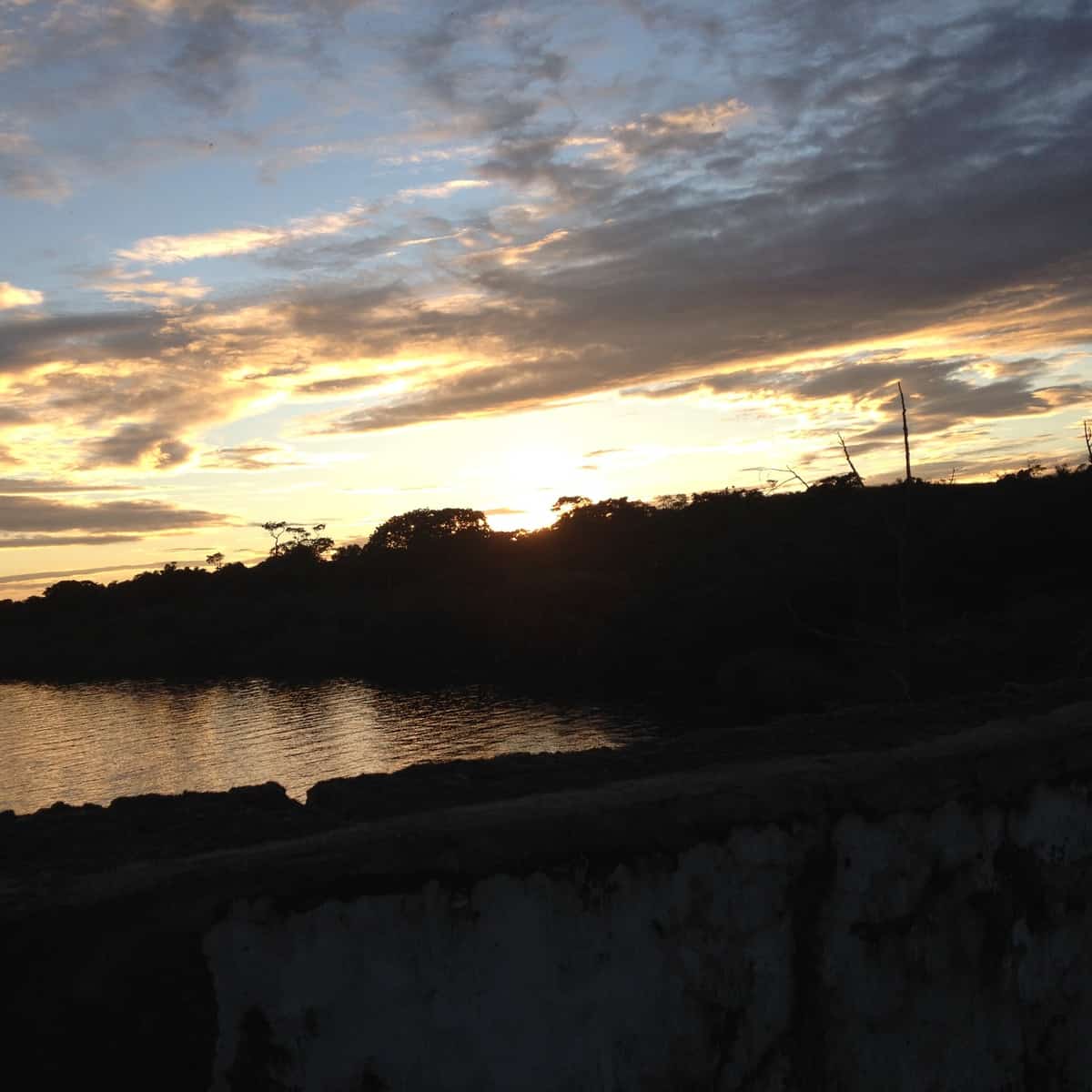
  Sunset on Banda Island, Lake Victoria Uganda New Blood II: Gotta have it. Yesterday, we shared about the need for new  blood in any organization and ministry. If you missed this blog about our new team member, JD Hull, and a guitar player named Steve Gaines, you can access it at   The second story is from Louisiana as well as Uganda. Recently, DeDe and I watched Todd and Jessica Burnaman arrive through the Entebbe airport. We picked them up at the airport last Monday night. They arrived before midnight and flew out early the next morning.   The Burnaman’s are on the sixth trip by our church in less than two years.   Todd is on his third Ugandan trip and Jessica on her second.   Like JD Hull, Todd is new blood in my life. He is the manager of Dry Creek Baptist Camp, where he succeeded me after my fourteen years as leader.   I had the privilege of mentoring Todd beginning in 1999. He provided new blood in every position we placed him in. This culminated in his coming aboard as camp intern.   In this full time capacity, Todd and his new bride, Jessica, provided new blood at the camp, our church, our school (where Jessica taught with my wife DeDe) and our community.   When Hurricane Katrina, followed by its evil twin sister Rita, hit Louisiana, in 2005, Dry Creek Camp went into ministry mode. We took in hundreds of Katrinaites and within a month took a direct shot from Rita. I write about this time in the short story collection, Hearts across the Water. We dealt daily with every crisis under the sun during, as well as after, the storms. Todd showed his maturing leadership in dealing with the daily challenges. Late 2005. That’s when God began the process of moving me beyond the Camp. It’s hard to explain but I felt the Lord’s leadership prodding me that my tenure at the Camp was ending. This is how I felt God speaking into my life: You’ve done your job here at the Camp. I’m releasing you for the next steps of your journey. I’ve blessed your time here, but if you stay on beyond my timing, I cannot bless this Camp the way I wish. I knew I was being released. It was time for the next season. I had no idea this release would lead to my writing this blog from Lake Victoria in Africa.   I knew Todd was ready to lead the Camp to the next level. At the same time, I didn’t view my job as anointing my successor. The wonderful trustee board at Dry Creek realized that Todd was the man to move the Camp on. In mid-2006, they wisely selected him as manager.   In my final act at the Camp, I gave Todd an important gift. We had a large gathering of our many friends and supporters. Hundreds of folks gathered in the Dining Hall as I made a short speech. I held up a sharp hatchet. As I handed it to Todd, I said, “Now, Todd, folks will be saying to you, ‘But that’s not the way Bro. Curt did it.’ ” I did a tomahawk chop in the air. “When they say that, get this hatchet out and trim off the end of their little finger. They’ll stop that second-guessing pretty quick.” It was a joke but I’d made my point. Sometimes we need to get out of the way and let new blood lead the way. New blood. We all need it.    

What if . . .

  What if . . . What if you and your church decided to find the Uduk People. As you can see from the map this group is located in the Dallas/Fort Worth area.   You wouldn’t need a passport. Just the courage, energy, and curiousity to go find the Uduk in the Metroplex. What if  . . . You could be part of an Uduk coming to follow Jesus. And passing that new belief on to the home folks along the Ethiopian/South Sudanese border. What if  . . . There are those in this area that are working with unreached people groups. I pray that the Uduk that live in the United States hear the Word of God and come to faith. As result of their new life in Jesus, I pray that the Uduk believers will share the gospel with their families in Ethiopia, Sudan, and South Sudan. Pray for the Uduk of the United States Affinity Bloc: Sub-Saharan African People Cluster: Nilotic Language: Uduk – (udu) Alternate Name(s): Primary Religion: Islam Country: United States Also found in: Ethiopia; Sudan; Population: 375 Global Population: 20,875 Progress of the Gospel: Unengaged and Unreached Global Status of Evangelical Christianity: 1 Overview: The Uduk of United States, numbering 375, are Unengaged and Unreached. They are part of the Nilotic people cluster within the Sub-Saharan African affinity bloc. Globally, this group totals 20,875 in 3 countries. Their primary language is Uduk. The primary religion practiced by the Uduk is Islam, a monotheistic religion built around the teachings of the Qur’an and of the prophet Muhammad. Bible Translations: Available Jesus Film: Not Available Gospel Recordings: Available Radio Broadcast: Not Available  

Saturday Shots and Stories

  Saturday,  23 May 2015 Nairobi, Kenya   Currently church groups are wary of venturing into many parts of the world where we work. Due to the ongoing South Sudanese war,  we only recommend that groups consider going to the two SS locations we have field personnel:  Taposa Land and Dinka Rek Country. Kakuma Refugee Camp in Kenya (scene of much of the recent movie, ‘The Good Lie’) is currently stable but recent terrorism in other areas of Kenya has discouraged American volunteers. The work in Chad is in the foundational stage and it will be time before we’re ready for groups. But there’s an area that is both stable and ripe for the gospel:  northern Uganda. The twelve settlements comprising what is called “Adjumani Camps” are open and ripe for Gospel opportunities. We have trusted pastors both in and near the Camps who can work with American churches. Bible schools are sprouting up in these camps. The Jesus Film and audio Bibles are finding receptive ears and hearts. Come join us.   I have this countdown clock on my computer. It tracks the time we have left before our season in Africa ends and we return to the United States. The initial reaction might be,  “It looks like y’all are counting down the days and can’t wait to leave.” That’s not why I’m using this clock. DeDe and I have a strong desire to finish strong. To leave Africa with having put it all “out on the court.” To hold nothing back. To hit the finish line in a steady sprint. Pray for us that in this remaining months, we will “redeem the time.”   You’ll laugh at the FillerUp  video.       Receive notification when new blog posts are published. If you enjoyed this story please share it with the social media buttons at top of the post. Subscribe to our monthly Story Letter and weekly podcast. Follow us on: Curt’s Facebook Enjoy our Boards on Pinterest Twitter:  @curtiles    #UpCountry  #goChadan The Creekbank AmazonPage Instagram curtiles We always enjoy hearing from readers like you.    

Perseverance

  A word from Curt The highlighted red text was written last week: As you read this, we are flying into western Ethiopia. We’ll spend the next week in refugee camps of Gambela Region. We need you persevering in prayer. When you pray, you are holding the rope. When you hold the rope, we’re willing to go down in the well.   Instead, I’m in a Nairobi, Kenya hospital. I’ve battled an African stomach bug for two weeks.  Our medical leadership brought us to Nairobi for further testing. I’m slowly improving. We’ll keep you in the loop so you can pray with insight. Whether we’re in Ethiopia, South Sudan, or Nairobi we need you holding the rope. And that’s best done with prayer.       Our friend Donna Rhymes is a great encourager with her words and timely notes. With her permission, I’m sharing a recent post about a good word:  Perseverance “Perseverance is bearing up under the load. It doesn’t mean coming out of a trial or being freed from the load, but it’s continuing to walk and trust while under the load.   God is faithful to provide the strength to do so.   We will make it by His strength, compassion, and love.” “Blessed is a man who perseveres under trial; for once he has been approved, he will receive the crown of life which the L. has promised to those who love Him.” (James 1:12)  

Though dead, he speaketh still . . .

A word from Curt Today is a travel day Up Country. Upcountry is that part of Uganda above the Nile River. It’s Wild. Open. Rustic. Beautiful. Frustrating. Pray for Charlie, Shane, and me as we travel. I can’t wait to show Shane Wilber this spot on the road north.   David Platt is the new leader of our organization, the International Mission Board. Platt, who is best known for his challenging book,  Radical, recently attended a meeting Germany. His words below are worth repeating about the Great Reformer, Martin Luther: Platt shares, All of this leads me to the main thing I want to share with you. When I was in Germany last week, I had an opportunity with some of our leaders to visit Wartburg Castle, the place where Martin Luther was taken for protection after he testified at the Diet of Worms, and also the place where he translated the NT into German. As I considered the immeasurable influence this one man had (and still has today) on the world for the glory of our Father, I was reminded of a quote I once read from him when he was asked how he played such a pivotal role in bringing about such massive reformation. Luther’s response was classic. He said, “I simply taught…and wrote [the] Word; otherwise I did nothing. And then, while I slept, or drank Wittenberg beer with my Philip (Melanchton) and my Amsdorf (Nicholas von), the word so greatly weakened the papacy that never a prince or emperor did such damage to it. I did nothing. The Word did it all.” Aren’t you struck by the simplicity of that statement? When Luther was asked how he brought about reformation, he simply said, “I read and taught the Word, slept, drank beer, and the Word did all the work.” Now let me be clear: this is not my attempt to advocate a new alcohol policy! But it is my attempt to remind us that the Word of our Father is powerful, and to encourage us to arrange our lives and leadership in such a way that we depend on His Word to do the work. That way, when anything good happens through us, it will be clear: it wasn’t us who brought about this good; it was His Word that did the work. As I thought about Luther’s dependence on the Word, I was reminded of George Muller in a similar way when it comes to intercession. When I first read Muller’s biography, I recall being struck in a similar way to how I felt when I read Luther’s comments. Many of you know that Muller cared for thousands upon thousands of orphans, and he did so by never publicizing (or allowing any of those around him to publicize) the need for financial resources. Instead, Muller set up his organization to revolve around dependence on the Father through intercession. I was overwhelmed when I first read his biography and heard Muller describe the reason why he started the orphanage. He wrote in his journal, “If I, a poor man, simply by [intercession] and [belief], obtained, without asking any individual, the means for establishing and carrying on an Orphan-House: there would be something which, with the [Father’s] blessing, might be instrumental in strengthening the [belief] of the children of [the Father] besides being a testimony to the consciences of the [lost], of the reality of the things of [the Father}. This, then, was the primary reason, for establishing the Orphan-House…The first and primary object of the work was, (and still is) that [the Father] might be magnified by the fact, that the orphans under my care are provided, with all they need, only by [intercession] and [belief], without any one being asked by me or my fellow-laborers, whereby it may be seen, that [the Father] is faithful still, and hears [intercession] still.” (That quote is a bit hard to securitize, but I think you get the point!) In other words, Muller said that the primary purpose for starting an Orphan House was not to care for orphans. Instead, his primary purpose was to design an organization that would be a clear testimony to all that the Father is faithful to answer the cries of His children.   As I have thought about Luther on the Word and Muller on intercession, I have been challenged in the way I think about our organization. I want us to have immeasurable influence in the world for the glory of our Father. I want us to make the good news known directly and indirectly to millions of people who have not yet been reached by it. But I want us to do all of this in such a way that it’s clear to everyone that His Word did all the work, and all of this happened only because the men and women of the Father in our worldwide family were desperately dependent on His power in intercession. So worldwide family, let’s set up our lives and leadership so that this commentary might mark us. Let’s hold fast to His Word in everything we do, and let’s speak it boldly wherever we go. And as we do, let’s all fast and intercede (each and every one of us pleading before the Father to do what only He can do!) that indeed we might have immeasurable influence for the spread of His good news. -David Platt. Learn more at Platt’s Radical Together website as well as www.imb.org          

The Most Popular Birthday and My Reading List

Reading friends, Today is a brief blog. I’ve been sick all week with a viral digestive bug.  Pray for healing.  I leave Saturday for a trip Up Country with my home church in Louisiana. Two things are on my mind and heart: One: Birthdays in South Sudan Two:  Books I’ve been reading.   Birthdays  We’re working on Visas for an upcoming trip to Ethiopia.  Edward Dima is president of our Baptist Convention of South Sudan.  Edward and Ding Lual are traveling with us to the refugee camps of Gambela Region,  Ethiopia. Edward supplied me with his full name, passport number, and other dates. One date jumped out:   date of birth:  January 1, 1969. Edward is one of the thousands of young South Sudanese who walked across their country during the midst of the Civil War. They are known collectively as The Lost Boys. When they finally arrived in Ethiopia and then Kenya, they were given identity papers.  Few knew their dates of birth, so the organizations assigned most of them January 1. As in 1-1-69. If you’ve seen the recent movie,  “The Good Lie”,  the Lost Boys (and Girls) were told,  “It’s a good date.  There will always be a celebration on your birthday. I was reminded that my friends like Edward, Ding, and dozens more have experienced things that I will never understand. They are my friends. They are my teachers.   LLL    That’s “Life Long Learner.” It’s a major goal of my life as I inch closer to sixty. Reading is the avenue where I strive to learn, grow, and be stretched.  The image (from my Kindle) above shows some of my recent books. Several comments: The book in the center of the page is What is the What. It’s the best Lost Boys of Sudan book I’ve read. It’s worth a reading just to understand the origin of the title. You can see a few of the Bible versions I read.  I get a daily dose of Proverbs (reading the chapter that confirms to the day of the month).  I’m also digging into the Gospel of John, Joseph in Genesis 37-50, and much more. I enjoy biographies.  Two of listed here.   Wilson is an excellent study of one of our most complex and important presidents. Rebel Yell is a recent award-winning biography of Stonewall Jackson.  I’m currently in the midst of it.  Wow. Many of the early African explorers stories are free on Kindle.  I’ve read of Livingstone, Speke, Baker, Burton, and more. It helps me understand this area that is currently our home.  Baker’s Discovery of Lake Albert comes alive as I drive through the very areas he wrote about. I’ve always loved history.  An Army at Dawn is about World War II and our American forces in north Africa.  Two American Indians history make the list.  They tell the stories of Quanah Parker (Commanches) and Red Cloud (Sioux). Self-help/improvement books are always on my list.   The Happiest Life and unique Japanese-inspired The Magic of Tidying Up are neat (pun intended). I use Evernote daily and am always trying to learn more about this tool to organize the paperwork of one’s life. Two of the best books I’ve read (and am currently re-reading) are: Essentialism  by Greg McKewon and The War of Art by Steven Pressfield. All the Light We Cannot See is the best novel I’ve read recently. I share this titles simply as an accountability tool that I’m trying to live by my “LLL Motto.” What are the best books you’ve read recently? [gravityform id=”1″ title=”true” description=”true”]        

Come on in, Mr. Johnson

Author note:  We recently ran this post and many of you enjoyed it. My new colleague, J.D. Hull, went to meet Mr. Johnson and the excellent photos included here show his artistic eye and touch. In addition to photography, J.D. is an excellent writer.  You can follow his blog at http://www.jdhblog.net/. A Word from Curt Providence. It’s a good word. A reminder that God is always working. Always present. No encounter is by accident. Everything is part of the Plan. Like in the story below.   Come on in, Mr. Johnson He’s hunched over the vise in the cramped corner of his shop near Uganda’s Lake Victoria. Mr. Johnson is making a key. No machine. All by hand. A vise. A file. A wall of blank keys. And skilled hands. That’s it. His business sign advertises: Key Cutter. Locksmith. But I beg to differ. He is an artist. An artisan. With his hands, experience, and a careful eye, he cuts keys, and it’s a work of art.   We visit as he works. Time flies as he files. As always, our conversation shifts to a spiritual one. Mr. Johnson loves talking about matters of the soul. The fact that we are age mates leads to a refreshing transparency. He looks up from his work. “I’ve rediscovered about knowing Jesus.” He’s got my attention. Especially the rediscovered part. He taps the half-finished key. “I’m learning that the way to salvation is through Jesus. My goal is having Him in my heart so I can have eternal life.” I smile. Here’s a locksmith that’s found the real key. The rasping sound of his file echoes in the small shop. I recall the proverb, “As iron sharpens iron, so one man sharpens another. Up to this point, I’ve not been happy about being at Mr. Johnson’s shop. We moved into a new house yesterday. In the space of twenty-four hours I’ve broken a box of glassware, stumbled around in the dark hunting light switches, and expertly locked a padlock that has no key. The latter is the reason I’m at Mr. Johnson’s. He finished making my spare keys and we drive to our house to look at the the keyless lock. In our truck, I hand my iPad to Mr. Johnson He reads aloud the passage I’ve highlighted: This is how we know that we live in him and he in us: He has given us of his Spirit. And we have seen and testify that the Father has sent His Son to be the Savior of the world. If anyone acknowledges that Jesus is the Son of God, God lives in them and they in God. He reads it in the steady musical British-Ugandan English I’ve come to love. He reads it a second time. If anyone acknowledges that Jesus is the Son of God, God lives in them and they in God. He places the tablet in his lap. “I love how John writes. His Gospel and letters are my favorites. He writes in a simple but powerful way that I can understand.” I agree. “John was Jesus’ best friend—present at all of the key events in Jesus’ earthly life. He even refers to himself as ‘The Disciple Jesus Loved.’ ” Once again, I think about the unique relationship between the Carpenter and Fisherman. Reaching our house, Mr. Johnson makes short work of the sturdy padlock. Within five minutes, he’s disassembled the lock pins and we’re on our way back to his shop, lock and pins in hand. It seems Mr. Johnson has only one thing on his mind: talking about Jesus: “I’m learning that knowing—having Jesus—in my heart is the only thing that matters.” He doesn’t mention denominations, rules, or material possessions.. He just wants to talk about Jesus. I hand the tablet to him. He reads another highlighted passage: And this is the testimony: God has given us eternal life, and this life is in his Son. Whoever has the Son has life; whoever does not have the Son of God does not have life. As he finishes, he adds an emphatic period. . . . whoever has the Son has life; whoever does not have the Son of God does not have life. Period. As we say back home, “Nuff said.” Jesus is enough. Period. He rubs his  close-cropped gray hair.  “I only wish I’d known this truth years ago, like you.” I grip the steering wheel. “I’m still learning about Jesus myself and today’s conversation has compelled me into wanting to know Him in a fresh way.” I use his verb. I want to rediscover Him. I feel compelled in rediscovering all of the reasons why I fell in love with Jesus as a teen. Back at the shop, a crowd is waiting for Mr. Johnson. He makes short work of my lock. I watch over his shoulder as he puts the lock in his vise, inserts a blank key, and begins reinserting the lock pins one by one, filing to the key to match it. I’m in the presence of an artist. An Ugandan who’s discovering—or rediscovering—the only thing that matters. I leave happy and sad. Happy that our conversation has occurred. “As iron sharpens iron . . . “ Mr. Johnson’s words have filed my heart. Sharpened the part of me called the soul. I’m sad that I’d wasted part of this day griping about a lock without a key. This keyless lock led to a memorable encounter that so touched me that I had to share this story with you. I believe hundreds—like you – will read Mr. Johnson’s story and the powerful inspired words of Fisherman John and be touched. That’ll make Mr. Johnson happy. Processing this experience, I fantasize about that day when we will all stand before God. I visualize the gate of heaven. The gate into the sheepfold. The door into eternity with God. A angel/guard stands at the gate and asks, “Why should I let you into God’s heaven?”

Different Mother, Same Father

3 Key Prayer Points: Our home church, Dry Creek Baptist (La), arrives on May 7 for a week among their people group, the Kakwa. Curt and DeDe as they plan a late May trip to the Gambela region of Ethiopia. Wisdom and safety as we choose where to go in the coming months.                                   Acholi Landmark Tree near Gulu, Uganda.  Notice truck driving on “wrong side of the road.”  Different Mother, Same Father     I’ve always had a love affair with trees.  Growing up in what is known as the Louisiana Piney Woods, I’ve always felt a kinship with the beech, oaks, and  longleaf pines.   After over two years in Africa, I’ve come to love the trees of this continent. The umbrella-shaped acacia trees.  Be careful of those thorns! The dozens of palm species found throughout Uganda. Plantations of teak and eucalyptus trees. But my favorite tree is the one shown at the top of this post. It’s on the road south of Gulu, Uganda. It’s what Louisiana old-timers called a “landmark tree.” A majestic landmark for travelers. As we travel Up Country, the region north of the Nile River, this welcome tree signals our entry into Acholi Land and the end of a long rough day of driving.   Acholi Land. A people group with dozens of stories about their culture, history, and background. Acholi country:  the home of Joseph Kony and where the infamous LRA (Lord’s Resistance Army) began their reign of terror. Acholi District:  home of the Invisible Children.  Thousands of school children who walked into Gulu Town nightly to escape the kidnapping and maiming of the LRA.   Many probably passed this tree on their way to town.   However, there’s more to this Acholi Landmark tree than meets the eye.   Nearing it, we realize it’s not one tree. It’s two. Two towering trees. Uncut by generations of charcoal makers, lumbermen, and road builders.   Two trees that appear as one. It gets me to thinking.   Two shall become one. I recall my closest northern Ugandan friends, Joseph and Jessica Anyovi.     Joseph is a member of the Madi tribe. He met his Kakwan wife, Jessica, at seminary. They live in the heart of Madi country (which is west of the Acholi) in a town called Adjumani. Adjumani district holds a dozen refugee camps. There are over one hundred thousand refugees scattered over the district. All are from South Sudan and most are Dinka Bor.   Joseph has led the Ugandan Madi to reach out to the Dinka, Murle, and a hodgepodge of twenty more South Sudanese tribes.   He and Jessica make a great team. Joseph’s out front planning, speaking, and moving about. Jessica is much quieter.  More behind the scenes.   A lovely young couple. Two becoming one. Like our Acholi trees.   I ask Joseph,  “Why are the Madi reaching out to the Dinka refugees?”   “Mzee (that’s my name here.  It means elder), we Madi have been refugees.  We know all about how it is to suffer and lose everything.  How could we refuse to help? “ Joseph picks up his firstborn, Desire.  “Besides we’re from different mothers but have the same Father.” Wow.  I am old enough to be Joseph’s father, but he is teaching Mzee a valuable lesson.  Caring for others—especially the downtrodden—is a mark of following Jesus.   I see this modeled in the lives of oneyoung couple from two tribes.   A two-become-one couple.  A Madi.  A Kakwa.  Reaching out to the Dinka. Different mother. Same Father.     Gratefully, Mzee     If you enjoyed this story, you’ll want to read our latest ebook, Trampled Grass. It contains stories about Joseph, Jessica, and dozens of others who are displaying the love of Jesus with human hands and hearts.   You can read a sample at Amazon  or  download a copy at www.creekbank.net.   You can read more stories at our blog,  www.creekbank.net/blog