A Day in the Life
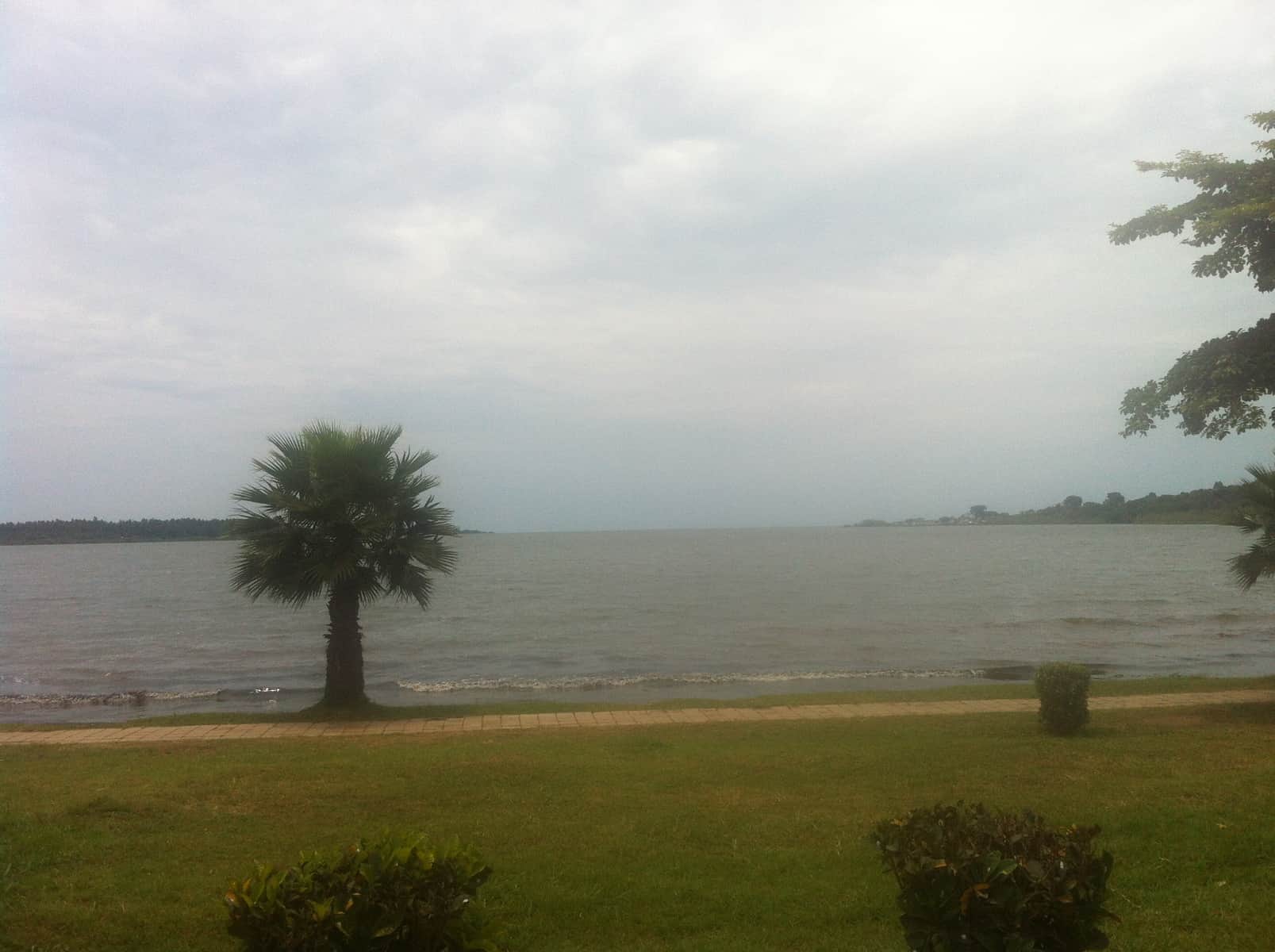
How do I even begin to describe Africa? I’ve updated my reading list. I post it to spur myself on as a L.L.L. (Life Long Learner). Enjoy! What’s on your reading list? We’d be honored to have you subscribe to this blog. I normally update it three (3) times weekly: Weekend/Tuesday/Thursday. Every day is different. This is a photo trip through the last week of our life in Uganda. The way to meet Africans is by walking. These are shots from our daily trips. The area around Lake Victoria is a bird paradise. In Africa, everyone is hustling to make a living (or survive). Motorcycles (they’re called “boda-bodas” here) carry everything. Last week, I saw one carrying a coffin strapped to the back. I presume it was empty. Even in Entebbe, livestock (cows, goats, and sheep) are staked out daily in grassy area. At dusk, owners will bring them back to a pen or enclosure. We’ve been greeted with such kindness by the ordinary folks in Africa.
No Woman/No Cry: Thoughts on African Life
It’s probably odd to read a blog from ” Someone on Mission” that quotes Bob Marley. But thanks to my African friend Eric, Marley’s “No Woman/No Cry” is stuck in my head. More importantly, the song is buried in my heart. I wonder if I’ll ever get it out. I’m not sure I want to lose it. What song(s) always take you back to a spot in your life journey? Why? I’ll be adding more to this post during the day. Blessings, Curt Curt and DeDe leave for village homestay with our hosts, Eric and Margaret. ** Our Mission: To connect the love and power of the Lord Jesus Christ to those who’ve never heard and not yet responded. No Woman . . . No Cry Village life in Zambia. It’s all about community. In the village, everyone’s a cousin, or an aunt, or brother. I’m sitting in our hosts, Eric and Margaret’s doorway watching people stroll by. A frail woman passing with a five-gallon bucket of water balanced on their head. I go back to the science classroom. I believe water weighs 8.3 pounds per gallon. She’s carrying nearly fifty pounds on water on her head. An elderly grandmother hunched over by a load of sticks for firewood. Eric’s radio (run by a solar panel on the roof) blasts out Bob Marley’s “No Woman/No Cry.” The words grip my heart. I balance the songs lyrics with the difficulty of life for village women. No woman, no cry No woman, no cry Oh my Little sister, don’t shed no tears No woman, no cry I recall the echo of the women wailing yesterday at the graveyard. It chilled my soul. I can’t get it out of my head. Once again, I don’t want to. Tasting, seeing, being part of grief is part of Africa. Africans know this well and if you’re going to share friendship with Africans, you must be willing to share their grief. No Woman, no cry. I’ve learned so much in my month of living outside in the beauty of Zambia. So much is different here But so much is also similar. At times even familiar. It reminds me of the stories told by great grandparents of Louisiana life at the turn of the century. Babies are born and we smile. Loved ones die and we smile. People fall in love. They have dreams. Many times those dreams are shattered against the hard rocks of life. There’s an acronym for it: AWA “Africa wins Again.” A young girl smiles shyly as she passes. She’s toting a baby brother half her size tied on her back. He ain’t heavy, he’s my brother. No woman, no cry. That young girl will see lots of heartbreak in her life. She’ll help bury—or be buried by—the people of this village. It may be malaria, HIV, or a road accident. Death is no respecter of age or youth in the African Bush. An average life span of about fifty years says it all. Good friends we have had, oh good friends we’ve lost along the way In this bright future you can’t forget your past So dry your tears I say No woman, no cry No woman, no cry No Woman, No Cry. Africans are resilient. They walk on, carrying their loads. Some loads are visible. Others hidden. No Woman No Cry My feet is my only carriage So I’ve got to push on through But while I’m gone… Everything’s gonna be alright As I prepare to leave this part of Africa, I’ve added things in my pack. The warm smiles that light up any room. The slower-Louisiana-bayou-flow of life. “Americans have the watches, but Africans have the time.” “It’s O.K. to be late as long as you show up.” Taking a nighttime bucket bath underneath the unbelievable nighttime sky. As I soap my dirty feet, I can see the Big Dipper and Southern Cross on separate ends of the broad horizon. I’ve been a recipient of the Kindness of Africa. I plan to remember that when I get mugged, robbed, or carjacked. The vast majority of Africans are honest, kind, and full of hospitality. They’ll go without to share what they have with a stranger. This very morning our host, Eric, sent a village boy 7 kilometers by bicycle to Covenant College Farm to buy a hen. Naomi, Eric’s preteen daughter, killed and dressed the hen. Margaret cut it into creative pieces and we enjoyed chicken for the next three meals. At least DeDe and I did. Eric and Margaret only ate chicken at the first meal. DeDe and I ate it for two more meals, while our hosts ate mshema (plain grits) outside. What do you say to kindness and sacrifice like this? No woman, no cry Said, said, said I remember when we used to sit In the government yard in Trenchtown And then Georgie would make the fire light Log wood burnin’ through the night Then we would cook corn meal porridge Of which I’ll share with you In the midst of their poverty, sharing what they have. Give us this day our daily bread. Village children, sent by their mothers, coming to buy 6 ounces of sunflower oil for the price of a single Kwacha. That’s about 12 cents. It’s all they afford at the moment. No woman, no cry. Give us this day our daily bread. I’ll always remember the joy of being in the bush during harvest time. Ox-pulled carts loaded with maize corn. Acrces of groundnuts (peanuts) being dug by hand. Sunflower seeds being sifted, beans being snapped. This joy mixed with the unspoken fear that this year’s harvest won’t be enough. “The rains started late and ended early.” The look of uncertainty I saw over and over as I inquired about the crops. My fear is my only courage So I’ve got to push on thru Oh, while I’m gone Everything ‘s gonna be alright, everything ‘s gonna be alright No
“Push the week . . . Polk Salad Annie and Our Daily Bread
Juxtaposition. Compare and Contrast. It’s what I love about being Deeply Southern Fried American and a Pilgrim in East Africa. Both places have red dirt, rural hospitality, “tribal problems”, and soul food. The story below is my latest attempt to explain, connect, and understand two cultures. Sukuma Wiki, Ugali, Polk Salad Annie, and other culinary thoughts And give us this day, our daily bread A special thanks to two new Kenyan friends at Elite Computers: Thanks Silas for repairing my computer so this story could be finished. Asante sana, Faith for serving as my Kiswahili editor! Down in Louisiana Where the alligators grow so mean There lived a girl I’d swear to the world Made the alligators look tame. -“Polk Salad Annie” Tony Joe White’s song from the 70’s came to mind last week in Africa. The spark that brought it back was the Swahili term, Sukuma Wiki. It’s what they call greens here. And it means “Pushing the Week.” Like when you’ve got several days to eat, and little or no money, you resort to eating “Sukuma Wiki.” Wild greens or even grasses boiled over an outside fire. Tony Joe White’s** Louisiana song of a poor neighbor girl who picked “Polk Salad” for the family’s meals was a classic among my generation. *Question for our readers: Is it Poke Salad or Polk Salad?
Dada Stella’s Big Ripple
A word that is changing my life It’s a simple word but it’s become my favorite. The word is “Privilege.” It’s become one of my “6 words to live by.”* I’m simply using this word to remind myself of how privileged I am to: Be alive Serving Bwana (Lord) Jesus in Africa. Having a wonderful family. Good health. Learning a new language at age 56 Privilege. I’m placing it in my “word chest” next to Gratitude. I’m learning that it’s all in how we look at it. I’m privileged to have the gift and responsibility of writing. Sharing about words. Especially good words like privilege. My current 6 words to live by are: GratefulPrayer/Walk/Connect/Prayer/Encouragement/LifeLongLearning I’ll add privilege but don’t know which one to drop. Dada* Stella and DeDe Iles “Dada” is a Swahili term of endearment that translates “Sister.” DaDa Stella’s Ripple Effect Only Heaven will reveal the lives that have been changed by the lives that have been changed by the lives that have been changed by God at . . . She doesn’t own a car. In fact, she doesn’t want one. She prefers to walk everywhere. You probably wouldn’t pick her out of a crowd. She prefers it that way. Putting on a front or show isn’t Dada Stella’s way. As far as I know, she has never traveled far from her home area of Kenya’s Kiambu State. However, I’m not sure I’ve known many people with a larger ripple effect than this simple wonderful African woman. Dada (“Sister” in Swahili) has been a teacher all of her life. She jokingly says she backed into teaching Swahili by accident. I don’t believe it’s an accident at all. I believe it was (and is) part of God’s plan to use her to reach thousands with the Good News of the Gospel of Jesus Christ. And Dada Stella’s ripple effect has gone out over East Africa, the entire continent, and beyond. This born teacher has taught hundreds of missionaries to speak Kiswahili (The language of Swahili.) She taught two of my supervisors, Bob and David, over twenty years ago. She’s still going strong. Trying to teach a tongue-tied Southerner who cannot make the subtle n, ng, and ng’ sounds that easily roll off her tongue. I asked Dada Stella one day, “Have you ever thought what it’s going to be like when you get to Heaven?” She smiled quizzically at me, so I continued. “Have you ever considered the long line of people who’ll be in Heaven because someone you taught at Shade Swahili School* told them about the Savior Jesus?” “Well, someone did ask me that same question a few years ago.” I firmly believe that when Dada Stella enters Heaven (in her trademark Kanga wrap and wool cap) there will be a receiving line waiting. Generations of Masaii families who came to Jesus because of the work of Bob Calvert and David Crane. Bob and Nancy Calvert (with Curt and DeDe) at Lake Victoria/Entebbe, Uganda. A Tanzanian housewife who heard the Good News in her heart language, accepted Jesus, and led her neighborhood to faith. Mombasa street boys redeemed by the Blood. Refugees from every war zone in Africa who heard the story of Jesus in a stifling refugee camp, took it to heart, and traveled back home to share it with their unreached village. Violence-hardened Congolese soldiers who responded to the Gospel when an African pastor (mentored by one of Stella’s students) bravely went into an Army camp and preached Jesus in Kiswahili. A shepherd boy along the Kenyan/Ugandan border who connected with The Good Shepherd when he heard Jesus-Stories in his heart language of Swahili. The list could go on and on. Just like the receiving line will go on and on in Heaven. You see, Dada Stella has found what matters in life: Living a life for Someone bigger than ourselves. That Someone is Jesus. And then using her life for maximum impact and influence. I call them the twin I-beams that are unbreakable. Influence. Impact. Here’s how I try to describe them and their connection: Influence is how wide your ripple effect can reach. Like throwing a rock in a lake, the resulting wave can travel far beyond the point of impact. Our actions in our own “life space” can touch thousands we’ll never meet. Impact is how deep your influence can go into someone’s life. It’s a connection that takes time but bears great fruit. It’s what discipleship and mentoring are all about. Dada Stella has had both influence and impact directly in hundreds of lives. That influence touches thousands more. Her story is one that should be told. we don’t have to be rich, well-known, or super-educated to have a huge ripple effect. We just have to be faithful, using the talents and gifts God has given us. Doing our best day after day. Keeping our eyes on the prize and hands on the plow. It’s a good lesson for me. A good lesson for all of us. Stella is one of the co-owners of Shade Swahili School. Its name comes from how African villages had a special tree (mti) that served as the community meeting place, school, and worship center. Africans would gather there “under the comfort of the shade.” The Muna “Shade” Tree at Brackenhurst Conf. Center. Tigoni, Kenya. This is my favorite African tree. If you enjoyed this story, I’d love to pass on your comments/words of affirmation to Dada Stella. You can do this on Facebook, our Creekbank blog, Twitter, or email me at creekbank.stories@gmail.com I have a lifetime fascination with the subjects of influence and impact. One of my earlier stories, “The Ripple Effect” is always popular with readers. I invite you to enjoy it here. Curt Iles currently
Thoughts on “The Good Shepherd”
Listen to short clip from Tigoni Baptist Church Kenya Easter 2013 (Above) Don’t miss Dada Stella’s famous Shrill Swahili Spiritual Squeal. It’s one of my favorite parts of African worship! The clip below is an acapella Easter song from the Tigoni Adult Choir. Enjoy and Worship: TigoniEaster2 On the clip above, listen to each choir member humming their part. Also, choir director Lucas uses claps and snaps to keep the time. Simply wonderful! It’s Pasaka. Easter in Kenya. A day I’ll always remember. This is a long uncut audio from today’s Easter Service at Tigoni, Kenya2013 A Mchungaji named Petero “I am the good shepherd. The good shepherd lays down his life for the sheep.” John 10:11 It’s a sound my tongue may never get right. The mmm sound that many Swahili words begin with. You say it in the back of your throat with your mouth closed. As in Mchungaji. It’s become one of my favorite words in this new language. Mchungajii. It’s used interchangeably for two English words. Shepherd. Pastor Pastor-Shepherd. M-chun-ga-ji. It’s what I call my teacher Petero. Mchungaji Petero. He is a pastor/shepherd as well as one of our Swahili teachers. From the Turkana tribe of NW Kenya. We could call him Peter, but all Swahiii names end in an vowel, so he’s Petero. Petero. The Rock. Recently we visited Petero’s church. Had a wonderful service. He is a strong preacher. Strong in the Word and strong in the Lord. You would like him. You’d like for him to be your mchungajii. You’d agree that any sheep in his care would be safe. A strong Kenyan with a shy smile. Every morning as we dodge the potholes on the 3 km drive to school, we pass another mchungaji. He’s a real shepherd named Joshua. He’s young and only speaks Swahili. He faithfully stands over his roadside flock of sheep and goats. He leans on a shepherd’s stick and waves through the dust. He’ll be there in the afternoon as we pass again. Caked in the red dust of Kenya Keeping his flock safe. They’re not exactly a pretty flock and are grazing in a patch with more weeds than grass. But they’re safe because of Mchungaji named Joshua. Two Kenyan shepherds. Each faithfully watching over their flocks.
Together . . . on TheJourney

This week’s African proverb:
“If you want to go fast, go alone. If you want to go far, go together. “