See all of our Creekbank Books

Stories from the Creekbank The Old House Wind in the Pines Hearts Across the Water Deep Roots The Mockingbird’s Midnight Song Christmas Jelly The Wayfaring Stranger A Good Place As the Crow Flies A Spent Bullet Trampled Grass Uncle Sam: A Horse’s Tale Where I Come From “Medic!” The Three Trees One Night in Winterset Also by Curt Iles Stories From The Creekbank ISBN 978-0982649251 The Old House ISBN 1-4033-5227-5 Wind in the Pines ISBN 978-0-9705236-1-7 Hearts Across the Water ISBN 978-0-9863026-4-0 Deep Roots ISBN 978-0-9826492-1-3 The Mockingbird’s Song ISBN 978-0-9705236-9-3 Christmas Jelly ISBN 978-0-9826492-6-8 The Wayfaring Stranger ISBN 978-0-9826492-2-0 A Good Place ISBN 978-0-9705236-9-3 As The Crow Flies ISBN 978-0-9705236-7-9 A Spent Bullet ISBN 978-1-4497-2233-3 Trampled Grass ISBN 978-0-9863026-9-5 Uncle Sam: A Horse’s Tale Medic Ebook only ISBN 978-0-9826492-6-8 Where I Come From ISBN 978-0-9863026-0-2 paperback ISBN 978-1-967796-03-8 hardcover The Three Trees Paperback: 978-0-9863026-7-1 Ebook ISBN 978-1-967796-02-1 Hardcover ISBN 978-0-9863026 Large Print ISBN 978-1-967796-03-8 All books are available on Amazon and Ingram Distributors. www.creekbank.net Email: creekbank.stories@gmail.com Facebook: TheCreekTribe Podcast: rss.com/podcasts/TheCreek To learn about speaking engagements to book clubs, school visits, and civic groups, email creekbank.stories@gmail.com. Wow! I wrote my first book, Stories from the Creekbank, in 2000. Not only is it still in print, but it’s a steady seller. I’m so grateful for friends and readers like you who’ve kept my thirteen books “evergreen.” Evergreen is the book-selling term for a title that continues to sell long after its publication. We’ve been blessed in this. Many of you have chosen to fill the gaps in any of the thirteen books you don’t have (or have loaned) or buying one of our series bundles. Also by Curt Iles Stories From The Creekbank ISBN 978-0982649251 The Old House ISBN 1-4033-5227-5 Wind in the Pines ISBN 978-0-9705236-1-7 Hearts Across the Water ISBN 978-0-9863026-4-0 Deep Roots ISBN 978-0-9826492-1-3 The Mockingbird’s Song ISBN 978-0-9705236-9-3 Christmas Jelly ISBN 978-0-9826492-6-8 The Wayfaring Stranger ISBN 978-0-9826492-2-0 A Good Place ISBN 978-0-9705236-9-3 As The Crow Flies ISBN 978-0-9705236-7-9 A Spent Bullet ISBN 978-1-4497-2233-3 Trampled Grass ISBN 978-0-9863026-9-5 Uncle Sam: A Horse’s Tale Medic Ebook only ISBN 978-0-9826492-6-8 Where I Come From ISBN 978-0-9863026-0-2 paperback ISBN 978-1-967796-03-8 hardcover The Three Trees Paperback: 978-0-9863026-7-1 Ebook ISBN 978-1-967796-02-1 Hardcover ISBN 978-0-9863026 Large Print ISBN 978-1-967796-03-8 All books are available on Amazon and Ingram Distributors. www.creekbank.net Email: creekbank.stories@gmail.com Facebook: TheCreekTribe Podcast: rss.com/podcasts/TheCreek To learn about speaking engagements to book clubs, school visits, and civic groups, email creekbank.stories@gmail.com. I’ve been amazed at how many of you have chosen to buy the entire set of 13. It’s a pleasure to autograph these sets with special notes and scripts. Here is our Book Table. You can order through our website, read sample chapters, or go to Amazon for your purchase. Enjoy! Curt Click here or on image to visit our Book Table.
Our latest Creekbank Newsletter
“I worship when I write, and I write when I worship.” This wonderful quote shares what I’ve come to realize: that writing and creating are ways of worshipping God. He is the source of my life, joy, and any writing skills I’ve been given. I want to be a good steward of those gifts in 2025 and beyond. Merry Christmas. I am so grateful for readers and friends like you who read our newsletter and send valuable feedback. We enjoy hearing from readers and appreciate each one of you. Curt Our new e-book “Medic!” is available on Amazon Kindle. “Medic!” Two Snipers. One brave Medic A Christmas story you won’t forget. Share it with your family and friends. ________________ Recent interviews on Where I Come From: You’ll enjoy our KPLC TV interview with John Bridges I made new friends on my recent mini-book tour to Chillicothe, Missouri. Listen to my radio interview with Ean at KUHL 105.9 The Wave ___________________ If you missed it: Yesterday’s Newsletter story, “Drones over Dry Creek,” is both timely and funny. Read it here. ___________________ There is still plenty of time to order copies of Where I Come From for Christmas presents. Most Amazon orders are arriving in 2-3 days. The hardcover edition is proving to be very popular. Visit our Amazon page at https://bit.ly/KindleEbookWhereIcomeFrom Here is our current 2025 publication calendar Spring 2025 A Pineywoods Manifesto: Lasting Lessons for Life. With the help of readers (like you), I’ll be compiling short snippets on things young men (or women) need to know as they step out on their own. A Pineywoods Manifesto will be written as visits with my four teen grandsons. Late Summer 2025 A Broken Cup: A Journey Through Depression. Most of my readers know about my mental health challenges and bouts of depression. I feel compelled to share this book to encourage all who’ve been broken by life. Please pray for me on this project, which will require me to be transparent and vulnerable. I’ve been meditating on the statement, “If your deep pain has given you a platform, you should share it with others.” November 2025 A Love of the Land. More of the short stories our readers love. We also will sprinkle in some “surprise short books” that you’ll enjoy. As always, you can keep up with us at www.creekbank.net and Amazon.com/Curt Iles __________________________________ The purpose of Creekbank Stories is to write moving stories that encourage and inspire. ____________________________________________________ Helpful links All Things Creekbank www,creekbank,net Facebook Facebook.com/TheCreekTribe/ YouTube https://www.youtube.com/@curtiles56 Creekbank Podcast Audio Podcast. I’d love to hear from you at curt@creekbank.net To learn more, connect with our social media platforms, visit our Website Menu Bar at http://www.creekbank.net
The 100 Foot Line: Thoughts on Forest Fires

The 100-Foot Line There’s a fine stand of young slash pine at Dead Man’s curve on the Longville Road. I’ve watched the growth of this forest since it was clear cut, then replanted in straight rows. The following year, the pines began to poke their heads above the grass. They’ve emerged above the surrounding bushes and scrub trees. In the coming years, they’ll link canopies, drop their pine straw, and completely wipe out the other growth in this field. If a woods fire doesn’t kill them first. I’ve been inspecting the fire lane plowed around these pines. With the approach of winter and its accompanying grass-killing frosts, having good fire lines is essential. Woods fires break out when a cold front and its accompanying north wind dry out the ground and grass. There is a long tradition of burning the woods among the folks here in western Louisiana’s “No Man’s Land.’’ It began with the early cattleman and sheepherders burning off the dead grass, believing that new fresh grass was better for their livestock. Our native longleaf pines can survive most woods fires, but due to their slow growth, they’ve been replaced by newer species. The reforestation of Louisiana in the last eighty years has been with faster-growing loblolly and slash pines. The trade off is that these species cannot survive a hot woods fire. There’s nothing sadder than a field of burnt dead pines, meaning a loss of trees and habitat from fire. For years, Southwestern Louisiana led the entire state in woods arson. The old settlers still believed it was their right to burn the woods. Feuds over hunting leases or grudges led to “revenge fires.” Sometimes the fires were accidentally set and spread by a strong wind and low humidity. Regardless of the source, our two most common species of pines are exceptionally vulnerable to fire. I always worry over fields like the slash pines on the Longville Road. Once tall enough, they can withstand most fires. For the first five years or more, a hot fire will often destroy an entire stand. That’s why wise forest owners will plow a second inner “hundred-foot line.” This is insurance against the arsonist who tosses matches across the outer fire lane. This can stop the fire before it spreads to the entire pine plantation. It provides insurance for the larger part of the field. I see a spiritual and mental component to the hundred-foot line. In our busy lives, we need this guardrail of space and protection for our minds and souls. This fire lane, or margin, gives us boundaries and space to breathe. It allows us to control the raging fires that can burn in our lives. I know all about that—I’ve had some hot fires in my own heart—usually self-inflicted. How do we plow those hundred-foot lines? Here are two ideas: Be still… I love the words of the shepherd David in Psalms 46:10 “Be still and know that I am God.” It’s both a promise and commandment. Taking time to be still, get quiet, pray, and meditate help us as well as protect us. We must build solitude and silence into our lives and guard a time and place for them. Get outdoors. Wendell Berry made this statement, “The Bible was written to be read outdoors.” There is something about being in nature: a clear blue sky, the wind in the pines, an owl’s call, and a star-filled winter sky with a fingernail moon. Get outdoors. There’s something about being outside that is good for the inside of a man. Be sure your hundred-foot fire lanes are in order. It’s a lot easier to plow lines than replant pines.
The Best Trade: A Christmas Tree for a Basket of Jelly

The Best Trade: A Christmas Tree for a Basket of Jelly This story from my first book, Stories from the Creekbank, is still a favorite of readers of all ages. I hope you enjoy it. Merry Christmas to all of my friends. -Curt Christmas jelly is probably my favorite holiday gift. Yearly, I receive this present from a special lady in my life. Eleanor Andrews is my neighbor in Dry Creek. She lives along Highway 113. It’s easy to spot her place: It’s the prettiest yard in our community, a testament to her love of gardening and flowers. Mrs. Andrews is more than just my neighbor and a lover of flowers. She is also my all-time favorite teacher. She taught fifth grade at Dry Creek School and East Beauregard High. Every Dry Creek pupil for generations sat in one of her wooden desks.
December 29: Sharp Hooks

December 29 Sharp Hooks Reas Weeks was a Dry Creek legend who lived and died before my time. He was a bachelor who lived in a remote area along Bundick Creek. He never owned a vehicle or held a regular job. He supported himself by fishing, hunting, and farming. He was known as the best creek fisherman in our area. My dad told the story from his childhood of the school bus picking Reas Weeks up. Mr. Reas flopped a forty-pound catfish on the bench by my dad. He was going to the general store to sell it. Mr. Jay Miller was a neighbor to Reas Weeks, and shared this story, “I was always amazed at how Reas caught the largest catfish in Bundick Creek. No one else came close in size or quantity. One day I asked him how he did this. “He led me to his barn and pulled out a large bucket with his hooks and lines carefully wrapped around it. He took a whet rock out of his overalls and began sharpening a hook. ‘Jay, if you’re gonna catch the big ones, you’ve gotta keep your hooks sharp. Those big catfish have tough mouths. A dull hook won’t set, but a sharp one will.’ ” It’s a good story with a spiritual message: Jesus has called us to be “fishers of men.” If we are going to effectively reach others, our hook had better be sharp. In my life I’ve found that this is only done by spending time with Jesus. As we study His word, the Bible, and fellowship with God in prayer, our lives will be sharpened for His use. Yes, I never knew Reas Weeks . . . but one of his legacies is this story that I’ve shared dozens of times. Wise words on sharp hooks from an old country fisherman. Thanks, Mr. Reas.
Dec. 27 “Two Masters” Bah Humbug Week Continues:
December 27 We’re walking you through the week after Christmas. I call it “Bah Humbug Week.” It’s a time of recovery from Christmas. It’s often a difficult week. I believe it’s an essential week. A time to slow down. A time to take inventory of the past week. An opportunity to look toward the coming new year. Master A man can have many dogs in his life, but normally there is one that occupies a special place in your heart. For me, that dog was Ivory. A yellow lab with intelligent eyes and a perpetual smile, she graced our home for nearly fourteen years. Ivory actually belonged to my son Clint but when he left for college, she stayed. She became my dog, or rather, she chose me as her master. A few years later, Clint and I walked out of the camp office together. Ivory, grinning her silly smile, expectantly thumped her big tail against the wall. I challenged Clint to a test, “Let’s find out who Ivory really loves the most. You go north toward the road and I’ll go east to the Tabernacle. We’ll see who is her master.” He reluctantly agreed to my challenge. I was confident she would follow me because of how faithfully she always follows me each day. We both agreed not to look back until we had reached our respective spots. As I walked the seventy-five feet to the Tabernacle, I expected at any time to hear her steps behind me. Reaching the sidewalk I stopped and looked at Clint. He stood on his spot, the same distance from our starting point. Ivory was sitting right where we’d left her, anxiously looking back and forth. She wagged her tail, grinning at both of us. She seemed to be saying, “Eenie, Meenie, Miney, Moe . . . .” I walked to Clint. Ivory ran to us. I knelt and patted her head. “I’m sorry to do that to you. We won’t put you in a bind like that again. You love both of us.” The words of Jesus came to me as I thought about Ivory’s allegiance. Jesus clearly stated that no man can serve two masters. In the Sermon on the Mount, he clearly spoke of allegiance and dedication, “No one can serve two masters. Either he will hate the one and love the other, or he will be devoted to the one and despise the other. You cannot serve both God and money.” The scariest part is this: many times, we stand and look back and forth at which master we will serve. The object drawing us away from God is often something good, but anything that blocks our commitment and dedication to God is harmful, no matter what it is. We must not settle for good when we can have the best—an intimate relationship with Jesus. We cannot serve two masters. Just as Ivory whined at being unable to choose between her two masters, we are most unhappy when we are in the no man’s land of attempted dual allegiance. # # # One more thought on choosing a master. We need a full understanding of what the word means. I loved to hear T.J. Crosby pray. He used the endearing term “Master” throughout his prayers. It was his default address to God. It’s a good term. Master. It says a lot. I’m not sure I’ve ever heard anyone else use the term in their praying. Master. It means Boss. It’s a subservient term, and we Westerners don’t like being servile. A person who exercises authority… dominates. Doesn’t sound like a sweet cooing baby. It’s easier to keep Jesus in that manger than to think of one who “directs and controls.” A victor who conquers. Master. It’s a first cousin to the more familiar ‘Lord.’ The finest example of the term master is in the gospels. Let me set the stage. Simon Peter, a strong Galilean fisherman, has Jesus the carpenter in his boat. Jesus says, “Launch out into the deep and let down your nets for a catch.” Simon answers, “Master, we have toiled all night and caught nothing; nevertheless at your word I will let down the net.” The Jesus Film, based on the book of Luke, nails this scene. Burly bearded Simon looks confused, “But Master, we fished all night and didn’t catch a thing.” Then shrugs and smiles. “But if you say so, we’ll do it.” There’s a principle here: If someone is master, we’ll obey him or her. We’ll even obey them when it doesn’t make sense. Sea of Galilean fishermen caught fish at night. Last night had been a waste. It didn’t make sense to try again. Other than Jesus said it. We remember the WWJD bracelets so popular in the 90s. “What Would Jesus Do?” A lady made me a similar one. DWJS. Do What Jesus Says. Pretty simple. Pretty profound. Secondly, when we know Jesus is our Master, we’ll worship him. We’ll bow in admiration, respect, and love. That’s hard for us Americans. It’s in our blood to be independent. That attitude of “I’m no better than anyone but no one’s better than me.” It permeates my culture in the piney woods of western Louisiana. Our ancestors came here to be left alone. Not beholden to anyone. But if we worship Jesus, we must bow to him. He’s worthy. He’s worthy of our worship. Finally, if we recognize Jesus as Lord and Master, we’ll follow him. Go where he leads. Strive to walk closely with him. Sometimes, the most miserable person in the world is not the person who has no room for God in their life. Yes, that person is unhappy and unfulfilled. However, there is probably no worse spot to be in than attempting to be both a follower of Jesus and the world. May we constantly be reminded of the love and grace of Jesus. Let us never forget His strong call for us
Stocking Stuffers from the Creekbank
It’s Christmas and time to help you with stock stuffers and difficult gifts. We are offering five of our Creekbank books for sale during Christmas. Each book is for sale at a discount of $10 per book and to encourage multiple purchases, there is a total shipping fee of $5 regardless of purchase size. Each book is personally autographed. You can easily order by responding to curt@creekbank.net Here are the books: Christmas Jelly Our classic short story Christmas collection. A perfect stocking stuffer. Deep Roots Our most popular short story collection. Sure to put a smile on any reader’s face. A Spent Bullet The historical novel set in 1940’s Beauregard Parish amidst the Louisiana Maneuvers. Uncle Sam Illustrated children’s classic about the Wild Horses of Western Louisiana. As the Crow Flies Our latest novel set around the Westport Fight of 1882. You can order your copies by responding to this newsletter at curt@creekbank.net. Simply tell us what books you want, how many copies, and your mailing address. We’ll send an invoice with your order. Merry Christmas, Curt Iles curt@creekbank.net
January 1: Lagniappe
A word from Curt The following story, about King George VI and his famous Christmas message and poem to the British people during the darkest days of the War. Scroll down to read this remarkable story January 1 Lagniappe A New Year This is the final post from our book, Christmas Jelly. We’ve enjoyed visiting with you during the previous month. We’ll continue blogging this week about having a life plan for the New Year. Our wonderful Cajun culture has a unique word. Lagniappe. It means something extra, and goes back to the rural tradition of shop owners giving faithful customers a little something extra as appreciation for their business. Lagniappe. It’s a good word. It’s a New Year. We’ve woke up alive. This is a new day. It’s Lagniappe. It’s a new start A special gift. Lagniappe. Enjoy it. Suck the life out of it. Squeeze out every drop. Enjoy your lagniappe. It’s a New Year. Being a writer, I always equate the first day of a new year with the blank pages in a new journal. As I open the notebook and leaf through its empty pages, the potential for what will be written and recorded there is limitless. Being a journal keeper for nearly forty years has taught me several things. Some of this year’s entries will be sad and painful. Others will be joyous and funny. That is the nature of life. As the world enters this new year, the pages are blank and no human knows what this year holds. Never in my adult life have I seen such uncertainty and concern. From war and confusion in all corners of the world to an economic meltdown that has shaken the confidence of many, we face uncertain days ahead. The year 1939 was much like that . . . especially in Europe. War had commenced with the German invasion of Poland and subsequent involvement of most of the continent’s nations. In England, the days were especially dark. In was in this bleak time at Christmas 1939 that King George VI made his annual Christmas message to the British people. He quoted from a familiar poem by Minnie Haskins entitled “The Gate of the Year.” “I said to the man who stood at the Gate of the Year, “Give me a light that I may tread safely into the unknown.” And he replied, “Go out into the darkness, and put your hand into the hand of God. That shall be to you better than light, and safer than a known way” The King’s appropriate use of this inspiring poem stirred the British people, as it still stirs us over a half-century later. It’s a good poem as we enter an uncertain new year. God is in control. There is no panic in heaven. As long as we hold onto his hand and follow his guidance, we’ll be all right. “ . . .My God shall supply all of your needs according to his riches in Christ Jesus.” Philippians 4:19
Dec. 31: “Finishing Strong” Last Day of the Year
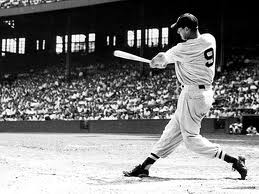
December 31 New Year’s Eve Finishing Strong Ted Williams is generally considered the greatest hitter in the history of major league baseball. Two events from his career speak about the concept of “finishing strong.” In 1941, Williams entered the last day of the season with a batting average of .3995. This would qualify him for a rounded off average of .400 and make him the first hitter in seventeen years to achieve that mark. His team, the Boston Red Sox, had a meaningless doubleheader that day and by sitting out these two games, Williams could end the year at .400. However that wasn’t the Ted Williams way. He played in both games, and when the dust had settled, he’d gotten 5 hits in 7 at bats to finish with an average of .406. No one has hit above .400 level in the seventy years since 1941. # # # Ted Williams retired at the end of the 1960 season at the age of forty-two. In his last at bat in the final game of the year, he hit a home run. Old news footage shows Williams rounding the bases with a skip in his step and joy on his face. He hit a home run in his last at bat. That’s finishing strong. Finishing strong. We’re remembered not by how we started, but how we finish. Like Ted Williams, the Apostle Paul was a man of passion. He had an unyielding love for the Lord Jesus. In many of his writings, he expresses a strong desire to finish the work assigned to him by God. Paul understood that how we finish is how we are remembered. Living in a day where his listeners understood about athletes, he compared it to striving to finish the race and win the prize. The first runner out of the blocks isn’t always remembered. It’s the one who finishes first. Paul’s words speak to this: “But none of these things move me; nor do I count my life dear to myself, so that I may finish my race with joy . . . . .” Acts 20:24 # # # “If it’s worth doing, it is worth doing right- especially if it is for God!” # # # P.S. One of my favorite anecdotes involves a baseball discussion. “What do you think Ted Williams would hit if he was playing against today’s pitchers?” “Well, he’d be about ninety-four years old, so I don’t expect he’d do too well.”
December 30 Moving Out

A Word from Curt Grateful. Gratitude is one of my 6+ words for 2016. I’m thankful for the wonderful gifts in my life. Today I’m thankful to have the calling of writing. It’s what I do. Who I am. I’m thankful that you have chosen to read this blog and allow my heart to hopefully warm your life. Gratitude. What a good word. For the month of December, we’ve served a daily helping of our short story collection, Christmas Jelly. We have three more chapters to complete. They’re short thoughts on ending one year and getting ready for the new year. I call this week, “Bah Humbug.” Christmas is over and there’s no way it could meet every expectation we had. It’s no accident that the Christmas season and the week(s) after are a wonderfully difficult time. Bah Humbug week is a great time to reflect, think, plan, and prioritize. Enjoy today’s story, “Moving Out.” December 30 Ready to Move Out A few summers ago, DeDe, our youngest son Terry, and I took part in a youth camp in the Black Hills of South Dakota. This area of majestic mountains, covered with vast stands of tall Ponderosa Pines, is one of my favorite places in America. To get to camp, we drove deeper and deeper into the Hills following a long snaking dirt road called Pasa Sapa Road (the Sioux name for the Black Hills.) Upon arriving at Kamp Kinship, we were greeted by the friendly staff and soon made ourselves right at home. One of the first things the Camp Director did was to instruct all drivers to park their vehicles outside the front gate. They were shown how to park in lines with the vehicles pointed out toward Pasa Sapa Road. My inquisitiveness at this was answered by one of the local men. “Up here in the Hills a wild fire can spread quickly. During the hot summer season, dry lightning storms rake across this area. One lightning strike in these dry hills can spark a spreading dangerous inferno that destroys everything in its path.” He nodded as the carefully parked cars. “We’re ready to move out at a moment’s notice. If you hear the camp bell ringing non-stop, it’s the signal to load up and evacuate immediately. Don’t even go back to your cabin.” This plan of “Being ready to move out” made an impression on me, especially later in the week. Wednesday evening, we had a wonderful worship service of singing and sharing. In the distant northwestern sky over the mountain, bright flashes of lightning split the sky one after another. My friend Stan said, “That storm’s coming from Wyoming. This is just the type that sets off fires in the mountains.” About midnight the storm roared over the camp. There was no rain but plenty of howling wind, bolts of lightning, and booming thunder. Fortunately, no fires were ignited near Kamp Kinship. Only later did we learn that several fires erupted at different locations in the Black Hills. Later that weekend we traveled into Wyoming to Devil’s Tower and saw a huge wildfire that had been burning since the previous week. Parking the vehicles pointed out at camp “ready to move out” gave me several thoughts about being ready. Here are a few: Being ready to live – If only we would daily decide to live as if this was our last chance to suck in oxygen and see the sunset. Man, I want to be “ready to move out” and attack life with passion and joy. Being ready to die– “No man is ready to live who is not ready to die.” No one gets up in the morning and says, “Well, I believe I’ll probably go out and die today.” Deep down inside, we humans all secretly believe we’ll be the one exception to the rule and live forever. One time after the sudden death of a young person in Dry Creek, a wise man told me, “When you put your shoes on in the morning, you don’t ever know who’ll be taking them off you.” “Living ready to die” for me entails living in a personal relationship with Jesus. He is my rock, friend, savior, confidant, and guide. I’ve trusted Him for every aspect of my life, including my eternal destination. I can confidently face life and death knowing He is holding not only my hand, but also my destiny. Living ready to die also includes keeping a short account in my relationships with those around me. I choose not to let hurt feelings or a bad experience keep me from being in touch with others. If there is a problem, I go to them. As needed, I apologize and seek to make things right. That is a part of living joyfully and with gratitude. I’m pointing the vehicle of my life so I can be ready to go… or content to stay. Many of you have heard me speak of Brett Thornton who has a tattoo on each arm. One arm says, “R 2 G”, and the other, “C 2 S.” These tattoos sum up his life mission: “Ready to Go, Content to Stay.” It is an attitude of readiness to go where God leads: Ready to jump in the vehicle and spin out if the bell of God’s Holy Spirit rings out. At the same time, it means possessing a quiet peace that we can trust God if our instructions are to stay put and dig deeper right where we are. Ready to live Ready to die Ready to go . . . content to stay. Always ready to move out when needed. Moving up . . . and moving out.
Dec. 26. . . and now it begins: Bah Humbug Week

For the next week, through January 1, I’ll share a daily short short story with thoughts to help us all navigate that wonderful week between Christmas and New Year’s Day. I lovingly call it “Bah Humbug” Week. It can be the most difficult week of the year. Stay tuned daily for a story, thought, or insight that hopefully will make you smile, reflect, and move on beyond Christmas. SCI (Sidney Curt Iles) I love Christmas. I really do. I’d glad it occurs yearly. And glad it only occurs yearly. I call the week after Christmas, Dec. 26-Jan.1, “Bah Humbug Week.” It’s a week to recover. It’s a week to reflect. I use this week to look back over the past year with gratitude and as a springboard to think about and write what my priorities are for the coming year. Here we go. Join us all week as we share short stories from “Bah Humbug Week.” Bah Humbug Week From Christmas Jelly by Curt Iles. If you’re still reading, and it’s after Christmas, I’m impressed. It’s the week after Christmas and let’s be honest: We’re sick of it all. Glad it’s over. Too much of everything. No matter how good our Christmas was, it wasn’t as perfect as we imagined. So, it’s normal to have a post-Christmas letdown. It’s an emotional and physical hangover. If we’re not careful, it can be a spiritual letdown. To help you through this weirdly wonderful week, we’ve included a short story for each of the seven days separating Christmas from New Year’s. The week after Christmas is a transition week. I call it Inventory Week. An opportunity to glance back at the past year. A chance to look ahead to goals and dreams for the coming year. So here goes, I hope you have a Merry . . . “Bah Humbug” Week. Bah Humbug Week Short List Begin a gratitude journal. Daily write down one (or more) thing you’re thankful for. Give yourself a Scrooge/Grinch day. Then move on. Develop a Life Plan for your coming year. Reflect on your blessings of the past year. Do something for someone who cannot pay you back. Write down your six words for the coming year. I’m working on mine. Here are several: Gratitude Balance Simplicity! . Make and enjoy a pot of Ouiska Chitto Stew (See recipe below.) # # # From Kay Campbell Fox: For twenty-nine years, my parents owned and operated a canoe business on the Ouiska Chitto River. Weekends meant leaving at 7:00 a.m., working until dark, and coming home exhausted and hungry. Mom was dedicated to ensuring her family was fed a hot and rewarding meal. Before we left for the river, she would assemble a large pot of beef stew in the crock-pot. There was never a question of the menu for the long day; and after several years, we changed the name of her stew to “Ouiska Chitto Stew.” It has become a traditional name in our family, and mom has left that legacy of dedication to her family. Kay Campbell Fox Ouiska Chitto Stew Marilyn Campbell 2 lbs. Stew Meat 6 Carrots scraped and cut into 2-inch portions 6–8 Potatoes peeled and cut into pieces 1 Onion 1 Bell Pepper 3–4 Stalks Celery 1 pkg. McCormick Beef Stew Mix Seasoning to suit your taste Brown stew meat in pan with olive oil and seasoning. Transfer meat to crock-pot and add remaining ingredients. Cook on slow for 8 hours. Serve with rice and cornbread.
Dec. 25 Christmas Day My Favorite: My Grandpas’ Boots

A Story for Christmas During December we’re featuring one short story per day from my latest book, Christmas Jelly. Today’s story is my favourite from the thirty-two stories.* Enjoy! Christmas Jelly contains thirty-two chapters– 0ne for each day in December plus January 1. MY GRANDPAS’ BOOTS CURT ILES My name is Abe and this is the story of these scuffed boots I wear proudly. These boots have a good story to tell. These boots are six years older than me, and I’m almost seventy. Their history goes back to my hometown of Alexandria, Louisiana and the years after the Civil War. The retreating Union Army smoldering ruins in the spring of 1864. My father was seven years old and remembered the day when the retreating Union Army burned the city. Citizens fled to the Red River levee to escape the flames. My grandfather, Abram B. Terry, wasn’t there on the day of the fire. He was in the Confederate Army and a prisoner of war up North. A year after the fire, Grandpa, whom everyone called Pops, limped home from the prison camp and found his hometown destroyed. He’d lost his left leg and replaced it with a stout dogwood crutch, and a heart that was harder than the hickory peg leg he now wore. The years after the war, known as Reconstruction, were hard on everyone in the Red River cotton country. In the year 1882, seventeen years after the end of the war, Pops and my dad, who was now twenty-three and still single, opened a sawmill on Bayou Rapides. Money was still tight and as Christmas approached, no one expected gifts. A string of events occurred in the in the cold weeks before Christmas changed everything about Pops and our family tree. At the same time as my family opened their sawmill, several new families arrived in Alexandria. Most of the men were former Union soldiers who’d come South to make money selling cotton to the New England textile markets. Pops disdainfully called them ‘Carpetbaggers’ and made my father promise to have nothing to do with them. On this fateful day in December 1882, Pops and my daddy were walking along the levee on their way to the bank. Pop stopped when saw a bearded man wearing a faded Union soldier greatcoat. “Hey Bluecoat,” Pop said, “Have you come back to see if there’s anything you didn’t burn the first time?”” The man, who was sitting at a checkerboard balanced on a keg, looked up with a disarming smile. “I don’t want to burn nothing. I might catch fire, too.”He lifted his right pants leg, revealing a wooden peg. Pops squinted. “Where’d you lose that?” “One of your snipers got it on the last day at Vicksburg. I was the final casualty. ” Pops leaned on his crutch revealing his own wooden leg. “Lost mine in ‘Pennsylvania.“He hobbled closer.“Bluecoat, how far is your’s gone?” “To the hip.” Pops grimaced. “I guess I ought to be thankful mine’s just below the knee.” “Mine started below the knee too, but Ol’ Sawbones just kept cutting.” Bluecoat winked.“Told him I’d shoot him if he went any higher.” “Bluecoat, you lost your right leg,” Pops said. The man moved his checkerboard. “And I see you left your left one somewhere up north, Reb.” “Yep, they said they buried it in a stump hole at Gettysburg. Pickett’s Charge. July 3rd, 1863.” Bluecoat grinned. “I guess we’re even then.” He scratched his long beard. “July 3rd. Was that a Friday?” “It was.”Pops stared down the street “A Friday I won’t forget.” “Friday, July 3rd,” Bluecoat said, “Same day I lost mine, if I remember—“ Pops interrupted him. “I was crawling away from the stone wall when they captured me and sent me to one of y’all’s prison camps near Elmira, New York. That’s where I cooled my heels—or rather heel—for the rest of the dang war. “ Bluecoat put his hand out. “Like I said, we’re even.” Pops’ face reddened “I lost a lot more than a leg up there.” “I’m sure you did.” Pops placed his right foot beside the Yankee’s left one “What size do you wear?” “9-E.” “Me, too.” Bluecoat extended his hand again. “My name’s Hiram Plott. Just arrived here from Illinois with my wife and four daughters.” Pops studied the open palm. “I don’t shake hands with the enemy.” Bluecoat shrugged “No hard feelings. It’s over on my end.” Pops turned away and spat. “It won’t ever be over on mine.” He grabbed me and said, “Come on, Son, we got work to do.” I figured that exchange ended any chance for friendship between the two one-legged Civil War veterans. But in the coming weeks, as Pops made his bank visits, he’d faithfully stop by and harass the Bluecoat Hiram Plott at his makeshift whiskey barrel office on the levee. * * * My father remembered Christmas Eve of ‘82 as unusually cold for Louisiana. With the hard times, he didn’t expect any presents. He didn’t know how his mother—my grandmother—did it, but she scraped up enough money to buy a Christmas present for her husband, Pops. She handed him a box and he opened it to find a new pair of riding boots to replace the patched and re-soled one he’d been wearing since the war. When Pops held up the boots, he began crying. “How’d you afford these?” “Oh, I did some horse trading.” My father knew the truth; his mother had sold off some of the family heirloom silverware to buy those boots. Slipping the left boot on, Pops said, “Fits perfect.” Glancing down at the spare right boot, he tapped his wooden leg. “I‘ll keep that one in case my hickory
Dec. 23: Christmas Eve-Eve
The Hay’s in the Barn It’s “Christmas Eve-Eve.” Two days until Christmas. It’s close but there’s still time for planning and dreaming. A strong cold front is blowing in as I arrive at Foreman’s Meat Market. Last night we were in shirtsleeves. By tonight it will be freezing. Long vee formations of geese have been flying over all morning. They’re honking and struggling against the humid south wind being pulled toward the cold front. Foreman’s is a busy place in the week leading up to Christmas. Customers are gassing up or buying meat for family gatherings. Others are picking up deer sausage. The first drops of rain come from the darkening sky, and then the bottom drops out. A flatbed truck, loaded high with round bales of hay, skid into the parking lot. Three cowboys fall out of the truck and hurriedly begin pulling out a blue tarp over the hay. They tell me they’re bound for Lake Charles. The wind is now turning out of the north whipping their tarps. They tie down their load and roar south. Today is a good day to make sure the hay is in the barn. This common rural saying refers to finishing a task by a certain deadline. The hay’s in the barn. The good feeling resulting from doing all you can do. You’ve done a hard job and done it well. It’s a good feeling. Back at Foreman’s parking lot, the rain is arriving in sheets. I’ve got one more trip to town before Christmas. My hay is not quite all in the barn . . . there are a few more presents to buy. When Dry Creekers say, “I’m going to town” they mean DeRidder. A neighbor’s friendly “I’m going to town. Do you need anything?” is a common question. Super Wal-Mart. I dread going in there on this crazy shopping day. I talk my youngest son, Terry, into going with me. I bribe him with the idea of a burger and fries. That’s the best way to get a rural boy to go into DeRidder—let him drive and promise him something to eat. Driving the twenty-five miles to town, the rain pours down. As we pass Bundick Lake, the whitecaps are surging, pushed by the strengthening north wind. The Wal-Mart parking lot is full. We park out near the highway and hurry in. The rain has stopped and the air has turned much colder. Shoppers, many lightly dressed, scurry in and out of the store. Like me, the shoppers haven’t quite got all of their hay in the barn. I recall Uncle Bill telling of Christmas Eve at a K Mart in Lake Charles. He said the hurry, frustration, and impatience of these last minute desperate shoppers was something to behold. I bet tomorrow night will be just that crazy at this Wal-Mart. I’d like to be brave enough one Christmas Eve to come observe it. Terry and I split up and decide on a place to meet later. I wonder how long it will take as crowded as the store is. DeDe won’t hardly shop with me here because of how many people I visit with. Today is different. Everyone’s in a hurry. Plenty of “Merry Christmases” abound combined with smiles and good-natured remarks. But there is little of the stop-and-visit normally found in the culture of Beauregard parish shopping. And I know why: everyone here today is trying to get all of his or her hay in the barn. After returning from town, I go to the cemetery and drain the water in the public restrooms. I re-check all of the pipes and faucets at our home as well as The Old House. It’s dark now and the temperature continues to drop. This will be one of the coldest Christmas’s in a long time. But I’m fine. I’ve got my hay in the barn. Before going to bed, I decide to make a personal “hay in the barn” list: I want to be full of gratitude at this special time of the year. I want to thank God for each and every blessing. I want to enjoy my family. What a gift family is. As my family grows and leaves the nest, I’m reminded to cherish each precious moment. I want to spread good cheer. I’m reminded that Christmas is often the toughest time of the year for folks. I want to call, write, and check on them. I want to make sure there is no unforgiveness in my life. Are there any walls that need breaking down? What better time of the year than now! I will seek to live the regret-free life. I want a minimum of “should’ve and could’ves.” Closing my journal, I crawl in bed. I sleep great that night. I should. The hay’s all in the barn.
Dec. 21: Lazarus’ Second Funeral from “Christmas Jelly”

Lazarus’ Second Funeral I guess I’m only one who attended both of Boaz Lazurus’ funerals. The second one was yesterday. The first one was thirty-one years ago. I remember the first funeral well. I was a young rabbi, only recently assigned to the Bethany synagogue. I’ll never forget the raw grief of his two sisters, Mary and Martha. I had grown to love the Lazarus family and spent lots of time with them in the days leading up to his death. It was like being on a storm in the sea. Up one minute, down the next. The sisters had such hope that The Teacher would come and heal him. Martha, the older of the sisters, stood at the edge of town for two days waiting for Jesus to arrive. He didn’t come. And Lazarus died. Like the sisters, I questioned why the Teacher didn’t come when summoned. He’d supposedly healed the blind and lame. He could’ve healed his dear friend. But Lazarus died. I helped with the preparation, funeral, and burial. I was gone for a week after his burial. First Jerusalem then Jericho. On my way home to Bethany, I began hearing strange stories as I encountered travelers. Jesus had raised a man from the dead. A man from Bethany. The rumors used many names. Boaz was such a common name. It couldn’t be him. I had felt his cold body. I had helped bury him. Lazarus had died. I hurried my pace as I neared Bethany, arriving late at night. The streets were empty. The Lazarus house was dark but I beat on the door. Eventually, a lamp was lit. Martha came to the door. “Rabbi, what is it?” I hesitated. “Is it true what I’ve heard?” “Come see for yourself.” She led me to the very room where Lazarus had died. A man was sleeping, snoring softly without a care in the world. “Lazarus, you’ve got company.” He rolled over, squinting at the lamplight, then sat up. “Hello, Rabbi.” I trembled and couldn’t speak. It was like seeing a dead man. No, it was like seeing a live man who’d been dead. For the next thirty years, I served as his rabbi. In spite of my prodding, he’d never reveal much about what he remembered between his death and resurrection. He’d only wink. “You wouldn’t believe me if I told you.” The rumors persisted about him. The most popular was that Lazarus had only swooned and came out of the grave when he awoke. Lazarus was dead. I know a dead man when I see one. Over the years, I officiated at many funerals attended by Lazarus, including his sisters—first Mary, then Martha. He grieved along with everyone else but there was always a faraway look in his eyes as if he knew something that made it all different. Rumors swirled that Lazarus would never die. He shook them off. “Rabbi, I’m going to die soon but have no complaints. I had three decades of extra life.” Finally, last week he took sick and knew the end was coming. I spent time with him on his last day. “Friend, do you think Jesus is coming to rescue you again?” “Yes, but in a different way.” I carefully broached a touchy subject. “Do you really believe Jesus is alive?” “I know it.” “But you never saw him alive as some of the others claimed?” “I didn’t have to. He raised me. He had power over death.” Lazarus weakly tried to sit up. “Rabbi, what do you believe?” “I believe he raised you from the dead.” “But do you believe He’s the Son of God?” “I’m not sure.” “What more proof could you need? Just believe.” That was the last words he spoke to me. He laid back, closed his eyes, and died early the next morning. His nephews told me just before he died, he opened his eyes, reaching skyward. “I can see Jesus coming to get me.” Some may doubt it, but I don’t. A wise rabbi once told me, “Which is most crazy: a person who hears thunder and says it was God speaking to them, or one who hears God speak and says it is only thunder?” I’ve learned not to doubt belief. Lazarus died the day before the Sabbath, so we hurriedly prepared his body for burial. It was a strange funeral to say the least. There wasn’t much grief. It’s hard to grieve for a man who was given thirty extra years of life and seemed eager to step into whatever lay on the other side. It was more than ironic that Lazarus died on what the local Christians are calling the birthday of Jesus. I’m skeptical if they’re very accurate about when he was actually born. It’s what they’re beginning to call one of their two holy days. The other one is the supposed day of his resurrection. I doubt if their two holy days will ever be widely celebrated like our Jewish holidays or Roman ones, but the Christians sure observe them. I can’t get Lazarus’ last two words out of my mind. Just believe. I’m not sure I totally believe, but I do believe I’m closer. It’s difficult not to believe in the word and faith of a man who had two funerals. Mary loved quoting Jesus’ words on the morning of Lazarus’ resurrection. I am the resurrection and the life. He that believes in me. I guess I’ll never get those words . . . or the story of Lazarus . . . out of my mind.