Creekbank Stories

Chapter 4 from Trampled Grass: #UpCountry

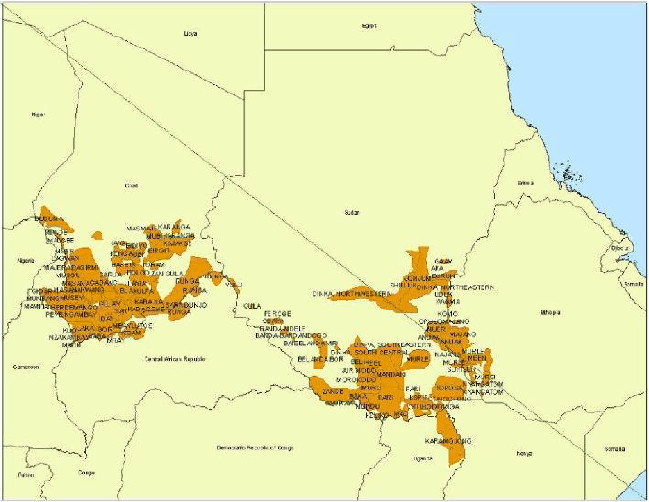
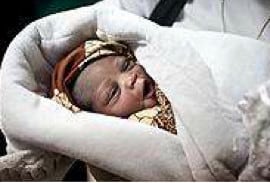
      As you read this, DeDe and I are Up Country in northern Kenya. We are researching Unreached People Groups at Kakuma Refugee Camp. The following story is from our upcoming ebook,  Trampled Grass. You can follow both of us on Twitter with hashtag   #UpCountry.   CHAPTER 4   UP COUNTRY       “I’m going up the country Got to get away.” – Canned Heat in “Up the Country”         Most of the stories in Trampled Grass take place in the part of Uganda called “Up Country.”   This rural and wild part of the country is often sneered at by residents in Kampala. It’s considered backwards and unstable. It’s our favourites part of the country.   Uganda isn’t a large country.   It compares roughly in size to our state of Colorado.            Size of Uganda compared to the U.S.   You cannot understand Uganda without a geographical understanding of its relationship to the Nile River.   The Nile begins its long journey as it surges out of Lake Victoria at Jinja, Uganda. This is considered the source of the great river and the river is called the Victoria Nile at this point.   The River heads north then turns west across central Uganda where much of its mileage is actually a large swampy area called Lake Kyoga.       Uganda’s main north-south highway crosses the Nile at one of the country’s most beautiful spots, Karuma Falls.   This is where Up Country begins. The land across the Nile is completely different. The people are different also. The Up Country tribes are primarily Nilotic while those south of the Nile are Bantu. This is an important delineation between the two regions. Until a decade ago, you crossed at Karuma at the possible risk of your life. Northern Uganda was in the purview of the Lord’s Resistance Army. More on that misnamed group later. Before turning north, the Nile passes through Murchison Falls National Park in and out of Lake Albert. This area is renowned for its animal life and beauty.   It’s now called the Albert Nile and crisscrosses Up Country before entering South Sudan on its still long journey to Egypt. Most of the stories in this book take place along the Albert Nile. There are three major refugee camps along the River: Adjumani Camps, Rhino Camps, and Koboko Camps. The first is where Dinka refugees have settled, the second is primarily the Nuer tribe, and Koboko contains Kakwa refugees from neighboring Congo.   I feel much more comfortable in Up Country than the urban shores of Lake Victoria.   It’s probably because I’m from “the sticks in Louisiana.” People from our largest city, New Orleans, sneer at our part of Louisiana as “backwards and ignorant.” So I understand about how Up Country folks feel.   Many times they use the term “marginalized.” They’re underdogs.   And we Americans always like an underdog.   Up Country.     In Trampled Grass,you’ll learn about the people who live Up Country, a place where you’re made to feel welcome. A place where babies often burst out crying at the sight of a white man.   It’s Up Country.     A place we love.      

Chapter 2 Trampled Grass

    A word from Curt Our upcoming ebook,  Trampled Grass, will be released in late September.  It contains forty stories about the amazing people of South Sudan and northern Uganda. The purpose of Trampled Grass is two fold: 1. To share stories that put a face on what is happening in a country we’ve come to love,  South Sudan. 2. To encourage Americans to get involved by praying, giving, sending, and going.  Trampled Grass will retail for $1.99 and proceeds will go to our organisation’s mission fund,  The Lottie Moon Christmas Offering. Get your passport out. Pack your bags and load your camera. You’re going to an Amazing place. Africa. Enjoy the journey.   Chapter  2   Trampled Grass   “When two elephants fight, it’s the grass that gets trampled.” —African Proverb   This collection of stories is not about the two elephants that have destroyed our adopted country of South Sudan. We’ll leave that to the political experts. As we say back home, I don’t have a dog (or elephant) in this fight.   My concern, as well as stories, is about the trampled grass: the innocent everyday citizens of South Sudan.   “This war took away something we must have: our opportunity at education.” -Ulua Camp School Boys     They are personally paying the price for the civil war that has gripped South Sudan since mid-December 2013.   We’ve met these brave people in the refugee camps and settlements along the border of South Sudan and it’s neighbor, Uganda. These are their stories.     The history and background of the current situation is complex and long. Here’s how it’s playing out presently:   A power struggle exists between the two strongest men in South Sudan, President Salva Kiir and former Vice President Riek Machar. Their sharing of power broke in July 2013 when President Kiir fired his entire cabinet, including Machar.   Kiir is from the Dinka tribe, South Sudan’s largest tribe.   Machar is from its second largest, the Nuer.   The fighting and violence is not all about ethnic allegiance, but the people you’ll meet in the following stories—Nuer, Dinka, Shilluk, or Zande— were trampled by soldiers, rebels, even neighbors who viewed them as the enemy.   Many lost family members.   Some fled south to the Ugandan border. That’s where we met them in the refugee camps and villages.   They are the trampled grass.   And these are their stories and the stories of the heroes who’ve reached out to them.   Joseph and Jessica Anyovi, refugees as children, have used their past experiences to help others.

Preview Trampled Grass Chapter 1

 A word from Curt Amazed.  It’s a word that we often use in Africa. Our upcoming ebook,  Trampled Grass, will be released in late September.  It contains forty stories about the amazing people of South Sudan and northern Uganda. Its subtitle says it all,  “Stories of Courage and Hope.” We’ve met so many heroes among the South Sudanese refugees as well as the many Madi and Kakwa nationals who’ve opened their hearts and doors to thousands of the homeless. The purpose of Trampled Grass is two fold: 1. To share stories that put a face on what is happening in a country we’ve come to love,  South Sudan. 2. To encourage Americans to get involved by praying, giving, sending, and going.  Trampled Grass will retail for $1.99 and proceeds will go to our organisation’s mission fund,  The Lottie Moon Christmas Offering. Get your passport out. Pack your bags and load your camera. You’re going to an Amazing place. Africa. Enjoy the journey. CHAPTER 1    I STAND AMAZED                           In the mirror: may we never lose the curiosity that defines a child.     Pay Attention.   Be Astonished.   Tell Others.   -Mary Oliver     That’s basically what our two years in Africa have consisted of.   Paying attention to the people and places around us.   This Continent never fails to astonish.   We daily stand amazed.   We see beauty and hospitality beyond words to describe.                       Karuma Falls on the Victoria Nile River is where Uganda’s “Up Country” region begins.                 We also experience painful suffering that astonishes the soul.   It’d be easier to ignore these astonishments.   But we must tell others.               When you leave a refugee camp or small village, residents will grab you by the arm and say, “Please don’t forget us. Tell other Americans about us.”   I’m trying to keep that promise.   My job is to tell their stories. That’s the purpose of this small book.   I hope you’ll laugh at some of the stories.   Some will make you cry. That’s the effect they had on me.   I pray you’ll take all of these tales into your heart.   These are stories of courage and hope.                   John, a courageous pastor who returns to the middle of a war to “find his people.”   You’ll meet a hero named Margaret who took her own experience as a refugee and uses it to bring hope to an entire refugee camp.                         Peter, a Dinka refugee on the run with his family, who adopts a lonely boy from the Anuak tribe.                         As we begin, a word of advice:   I love Africa but often have hankerings for things I miss from back home. Right now, I’ve coveting a bag of Cheetos.   Not just any kind—but crunchy Cheetos. I hope someone will bring a bag (or two) over soon.   When those of us in self-exile get these delectable treats, we face a conundrum: do we devour the entire bag in one fell swoop or savor a few Cheetos each day?   We have friends over here that nearly needed marriage counseling after the wife scarfed down a whole care package of Reese’s Peanut Butter Cups while the husband was away!   Trampled Grass is like that bag of Cheetos (or Reese’s Cups); you can read through it quickly bypassing (for now) the links.   Or you can slowly savor each chapter with its portals, photos, songs, audio and video.   Snippet calls these links “discoverables.” They allow you — the reader — to delve deeper into the stories.   Unlike those eaten Cheetos, these links will be present on your next visit.   I’ve tried to capture it with my journal, camera, and soul.   It’s now your book.   Enjoy. Be astonished. Pass it on.   S.C. Iles   Entebbe, Uganda   August 2014  

2 Stories: Why I’m thrilled about David Platt

              A Word from Curt: Passion! It’s a good word. It’s the best word that describe David Platt, our new president and leader of the International Mission Board. Passion. What’s even neater is that Platt has another trait that doesn’t always travel in lock step with passion. Humility. Those that know him use those two often juxtaposed words to describe him. Passionate and humble.  It’s going to be fun watching how God uses David Platt in the coming days, weeks, and years. I’m thrilled.                               2 Stories: Why I’m Thrilled about David Platt leading the IMB.   Curt Iles Entebbe, Uganda   I say it without reservation: I believe God’s man has been selected as the president of our International Mission Board.   We are thrilled that David Platt will be leading the IMB’s vision “. . . of a multitude from every language, people, tribe, and nation knowing and worshipping our Lord Jesus.”       I am not a theologian. I’m a storyteller. Here are two stories of why I’m excited about David Platt:   1. Two Couples in Tough Country       Robert Lane, his wife Maridath and their partners, Selvin and Laurel Jeremiadoss, serve in an isolated part of South Sudan. These young IMB missionaries, with small children, have remained with their Dinka Rek people through the chaos and uncertainty that is present day South Sudan.   They’ve won the respect of their neighbors and are seeing Gospel fruit and church planting.   We had the privilege of being with them last week when they heard the news of David Platt’s election.   They were beyond thrilled.                     They became energized at the prospect of Platt leading the organization they’re pouring their lives into.   Our younger generation is already responding to David Platt as our leader.   My wife DeDe and I are nearly sixty and are SBC Lifers. Baptist born, Baptist bred, and one day we’ll be Baptist dead.   We, and the churches we’ve been members of, have supported the IMB, Cooperative Program, and the Lottie Moon Christmas Offering.   As International Service Corps workers in Africa, we see daily how Southern Baptists are invested in what God is doing here.   We’re thankful. Extremely grateful. We feel both humbled and honored.   I’ve felt strongly that our next IMB leader needed to be younger. Someone who could build on the legacy and foundation of our past two presidents. A man who could communicate missions passion to our American churches.

Brick by Brick

                                This story, “Brick by Brick” is featured in our upcoming ebook,  Trampled Grass. I wonder where he’s at. I hope he’s still alive. I first met Batuk the Dinka at a lonely border checkpoint in South Sudan just north of the Tri-Corner of where South Sudan, Uganda, and DR Congo converge. The Ghazi checkpoint is deep in SS’s Kakwa territory and it surprised us to see a Dinka there. He was easily identified as Dinka, the tallest people in the world. They are viewed by other tribes as arrogant and aggressive. Batuk didn’t make a good first impression. He was dressed in a running suit and approached our vehicle with a swagger that implied, “I’m in charge.” He was the immigration Officer for this stretch of pot-holed road that can only charitably be called a highway. Batuk began an interrogation of where we five “Mzungu” men were going and why. As we informed him of our mission work, he scoffed. “Jesus is a white man’s God.” He continued his monologue ending with, “If Jesus appeared right here, I wouldn’t bow down to him.” We were glad to leave his checkpoint and head north but knew he’d be waiting on our return trip. Four days later, there he was. Still dressed in his running suit uniform. However, we’d written down his name and addressing him personally was the first brick to fall in the wall between us. Several months later, DeDe, our son Clint, and I returned though Ghazi. As we bounced north, we were ready for the checkpoint and Big Batuk. First of all, I addressed him by name and alluded to our previous visit. A quizzical smile appeared on his face. I handed him the photo shown below. “You said Jesus was a white man’s God.” ​ ​ This painting, one of my favorites, is from the Catholic Guesthouse in Goma, DR Congo. He glanced up from the photo. “That’s just how some artist drew him as African.” I shrugged. “Every culture makes Jesus look like their own.” I put my white hand on his dark arm. “Besides, the real Jesus was probably closer to your tone than mine.” He smiled. Then I handed him our bribe. A loaf of DeDe’s famous banana bread. “We brought this for you.” “For me?” “Yep.” It works like the Proverbial Charm: a bribe of bread, cookies, or bottle of water. I even sometimes give a copy of one of my books. Anything but money. He ushered us through the checkpoint, wishing good luck for our journey. Three days later on our return, he greeted us effusively. It must’ve been the banana bread. He stood toe to toe with me. “I have one thing I want from you.” I stiffened; ready for the infamous “African Ask” we face nearly daily. “I want two books.” He had my attention. “I want a book called 70 Great Christians and I want a Bible.”   I’d never heard of the book but promised I’d find it if possible and deliver it in January. He walked us to our Land Cruiser. “God bless you on your way home.” We waved and headed south. Over the next ten miles of potholes we talked of the change we’d seen in him. It wasn’t the banana bread. I firmly believe it was the kneading work of the Holy Spirit. Back home in Uganda, I ordered 70 Great Christians from Amazon. Our son Terry brought it over last month. Our guard Oscar is currently reading it. It’s a fine book covering historic Jesus-followers from ‘The’PostlePaul’ to Corrie Ten Boom. I planned on presenting the book and Bible to Batuk as we passed through Ghazi next week. But we won’t be going. Crossing the border into South Sudan is sadly out of the question right now. As I think and pray about people in the war-torn country of South Sudan, I often think of Batuk. How is he? Is he still at his border post deep among the Kakwa, whom we love deeply, but have a history of disliking the Dinka. I pray for him. Will you join me in praying for him? Pray that somehow I can get the books to him. He needs to know there is one white-face that keeps a promise and is not put off by his demeanor and attitude. As you pray, pray for Batuk’s safety. Pray that Jesus, the Prince of Peace, will come to rule in his heart. What is happening in our country of South Sudan is heart breaking. But in spite of the chaos, God is working. Two of our team’s couples saw 75 people baptized yesterday in a remote part of South Sudan. God is working. I also believe the work God started in Batuk’s heart is ongoing. Even though we’re currently shut out of Ghazi and SS, we will continue to work. Even though you are a continent and an ocean away, you can be part of what God is doing. Pray! Pray for Batuk. People are unreached for a reason. Often, they’re in difficult places with difficult conditions. Many times the people are just difficult. They try to drive us away. Lord, help us see them as you do. – See more at: http://www.creekbank.net/heartbroken-but-still-in-love-south-Sudan/#sthash.4ahrEXQV.dpuf

Storm Fatigue

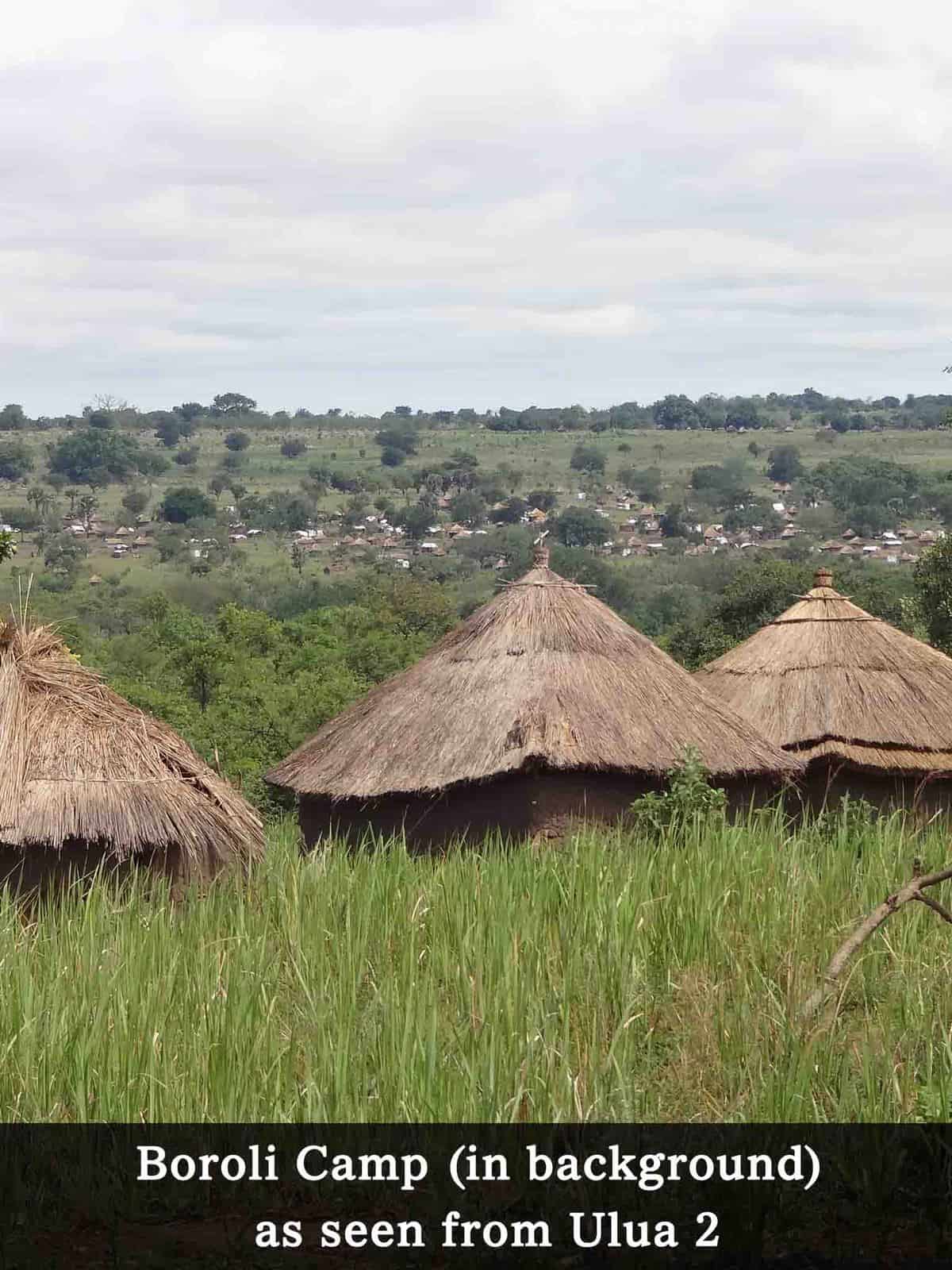
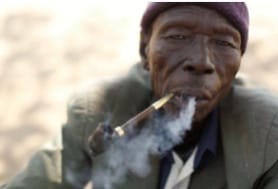
Prayer Update: Bob, Robert Franklin, and I leave Tuesday for a trip to Adjumani Camps in Uganda. Please pray for us as we share from the Storying Cloth, distribute Audio Storytellers in Dinka, Arabic, and Madi. We’ll be tweeting at hashtag  #UpCountry and Facebook at cur tiles.         “Storm Fatigue” is one of the forty stories in our upcoming ebook, Trampled Grass. Enjoy!         I’d suspected it when the tall Dinka woman was putting the finishing mud touches on a granary at Mirle Camp. She was planning on being here a long time. She had storm fatigue.   It was confirmed by a camp leader. “When will you go home?” “I won’t be going home.” He kicked at the red soil. “This is where I’ll be.”   Most of these refugees had been here before. They had straggled home in the years after the 2005 Comprehensive Peace Agreement. They’d left camps like Mirle. Or exile in Khartoum, northern Sudan’s capital. Shelters in Ethiopia and tukuls in the Kenya desert. Even many of those who’d settled in Europe or North America returned to have build New Sudan. They came home full of optimism. They finally had their own country, free of the Arab Islamic North. Many of the younger ones had never been to South Sudan. All of their lives had been spent as refugees. Now, with their new country only two-and-one-half years old, civil war had erupted. Many of the refugees were back at places they’d never expected to see again. Had hoped not to see again. Their dreams shattered. Their hopes gone. I recall Poppa Pipe. That’s what I call him. One look at the photos above tells you all you need to know about his name. He’s Dinka from Upper Nile State—scene of the some of the worst of the fighting. Knowing the situation and his age, he’ll probably never touch the soil of South Sudan again. It’s storm fatigue.     And it makes me think of Cameron Parish, Louisiana. Cameron Parish lies in the extreme southwest of our state, about seventy-five miles south of my piney woods hometown. But it’s a thousand miles away in culture and geography. It’s a beautiful, lonely place. Much of the parish is marshland with the population living on natural ridges called cheniers. It’s a haven for waterfowl, seafood, and fish. The small population consists of hardy Cajuns who love their homeland dearly and cling to their independent lifestyle. Cameronites are the kind of people that may be hard to get to know, but once you know you them, easy to love. Up until 2005, Cameron Parish residents divided life into “Before and After the Storm.” The Storm was Hurricane Audry. The time was late June 1957. Books have been written about the hurricane and what happened. Over 600 people lost their lives when the storm swept in and the rising water trapped residents. Every family lost someone close. It changed Cameron Parish. Some folks moved north, never to return. Most returned and rebuilt their lives. Many, as insurance, bought homes in our upland inland area. A place to go when the storms came. I recall the lines of “Acadian Driftwood” Some stayed on to finish what they started. They’re just built that way. The next fifty years were mostly kind to Cameron Parish. Most hurricanes veered to the east or west. Several clipped the area but there was nothing like Audry. Life carried on as “before Audry” and “after Audry.” Until Summer 2005. Louisiana was dealt two blows on its eastern and western borders. You know all about Katrina and New Orleans. Katrina didn’t even bring rain to Cameron Parish. But rain came three weeks later when Hurricane Rita hit SW Louisiana. Cameron Parish was in the storm’s sights. Fortunately, there was no loss of human life. Older residents haven’t forgotten Audry and still evacuate early. After Rita, most returned to find their towns and villages were devastated. Even the marshes were changed forever. Salt water now existed where it had never been. They began rebuilding their churches, stores, schools, and homes. Everything was built according to new building codes, hopefully putting dwellings above the flood line. Then in 2008, Hurricane Ike came ashore to the west of Cameron Parish, directly striking Galveston, Texas. Even though the SW Louisiana coast was spared the strongest winds of Ike, the flooding was worse than Rita. Hundreds of newly constructed homes and businesses went under. This time Storm Fatigue set in. Many people had had enough. They just didn’t go back. That’s what we’re seeing in the South Sudan camps. Storm fatigue. They’d had enough. Observing the difficulty of refugee camp life, DeDe said it best, “For people to willingly live and stay here makes me wonder how horrible were the things they fled.”   There is one group that still plans to return. It’s the young people. I’ve always loved teenagers and enjoyed being around them. Every refugee camp has a group of teen boys. They have a hard look when you first meet them. As we sat among them and listened, one thing became apparent: their desperation to resume their education. They know camp life has little future for them. They must get back in school. Somewhere. Soon. I asked them the same question. “Will you go home?” Every one of them, without exception, replied, “Oh, yes. Not now. But later when things get better, er, we will go home.” They would also look northward. “South Sudan is our home. We will go home.”    

Lost in Translation

I guess you could say I did a TransAtlantic  Translation of “The Big Red Goat.”   My Southern-fried tongue gets me in lots of trouble over here. The stories below are only a few of my major gaffes.    A word from Curt: This week I’m “out of the office.”  DeDe is teaching English at Uganda Baptist Seminary in Jinja. I’m with her catching up on a month’s worth of stories. Your prayer support (we call it “holding the rope”) is needed more than ever. Three prayer requests: 1. DeDe as she teaches dozens of choice young men and women who are committed to learning and sharing the Gospel of Jesus. 2. Our leaders Bob and Nancy who are deep in South Sudan teaching Biblical Storying. 3. That my writing will bring impact and influence for the Kingdom of God. We’ll be putting up fresh prayer requests using Twitter Hashtag   #WilluPray? Jerry Clower     Lost in Translation: Translating for Jerry Clower   I learned early on: don’t try to tell a joke to Africans. It just doesn’t translate well. So I should’ve known better. Known better than to play a Jerry Clower story in the car. My hero, Jerry Clower Three young African friends were riding with me after a full day in the Bush. As we headed back to town, a big goat bounded across the road.   These goats have found shelter from the storm. Nimule, South Sudan That’s when the plan was hatched. I knew they’d enjoy Jerry Clower’s “Big Red Goat.” It’s one of Clower’s shortest (2 minutes)  tales. My colleague David Crane nearly choked on a piece of chicken when I played it for him. It’s a story that always draws a burst of laughter at the punch line. That is if the hearers understand. With little introduction, I played “Big Red Goat” for my African friends.  They listened with polite attention. A glance in the rearview mirror assured me they weren’t getting much of Jerry’s strong Southern accent. They laughed at Clower’s sound effects but the end of the story left them shrugging at each other. I should’ve known they’d have difficulty. Africans have lots of trouble with American accents, especially the more Southern-fried varieties (like mine and Jerry’s.) That’s why most Americans over here acquire a fake-sounding British English accent. It’s not showing off but an attempt to be understood. I decided Jerry’s story needed translating. “Guys, let me tell you the background of the story and then I’ll play it again: It’s the story of two men who are deer hunting. They come upon a deep hole in the field. Not being able to see the bottom, they throw a stick in. There’s no sound, so they get a stump and chunk it in. Still no sound. One of the men sees an eight foot section of railroad track nearby. ‘Let’s throw it in there and I bet we’ll hear when it hits the bottom.’ The two men manhandle the heavy piece before sliding it in the hole. As they wait, a big red goat jumps into the hole. One of them says, ‘Did you see that?’ ‘Yep, it was a big red goat!’ Just then a man came walking out of the woods. He asked the hunters, ‘Hey fellows, have you seen my big red goat?’ The hunters looked at each other and one answered, ‘Yep, he just jumped into this hole.’ The man said, ‘That’s strange. I don’t see how he could’ve done that when I had him tied to an eight-foot piece of railroad track.’ “ I can hear y’all laughing all the way from Doodlefork to Deweyville. My African friends also laughed. We’ve spent enough time together that they’ve deciphered and decoded my Dry Creek dialect. I re-played Jerry’s “Big Red Goat”  and they seemed to really enjoy it. I think they pieced together the story from Jerry and me. At least they were polite enough to laugh at the right spots. If you’re ready for a good laugh (and who isn’t) you can hear Jerry’s version of Big Red Goat.  You can learn more about one of my heroes at http://en.wikipedia.org/wiki/Jerry_Clower            Jerry Clower at the Grand Ole Opry ******************************************************************** More on the perils of a Southern Accent in Africa: Two days ago I went in a northern Ugandan duka (store) to buy a tub of butter. The dominant brand is called “Blue Band.” I asked the middle-aged clerk, “Dada, I’d like a container of Blue Band.” She dutifully returned with a blue ink pen. At least she understood part of my request. “No. I mean Blue Band.”   I used both hands to frame an imaginary butter tub. “Blue Band. Butter.” She twirled the pen in her hand. An Ugandan standing beside me said, “He wants Blue Band.” The clerk went straight to the shelf and returned with my butter. The three of us had a good laugh. My tongue had made us another friend.     **************************************************** It was my last day in the Adjumani refugee camps. Pastor Joseph said, “Madeline wants you to come by her store. She wants to give you a coke.” I glanced at my partner in crime, Ethan. He shrugged. I guess she’d learned how much I like coca-cola. We drove to Madeline’s roadside business. After greeting us and giving us each a piece of fried cassava, she hurried toward her house. She returned at a trot, a package under one arm and a rooster under the other. Her gift wasn’t a coke. It was a cock. A big fine Rhode Island Red. Ethan Bossier (on left) and Roho The package was sesame seed to feed our rooster on the long drive across the Nile. I named him Rojo after an old song about a fighting Mexican rooster (told by Archie Campbell). Enjoy “Rojo” on You Tube. Disclaimer: no animals were harmed in the making of this story or video.   Ethan, Madeline, and Curt. I’m holding Rojo. I could go on and on

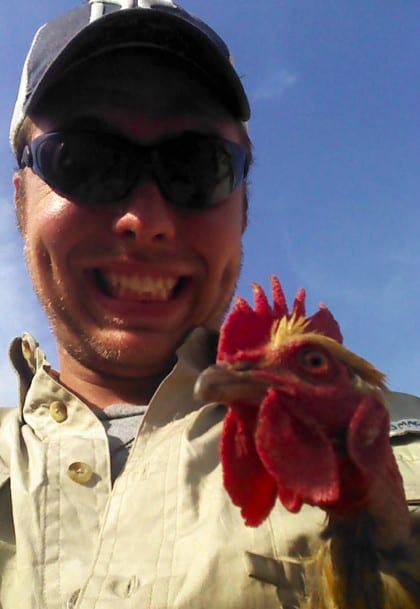
What do you do with a Gift Rooster?

              Relationships It’s always about relationships! Current Video: A wonderful way to greet http://youtu.be/KQqV7uU-7Q4 See how Nubian children in West Nile Uganda greet visitors.      The Gifts of Africa: Imported cheese and a rooster named Roho   You never know what a day in Africa will bring. It often involves gifts that were unexpected and delightful. I received two in the last month. Two rounds of Imported cheese. And a rooster named Roho.   I drove to Jinja, Uganda last week for seminary graduation. My friend Pascal Ndihokubwimana had finished seminary. Pascal is a brave pastor with a long last name. I’d like to have been there on the first day of seminary class when Dr. Sivage called roll. Pascal had perservered to graduate. Eleven long trips over three years Making the bus journey through a war zone in eastern Congo, through Rwanda and across Uganda. We had the privilege  of being a small part of helping him make and complete this journey. His wife Juliet, whom I’m met in Congo, came to see him graduate. She doesn’t speak English and my French and Swahili are poor. He smiled as she handed me a plastic bag. I peeked in at two perfect rounds of yellow cheese. “You made it?” Pascal answered for her.  “She made it for you.” I cut a slice off.  It was wonderful. “Thank you . . . or Merci beaucoup.” I proudly brought the cheese home to DeDe. Pascal and Juliet   Our recent volunteers had left a can of spam. There’s not much I like better than fried spam. Go ahead and laugh and shake your finger. I know it’s bad for you. And I don’t want to know what it’s really made of. DeDe made a toasted spam and cheese sandwich. I sat down with a cold coke and a spam sandwich. Made with imported cheese and imported spam. Cheese imported from the Democratic Republic of Congo. And Spam brought with care from Kentucky.   As that beer commercial used to say, “It doesn’t get any better than this.”   My second gift started out as a Coca-Cola. Ethan Bossier and I were on our last day in the refugee camps of Adjumani, Uganda. Our friend Joseph said,  “Before you leave, Mildred wants to see you.” “Mildred?” “Yes, you met her at church yesterday.  She wants to give you a Coca-Cola.” We drove by Mildred’s roadside market store. She greeted us with the warm African hospitality I’ve come to take for granted, sharing hot fried cassava hush puppies from a plastic bucket. I’m not crazy about cassava. It’s a sweet potato-like tuber that’s neither bad nor good. It’s tasteless. But fried it’s not bad.  (I come from a culture where a fried piece of leather shoe would be eaten with relish.) Mildred excused herself, presumably to retrieve my Coca-Cola.  I hoped in my heart it might be cold but knew better than to get my hopes up. Africa is the home of cold showers and hot cokes. Mildred didn’t return with a coke.  Under one arm she held a plastic bag.  In the other, she cradled a red rooster. She handed them to me.  Ethan laughed so hard I believe he peed in his pants. I laughed too but knew this was a serious gift. Africans seldom eat meat with a meal. To give away a chicken is a sacrifice. A sacrifice.  A gift of love. The plastic bag contained sim-sim, a sesame seed like grain that makes great honey cakes. I handed both to Ethan. It was then that I noticed Mr. Rooster’s legs were tied. Mildred gave us instructions on how to keep the rooster well in our car.   A little water. A little sim sim. Keep the windows rolled down. It was as if she was sending one of her children off to boarding school. We began our drive to the Lapori Ferry on the Nile.  On our ferry crossing four days earlier, Ethan and I had sat by a goat on the boat.  This time we had our own chicken. I named him Roho after a nearly forgotten song of my childhood about a Mexican rooster of the same name. Ethan named him Kojak. I had no problem with that.  Everyone in Africa has multiple names spelled in multiple ways. Roho/Kojak was a fine looking rooster.  A healthy Rhode Island Red. Ethan kind of wrested ownership of Roho from me, talking to it all the way along the bumpy road. He was pretty docile on our three hour ride to Koboko Town. “What are we going to do with him, Bro. Curt?” “I don’t know. We’ll decide when we get there.” It was a busy time as we reunited with our other team members. We soon walked into the village to share stories. It was dark when we returned.  I got Roho out of the truck and took him behind the guesthouse where the chickens roost. (My daughter in law Sara says you can judge African restuarants by how sorry or good the yard chickens look.  These didn’t look too good. I cut his legs loose and Roho strutted through the yard. “You don’t think anyone will steal him, do you?” “Nah, he’ll be here in the morning.” We were eating supper an hour later when a commotion began among the girls near the kitchen door. A fast moving rooster darted past them into the dining area. It was Roho. He ran straight toward Ethan. “Ethan, I believe he’s looking for you.” He was returned to the roost and that’s where we found him the next morning. We tied his legs and took him with us to Pastor Mark Vukoni’s house.  Ethan presented the rooster to Rose, Mark’s wife.  The Vukoni’s both are Madi and come from Adjumani town.  At least we were leaving our rooster with kinfolk. Ethan, who is a load of fun, whispered,  “Do you think she’ll cook him for