Together . . . on TheJourney

This week’s African proverb:
“If you want to go fast, go alone. If you want to go far, go together. “
Pamoja!: All together lift
Pamoja: it’s our Swahili word for the week. It means “Working together.” Pamoja. It’s a good word to share with you. As a friend, reader, and prayer supporter, you are working together as we follow God’s leadership in serving in east Africa. Keep praying! Praying for us this week: We’re in Entebbe, Uganda this week. Training with Bob and Nancy Calvert, our friends and co-workers. Nancy speaks at a women’s retreat this Friday (March 8) and Bob will be preaching on missions the next several Sundays at Entebbe Baptist Church DeDe and I will be looking at houses to rent when we come back in May. Pray for God’s guidance as we seek to find the right house in the best neighborhood to minister in and from. Pray for the Echelon Team serving in northern Uganda near the South Sudanese border. Our friends Selvin (see story below) and Laurel, Aaron and Hannah, and Cameron and Kelly are part of this ministry. We will be visiting and learning about a Unreached People Group this week. TheGoPeople (what we’ll call them) are from the Nile River area, completely Muslim, and not currently being reached with the Gospel. Join us in prayer for TheGoPeople. Bob and Nancy Calvert at the Entebbe Market. Read our latest Open Hands Africa newsletter You can also subscribe to the newsletter. As always, we love to hear from you. Email us at creekbank.stories@gmail.com Serving, Curt aka “Baba Clay” and “Bwana Nne.” One Single Bible “Only Heaven will reveal the lives that have been changed by the lives that have been changed by the lives that have been changed by the Word of God.” The year was about 1820. I’m sure the British missionaries left Tamil-land feeling like failures. The southern India Tamil people group had little interest in the Gospel. No takers. No new converts. No believers.
Jenga: Building Together
Jenga. It’s one of my favorite games. It involves removing wooden individual blocks without crashing the stacked blocks. My grandsons love to play it. Jenga comes from Swahili and means “building together.” updated on Sunday, 24 Feb2013 This is a simple sketch I’ve been using called “Where are you?” It uses the mathematical signs for greater than > and less than <. Life’s two biggest questions: Who is Jesus? What am I going to do about who I believe he is? Read our latest Open Hands Africa newsletter You can also subscribe to the newsletter. As always, we love to hear from you. Email us at creekbank.stories@gmail.com How you can pray for us this week: Our KiSwahili language studies. I (Curt) am really struggling with the language. Pray that I will persevere, work hard, and be a good steward of my tongue, talent, and time. s of people opens so many doors. Continue in prayer for Kenya’s national election on March 4. Our school will close down for the week and we’ll go to our future home in Uganda. Pray for peace and unity after the election. Pray for Rachel and J.W. , two Kenyans who decided to follow Jesus today at Hope Baptist Church. Latest blog entry: The Most One-Side Trade in Baseball History Without a doubt, the greatest trade in Astros history brought Jeff Bagwell to Houston in exchange for Larry Andersen. I must admit my reaction when I read of the trade was, “We traded for a third baseman who has never hit more than 10 homers in the minors?” Bagwell moved to first, won rookie of the year, and the rest is history. But it’s not really the greatest trade in history. II Corinthians 5:21 beats Bagwell/Anderson easily: He who had no sin became sin for us so that the righteousness of God might dwell in us. Our sin for the righteousness of Christ! We’re now taking nominations for the top three (3) Astros third baseman. What say you? Blessings, Curt We always love hearing from our friends. Email us at creekbank.stories@gmail.com Why we are on TheJourney in Africa: DeDe and I are simply walking along the path we’ve followed since giving our lives and hearts to Jesus. Because He is our Lord (Boss) and Savior, we seek to be where He wants us to be. For this stage of our journey, Africa is the place. Our job is to serve on our Mission’s Embrace Team. My word for this week is Gratitude. I wish to live the gratitude-filled life. To be thankful for each and every blessing, challenge, and opportunity. My current favorite Swahili term/word: Kipe Moyo! Take heart! Read Curt’s Current Six Words to live by http://www.creekbank.net/2012/10/curts-current-six-words/ Where we are now: My Life Verse is, “But seek first the Kingdom of God and his righteousness, and all these things shall be added unto you.” Matthew 6:33 See this verse in various translations. http://www.creekbank.net/2012/10/matthew-633-a-verse-to-live-by MyLife Statement: “To be a man God can use and be respected by my wife DeDe, our sons, and their precious families.” Curt’s Current Life Plan: http://www.creekbank.net/curts-life-plan/ I invite you to read What Matters Most to Curt or longer version: My LifeJourney Story What I’m currently reading: The Insanity of God by Nik Ripkin Mau Mau and Kenya: Analysis of a Peasant Revolt by Wunybari Maloba My current Heartsong “How Firm a Foundation.” It’s a song that gives me great strength in the trials, struggles, and joys of life. STAY IN TOUCH with TheJourney: Read our Latest Newsletter Subscribe to our Newsletter Website: http://www.creekbank.net Our Creekbank Blog Blog Subscription Facebook Twitter Pinterest Linked In Creekbank YouTube Page Learn more about our published books Curt’s Amazon Page Creekbank Book Page
Bribed, Floored, and More
On TheJourney . . . walking the red dirt roads of East Africa updated on Sunday, 17 Feb2013 February 2013 Have you read our latest newsletter? You can also subscribe to the newsletter. As always, we love to hear from you. Email us at creekbank.stories@gmail.com Click on image for larger view Praying for us this week: Our KiSwahili language studies. Becoming conversant in the heart languages of people opens so many doors. Pray that we will be good stewards of our time and classes. Upcoming Kenyan national election on March 4. Our school will close down for the week and we’ll go to our future home in Uganda. Pray for peace and unity after the election. How the country reacts to this election (they had violence and chaos after the previous election.) will chart the future for this country we’ve grown to love. “Bert and Ernie”*, two guards I met last week. Pray that DeDe and I will share the Good News with those in our “Life Space” this week. *Read more below Latest blog entry: Bribed and Floored “Where in the world is that English girl I promised I would meet on the third floor.” From “London Homesick Blues” by Gary P. Nunn You Tube version of London Homesick Blues by Nunn and Jerry Jeff Walker It all takes getting used to. Africa. Kenya with its British ways mixed into a bubbling dish served with East Africa ways. I smile when a tall dark Kenyan opens his mouth and “British English” flows smoothly out. They have a hard time with my “strong Southern accent” whether in English or KiSwahili. That’s what one national said, “Bwana (Mister) you have a verrrrry strong accent.” Whether it’s a compliment or not, it’s who I am. Another British way is how they number floors on a house/business. (That’s where the lyrics from London Homesick Blues come from. It’s the theme song from “Austin City Limits” as in “I wanna go home with the armadillos…”) For instance, the first floor is “the ground floor.” A local mall has a lower ground floor, ground floor, and the first floor. It’s actually the third floor. That’s explains the homesick Texan’s lament, “Where in the world is that English girl I promised to meet on the third floor?” We know where she’s at. Still waiting on the fourth (or fifth) floor. This week, I made a daring car trip into Central Nairobi. No lights, just right. Every man for himself and the shy driver gets boxed in. I grew up twenty miles from the nearest traffic light. No big deal. Folks in Nairobi can say the same thing about most of their city of 2 million plus. My car trip was to a hardware store. I’m looking for Coleman gas for my backpacking stove. (If anyone knows where some is in Central Kenya, let me know. It goes by “white gas/naptha/namna ya mafuta mepesi.” Plenty of kerosene by no Coleman fuel.) I pulled in the driveway of the building housing the hardware store. Thank you Lord for Google Maps. Of course, I pulled in the exit drive (no signs) and the guard motioned me to back out onto the street. Impossible. I tried to give him my saddest look. Even said, “I’m just a dumb American trying to figure things out.” No luck. He kept waving me back out into the fray. A second guard walked over and took charge. “Baba, you follow me.” He directed me to an angled narrow parking space and guided me in. “Assante sana, bwana. Can you tell me where the hardware store is?” He nodded. “On the first floor.” He lowered his voice. “Baba (father) will you buy me something?” “What do you want?” “Anything from the store.” He didn’t say more, but I knew he was adding non-verbally, “Get me something for helping you.” I glanced back at the car-packed street. “Sure, I’ll get you something.” I hurried into the building making an entire circuit looking for the hardware store on the first floor. No luck at all. Then I remembered where I was and climbed the stairs to the first floor. The hardware store was helpful but didn’t know what white gas/Coleman fuel was. My sketch didn’t help. I looked for a coke machine to buy something for my guard. Nothing. I went back downstairs to the first… I mean ground floor… searching for a cold drink. A bank. An electronics store. Shoe shine boys. No cokes. Then I saw the liquor store. Walking to the entrance, I saw everything but cold drinks. I walked in and there was a cold drink box. Different African sodas and Fanta. Fanta (they say it ‘F ahn ta’) orange. It’s an African favorite. I bought two. The Asian cashier eyed me carefully as she put my drinks in a paper bag with the store’s logo. I found my savior guard near my car. His eyes lit up when I pointed at him and the bag I held. His disappointment was keen when I pulled two Fanta Oranges out. I nearly laughed out loud. He recovered with “Assante Sana, Bwana” and took the bottles. He shared one with his other guard friend. They helped me back out and ran interference to get me back into the traffic. They waved as the new Mzungu (white man) crept along in his old white car (We don’t call it “The Creeker” for nothing.) I had no luck at the hardware store but made two friends. I’d paid my first Kenyan bribe (or tip as they politely call it) and felt all right about it. Seriously, our job here is the same it’s been back home. Planting seeds. One seed at a time. One smile at a time. One life at a time. Building bridges of friendship so we earn the right to talk about the reason we’re here: to brag on the Bwana Yesu Cristo. ( The Lord Jesus Christ.) I’m going to
The African Grapevine
Today is Monday* 11Feb 2013 * “Juma Tatu” Day 3 of the week (Swahili week begins with Sunday) Juma: Week/ Tatu: 3 I Heard it through the Grapevine I was in a store last week and heard it over the stereo system. That unmistakable bass line of the beginning of “I heard it through the grapevine.” It was the Marvin Gaye version (the Creedence version weighing in at ten minutes is my favorite.) I fully expected the California raisins to come prancing in. In Kenya, you hear about the “African Grapevine.” It’s the unique ability that news travels fast. I’ll share several items from my African Grapevine. What makes me homesick: I’m convinced Kenya is exactly where I need to be a this point in my life. But that doesn’t mean I don’t often feel homesick. Here are several things and thoughts that prick my heart: When the British Airways flight from London (the same one that brought us here) comes over between 9 and 10 each night on its approach to Nairobi Airport. Listening to any roots/bluegrass music. It makes me miss Vance, David, Dwayne, and all of my music friends. “Heading down South to the Land of the Pines.” (From “Wagon Wheel” by Bob Dylan) Wishing I could smell some pine sap. Thinking about Dry Creek fried catfish. I’ve had 3 fried meals since arriving in Kenya. My favorite moments of the past week in Africa: a. the whip poor will cousin (Nightjar) that sings each morning in greeting. b. African hospitality The greetings and smiles. c. Tea fields. Walking for kilometers in the waist high green tea fields is wonderful. Why we are here: DeDe and I are part of My word for today is passion. My current favorite Swahili word: kidogo kidogo “little by little.” Read Curt’s Current Six Words to live by http://www.creekbank.net/2012/10/curts-current-six-words/ How you can pray for us this week: Our continuing journey on learning/using Swahil. It is full time job learning and putting into practice our new language. Pray (Ombea) hard! Our ministry in the tea fields and dukas (small stores) in Tigoni, Kenya Peace as our country, Kenya, prepares for a national election. The prior election (2008) resulted in tribal violence and many deaths and displacement. Pray for the national leaders and major tribes, Kikuyu, Kilanjen, and Luo, to model peace and reconciliation. African counting: they begin with the thumb, move across the hand, then come back across. 1-10 on one hand. I’m making a video clip on it. Where we are now: Google Earth image of our current home near Tigoni, Kenya Brackenhurst is a former British golf course now owned by Southern Baptists. It’s coordinates are 1 degree south of the Equator. Due to that, this is considered summer, although the day length seldom changes. Our current elevation is 7800 feet above sea level. My Life Verse is, “But seek first the Kingdom of God and his righteousness, and all these things shall be added unto you.” Matthew 6:33 See this verse in various translations. http://www.creekbank.net/2012/10/matthew-633-a-verse-to-live-by MyLife Statement: “To be a man God can use and be respected by my wife DeDe, our sons, and their precious families.” Curt’s Current Life Plan: http://www.creekbank.net/curts-life-plan/ I invite you to read What Matters Most to Curt or longer version: My LifeJourney Story What I’m currently reading: The Insanity of God by Nik Ripkin Kenya: Between Hope and Despair by Daniel Branch What is my “Heartsong?” My current heartsong is “How Firm a Foundation.” It’s a song that gives me great strength in the trials, struggles, and joys of life. STAY IN TOUCH with TheJourney: Read our Latest Newsletter Subscribe to our Newsletter Website: http://www.creekbank.net Our Creekbank Blog Blog Subscription Facebook Twitter Pinterest Linked In Creekbank YouTube Page Learn more about our published books Curt’s Amazon Page Creekbank Book Page
On TheJourney . . . February 2013
Today is Tuesday 4 February 2013 Hakuna Matata “No worries” from The Lion King. Swahili speakers make fun of how we Americans know this term. Another Lion King word: Jambo. “When a Mzungu (white man) says ‘Jambo’ we raise the price* on everything. It’s evident they don’t know anything.” (Correct term is “Hu Jambo?” which means “no problems.” Reply should be “Si Jambo” (No problems). * There are three basic prices at the Dukas (stores): Japanese tourist price (Japanese will not haggle over price due to loss of face. So they get the inflated price. Mzungu price White man price. Still inflated. Local price Kenyan price. More on Kiswahili: There is no X nor Q in the Swahili alphabet. S replaces X and Kw takes over for Q: Queensland would be Kwinslandi. All Swahili words end in a vowel. That’s why they cannot pronounce my name, Curt. As you well know, Mzungu means “white man.”* A group of Kenyans traveled to South Sudan (home of the ultra-dark Dinka tribe that we will work with.) Returning to Nairobi, the travelers said, “Man, up there, we were mzungu.” A Swahili speaker will hardly ever use the word Kufa (which means “to die” Ku= to/ fa= die) They will say “They’ve stopped.” Similar to our Southern, “He passed.” My favorite moments of the past week in Africa: Watching a long line of Kenyan schoolchildren walking home from school. Practically all of them had a panga (machete). Locals bundled up in ski jackets, wool hats, and boots on a 60 degree F day. The beautiful worship of our Kenyan friends. So much to learn from them. My word for this week is Gratitude. I’m seeking to saturate my life with thankfulness. My current favorite Swahili word: “Lakini” Swahil for “but.” How you can pray for us this week: Our continuing journey on learning/using Swahil. “Assante sana” (Thank you very much) for praying! Our ministry in the tea fields and dukas (small stores) in Tigoni, Kenya Peace as our country, Kenya, prepares for a national election. The prior election (2008) resulted in tribal violence and many deaths and displacement. Pray for the national leaders and major tribes, Kikuyu, Kilanjen, and Luo, to model peace and reconciliation. Where we are now: Brackenhurst is a former British golf course now owned by Southern Baptists. It’s coordinates are 1 degree south of the Equator. Due to that, this is considered summer, although the day length seldom changes. Our current elevation is 7800 feet above sea level. My Life Verse is, “But seek first the Kingdom of God and his righteousness, and all these things shall be added unto you.” Matthew 6:33 See this verse in various translations. http://www.creekbank.net/2012/10/matthew-633-a-verse-to-live-by MyLife Statement: “To be a man God can use and be respected by my wife DeDe, our sons, and their precious families.” Curt’s Current Life Plan: http://www.creekbank.net/curts-life-plan/ I invite you to read What Matters Most to Curt or longer version: My LifeJourney Story What I’m currently reading: The Insanity of God by Nik Ripkin Kenya: Between Hope and Despair by Daniel Branch What is my “Heartsong?” My current heartsong is “How Firm a Foundation.” It’s a song that gives me great strength in the trials, struggles, and joys of life. STAY IN TOUCH with TheJourney: Read our Latest Newsletter Subscribe to our Newsletter Website: http://www.creekbank.net Our Creekbank Blog Blog Subscription Facebook Twitter Pinterest Linked In Creekbank YouTube Page Learn more about our published books Curt’s Amazon Page Creekbank Book Page
On TheJourney . . . in Kenya
Huge Eucalyptus Tree near our home. Friday, Feb. 1 “Juzi Juzi” We’ve been learning about time in Swahil. My current favorite term is, “Juzi Juzi” which means just “The Other Day.” I’ve heard Louisiana country men use the phrase all of my life. Whether they’re standing line at Foreman’s Meat Market, in the front of the post office, or on aisle 8 at WalMart. “Well, just the other day, I told the old lady…” Yes, we have no Ndzee Learning a new language is an experience. It’s really stretching my fifty-six year old Southern Redneck tongue. I supply lots of unintended humor to the Kenyans who are trying to teach me as well as the poor souls I practice on daily. Banana trees are plentiful in East Africa. The KwiSwahili* word for banana is “ndzee.” I’m still trying to get the word right. The n is nearly silent and their e is pronounced as “eye.” As our teacher, Petero, vainly tried to help me pronounce “banana/ndzee,” I asked, “Have you ever heard the song, “Yes, We Have No Bananas”? Enjoy the Muppet’s “Swedish Chef” version of “Yes, We have No Bananas” http://www.youtube.com/watch?v=PrmBWtOWYsA Or watch this 1930 cartoon on the song: http://www.youtube.com/watch?v=HygopC4S5W0 Petero laughed the rich Kenyan laugh I’ve grown to love. “What did you just say?” I explained about the song from the early 20th century, “Yes, We Have No Bananas/Ndzee.” Petero shook his head at me, his oldest student. DeDe also shook her head. “If you don’t quit telling “Hadithi” (story) about every word and phrase we learn, we’re going to finish this class about 2016.” Enjoy the Muppet’s “Swedish Chef” version of “Yes, We have No Bananas” http://www.youtube.com/watch?v=PrmBWtOWYsA Or watch this 1930 cartoon on the song: http://www.youtube.com/watch?v=HygopC4S5W0 * * * Then, last Sunday, a wonderful Hadithi was shared during worship at Hope Baptist Church. My new friend, Glen Moore, was leading a Bible study on tithing and giving our “first fruits” to the Lord. He shared about a recent experience with ndzee. One of the members brought a box/stalk of homegrown bananas as his first fruits offering. The church decided how to use the bananas: They had a Baptist auction. Except it was a Kenyan Baptist offering. The bids were cumulative. If you bid 10 shillings and a bidder topped you at 20 shillings, you both must pay. The auction was completed with numerous bids and a sizable amount given for the bananas. The accumulated monies were given to the church to help the poor in the community. But they still had a box of bananas to do something with. The congregation gave the bananas to Glen and his wife Jeri. Jeri took them home and prepared a whole boatload of banana bread, brought it to church the next Sunday, and they had a true Baptist fellowship meal. I like that story. It illustrates the spirit behind an offering of “first fruits.” Giving our best to the Lord and allowing Him to multiply it. According to the Bible, He has a pretty good track record at taking food, multiplying it in amazing ways, and not wasting a scrap. And I learned (or re-learned) this lesson at a small dirt-floored church not far from, you guessed it, the Banana Hill Road leading into Nairobi. Oh by the way, thinking of Jeri’s boatload of banana bread, have you ever seen the song, “Day-Oh: The Banana Boat Song?” It’s used in a hilarious scene from the American movie, “Beetlejuice.” http://www.youtube.com/watch?v=i3j9jpBez8g&list=FL1VaG4D1vPdYcJ74S6a_B4g&feature=mh_lolz Well, that’s a hadithi for another time. Some of you are probably thinking, “I thought we sent you to Africa to do something, not tell a bunch of stories.” Stories are who I am. They have a God-given power to connect hearts in an amazing way. I’m learning from the stories of folks I meet daily, and I’m having opportunity to tell my stories. Or better yet, God’s story. The best story of all: the story of Jesus. “The shortest distance between the truth and a human heart is a story.” -Anthony DeMello You don’t have to travel to Africa, or even Abbeville or Arcadia, to gather stories. They’re all around you—hanging like fruit from, you guessed it, a ndzee tree. *KwiSwahili literally means “Language of Swahili.” It’s the trade language of East Africa. You can learn more about the concept of first fruits and tithing in these scriptures: Leviticus 27:30 Deuteronomy 26:1-2 Malachi 3:6-12 II Corinthians 9:7
People need a Handup; not a Handout
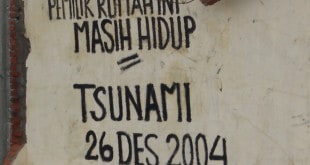
One of the things I’m determined about in Africa is not to be part of creating a dependency among the folks we’ll minister to/with. I’m excited about being part of hands up, not hand outs. March 2005 Sumatra, Indoneisa Goats, Boats, and Saws From Hearts across the Water by Curt Iles A hand up…. Not a handout One of the Displaced Person’s Centers along Sumatra’s Northern Coast is named Garut. It is one of many nondescript assortments of crude buildings, tents, and amassed people you find all along the coast. It was not a village before the tsunami. This new village of Garut consists of 300 families from five different areas. The village leader explains that the residents all come from coastal villages wiped out by the wave. They have come together here on higher ground to build a new life and a new village together. This conversation took place under a large United Nations tent that serves as the village school, hospital, and meeting area. I am simply an eavesdropper on the amazing conversation I’m going to relate to you. The village leader sat down with Jim. Jim is from an American aid group and has the wonderful but daunting task of allocating $16 million worth of tsunami aid throughout the affected areas of Southern Asia. Beside Jim sits “C”, an American who has spent his entire life among the Indonesian people. C’s as we will call him, job is to interpret this important conversation. I’m sitting ten feet away playing dominoes with a group of children. However, I’m not going to miss one word of the conversation going on behind me. I’ve been with Jim for two days and am very impressed with his spirit and vision. He is going village to village to find out firsthand about the needs and how best to be good stewards of the resources available. After some visiting and pleasantries, Jim asks the village leader what they need most. There is a long silence as if the leader is going over a mental shopping list in his mind. Then he replies in Indonesian. C seems puzzled and asks a question back. The village leader repeats his word. C smiles as he tells Jim, “He said most of all they needs goats.” Jim says, “Did you say goats?” “Yes, he says if every family in Garut has 5-7 goats, they could make it. This would allow them to have milk, food, and build large flocks.” Everyone sat in silence for a few seconds. I don’t know what the others were thinking but here was my thought: Here is a man and a village that is not looking for a handout. They are looking for a “hand up.” But the village leader wasn’t through… There was another lengthy exchange between C and the Garut leader. C then turned to Jim, “They would also like boats if possible. The men here were mostly fishermen. They lost all of their wooden boats in the tsunami.” C pointed toward the sea which was about one kilometer away across the low land wiped out by the wave. “Right now they are still too scared of the ocean to go back out on it, but they know they must, and will, go back to fishing. You can’t fish without boats. They need boats.” Once again: A hand up… not a handout. The third conversation between the Indonesian and C was long and full of many gestures. I don’t know about Jim Brown but I was nearly leaning in awaiting the next interpretation. C smiled as he related to Jim, “He says they would love to also have cutting tools. They do not have any tools to properly cut wood. Saws and axes would allow them to cut firewood for use and sale.” I could see in my mind these “industrious Indonesians” cutting and sawing up the fallen timber that was everywhere on the tsunami devastated areas. For some strange reason I thought of Marcel Ledbetter with his lightweight McCullough chainsaw. I wondered if any of these villagers had seen a chainsaw in action. That was the extent of this conversation. At this point it began to rain. I’d already noticed that the area under the tent and around it had earlier been a barnyard. I knew this because the soil was rich with dried “barnyard fertilizer.” Outside the tent the ground became wet, sticky, and smelly. But that didn’t take away my strong belief that this village of Garut was going to be an oasis of peace, growth, and prosperity. It was lunchtime. A nearby tent was dispensing sealed bowls of Japanese rice. A village woman checked off the name of each family as they received their allotment. Everywhere in Garut there was a feeling of looking forward, organization, and teamwork. Right about then is when something started burning a hole in my pocket. That burning sensation came from a large gift of over $1000 sent by the children of Fairview High School in Grant, Louisiana. They had instructed me to use it where it would help most. All of a sudden I had a pretty good idea that those Fairview students were going to be in the goat, boat, and saw business. It looked like a good investment to me. When we returned to Jakarta I went to our Aid office and deposited this money. I told the staff accountant to use it to buy “goats, boats, and saws” for the northern coast village of Garut. It was my privilege to be the middleman in linking the two villages of Grant, Louisiana, U.S., with Garut, Sumatra, Indonesia. People ask me, “Will you return to Indonesia?” I don’t know the answer to that question. I hope so. But I know there are so many other places to go and see also. But if I do, I know one place I’ll go… And if you should ever go to the northernmost island of Indonesia- the large island
Boots on the Ground
Friday morning, Jan. 18 It’s Friday morning here in Nairobi. Eight hours ahead of the US. My American friends and family are abed, but close in my heart. Today we move (again) to our home for the next three months: Brackenhurst Retreat Center. It’s located in the Kenyan “foothills” at 7800 feet. This will be our home as we begin Swahili language training. Stay in touch. It warms our hearts to hear from our friends. Africa is a big place!
Leaving the US of A.
Tuesday, Jan. 15 3:11 AM CST/ 9:11 AM LONDON We are in London gearing up for another flight. Everything’s been great. Keep praying! Monday, Jan. 14, 2013 Houston Airport Waiting on a plane. London. Then Nairobi. DeDe with our chauffeur (and son) Clint at the Houston Airport The Taposa are a South Sudanese tribe needing churches to adopt them. Learn more at www.imb.org
Prayer Request for our Work in Africa
Join us on TheJourney! SUB-SAHARAN AFRICAN UNENGAGED PEOPLES – Did you know that there are 56 unengaged unreached people groups (UUPGs) with a population of more than 100,000 people in Sub-Saharan Africa and that 26 of these are in East Africa? The majority of these are in South Sudan and the Democratic Republic of the Congo; most all of them are in very difficult locations. Please pray for those completing research on these groups so that the Gospel can be taken more effectively to them. Pray that these peoples will one day join the throng at the throne where, unlike their current lives, “They shall hunger no more, neither thirst anymore, neither shall the sun beat down on them, nor any heat; for the Lamb in the center of the throne shall be their shepherd, and shall guide them to springs of the water of life; and God shall wipe every tear from their eyes” (Revelation 7:16-17). http://prayerthreads.imb.org
Don’t Pack Air . . . TheJourney
“Pack no air” or “Don’t pack air.” They say the same thing. Which one sounds best to you? That’s Big! The Sheer Size of Africa. Still The Dark Continent? This nightime satellite image illustrates the lighted population of Africa with its neighbor to the north, Europe. Heading to Africa We leave this Monday (Jan. 14) from Houston. COUNTDOWN WIDGET
Words from a fellow struggler on The Journey
Wed. Jan. 2, 2013 I’m calling it The Journey. 12 days left in the piney woods and I’m happy and sad. It’s what I’m on. In fact, it’s what we’re all on. TheJourney. The path and direction of our life. 2013 is a new section of the journey. The road is clear and seems level as far as the eye can see. But past parts of TheJourney remind me that the coming year will be filled with uphill climbs, boulders in the path, fatigue, and “many dangers, toils, and snares” as John Newton said in “Amazing Grace.” I’m a fellow struggler on this journey. Any advice or wisdom I possess is simply from stumbles, storms, and the unspeakable comfort of God’s direction of each step. Join me this year on TheJourney. As my journey (Lord willing) goes to a new place and new direction on “The Continent.” Africa. Each year on both sides of January 1 , I evaluate my life plan. This week on our blog I’ll be sharing the current plans. I hope you enjoy following our “10 Pins Life Plan” in the coming weeks. I encourage you to develop your own written plan. Blessings on your Journey. Curt Iles 2013 My Life Plan as of 1/2/2013 What Matters Most: PIN 1. My Walk with Jesus: I want to chase hard after Jesus. My life verse: Seek ye first the Kingdom of God and His righteousness and all these things shall be added unto you. Matthew 6:33 I want to chase hard after Jesus. My life statement: I want to be a man God can use and be respected by my wife, sons, daughter-in-laws, and eight grandchildren. My Current Six Words as of 1/2/13 Walk Daily Connect in Relationships Grateful Prayer Simplicity Encourage! LLL be a Life Long Learner 2013 Keyword: Juxtaposition!* Juxtaposition is the process of comparing and contrasting two totally different objects. Such as apples and oranges. Or maybe, Africa and the Piney Woods. It should be fun! 2013 Key Verse: “When they saw the courage of Peter and John and how they were uneducated common men, they took note that they had been with Jesus.” Acts 4:13 Key Word: Juxtaposition Heart Song: “I Will Arise and Go to Jesus” Bible Book: Colossians/Sermon on the Mount (Matthew 5-7)
January 1: A New Year
January 1 Lagniappe: A New Year Scroll down to read Epilogue and Postscript Our wonderful Cajun culture has a unique word. Lagniappe. It means something extra, and goes back to the rural tradition of shop owners giving faithful customers a little something extra as appreciation for their business. Lagniappe. It’s a good word. It’s a New Year. We’ve woke up alive. This is a new day. It’s Lagniappe. It’s a new start A special gift. Lagniappe. Enjoy it. Suck the life out of it. Squeeze out every drop. Enjoy your lagniappe. It’s a New Year. Being a writer, I always equate the first day of a new year with the blank pages in a new journal. As I open the notebook and leaf through its empty pages, the potential for what will be written and recorded there is limitless. Being a journal keeper for nearly forty years has taught me several things. Some of this year’s entries will be sad and painful. Others will be joyous and funny. That is the nature of life. As the world enters this new year, the pages are blank and no human knows what this year holds. Never in my adult life have I seen such uncertainty and concern. From war and confusion in all corners of the world to an economic meltdown that has shaken the confidence of many, we face uncertain days ahead. The year 1939 was much like that . . . especially in Europe. War had commenced with the German invasion of Poland and subsequent involvement of most of the continent’s nations. In England, the days were especially dark. In was in this bleak time at Christmas 1939 that King George VI made his annual Christmas message to the British people. He quoted from a familiar poem by Minnie Haskins entitled “The Gate of the Year.” “I said to the man who stood at the Gate of the Year, “Give me a light that I may tread safely into the unknown.” And he replied, “Go out into the darkness, and put your hand into the hand of God. That shall be to you better than light, and safer than a known way” The King’s appropriate use of this inspiring poem stirred the British people, as it still stirs us over a half-century later. It’s a good poem as we enter a uncertain new year. God is in control. There is no panic in heaven. As long as we hold onto his hand and follow his guidance, we’ll be all right. “ . . .My God shall supply all of your needs according to his riches in Christ Jesus.” Philippians 4:19 Epilogue Honeysuckle [CI3] You won’t find—or smell—honeysuckle during Christmas season. A new year means there’s at least two months before Southwest Louisiana bursts into spring and greenery. I began this book with a story of a beloved teacher, Eleanor Andrews, and her holiday gift of Christmas jelly. I’ve chosen to close it with a final story about this memorable woman. Quietly, I ease in to the ICU where Mrs. Eleanor Andrews lays surrounded by tubes and monitors. I’m holding a green vase of pink honeysuckle, and its fragrance has followed me down the hallway. It’s difficult to fathom that Mrs. Andrews will probably die during her favorite season of spring. I’d always thought she’d leave us in the dead of winter when the trees were bare and her garden was empty. Her face is covered with an oxygen mask, but it doesn’t hide the smile that’s lit up my life since I was eleven. I lean down close because her voice is very weak. Most of what she says I can’t understand, but I hear one thing clearly. “I’m going home today.” For a moment I think she’s confused and believes she’s going home to Dry Creek. She reads my puzzled face and grasps my arm. “No, I’m going home today.” I understand. She’s going home and looking forward to it. She’s suffered enough. Most of the ones she loves best are already on the other side. She’s ready to go. Nothing, not even her beloved flowers and yard in Dry Creek, can draw her to stay on this earth any longer. I hold her hand, unable and unwilling to let go. I recall a wonderful January evening last year in her home. I brought nine boys, including my three sons, to watch the Division I Football Championship game. The boys, divided in loyalty between Virginia Tech and Oklahoma. . . . And in the midst of all this commotion, sat Mrs. Eleanor Andrews happily puffing away on a cigarette. I’ll never forget the look of pure joy on her face. Her eyes seemed to glow from the enjoyment of being surrounded by young people having a good time. We had such a swell time watching the game together- all eleven of us. You can probably guess who enjoyed it the most- Eleanor Andrews. Looking around on that special January night, I swear I could smell the fragrance of honeysuckle in her living room. Maybe it wasn’t honeysuckle, but the equally sweet aroma of love and friendship. When the game ended each boy came by her chair, leaned down, and gave her a hug. She kissed each one on the chee. The sight of these country boys hugging on her touched me. She had lost two of her three sons to death, but for one precious night, her house was once again full of laughing boys. I was at the end of the hugging line. She pulled me close with a surprisingly strong grip. “You’ll never know how much this meant to me.” I couldn’t speak. On that January night, I was too full for words # # # Once again, at her ICU deathbed, I’m too full for words. I lean down and kiss Mrs. Andrews on the cheek one