Saturday Snips: Is a picture really worth 10,000 words?

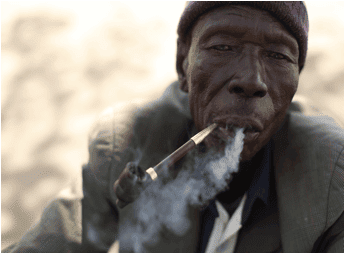
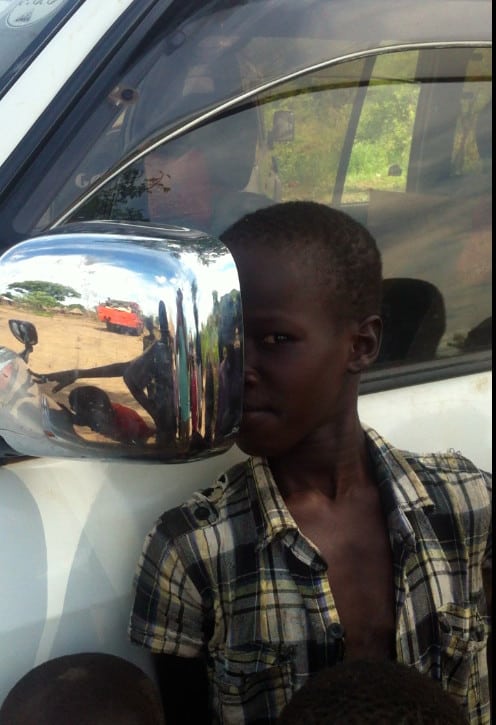
Today’s Saturday Snips is different You’ve heard the cliche: one picture is worth a thousand words. If so, you’re looking at 100,000 words below. I’ve selected ten photos from our week among refugees in northern Uganda and South Sudan. We’ll let them speak for themselves. I believe every face and scene will eloquently show you the needs, tears, and human drama of a country on the move away from war: the innocent refugees of South Sudan. These images are the artwork of a professional photographer who traveled with us. She requests anonymity and we will honour her request while praising God for her skill and insight. We are members of the Chadan Engagement Team. Our mission is equipping the people of God (in America, Africa, and beyond) to reach the least reached in South Sudan and southern Chad. If you’d like to receive more updates on how to pray for South Sudan and its unreached, please complete the form below. [gravityform id=5 title=false description=false ajax=true tabindex=49]
Sad Eyes and a Hand of Uno

Heartbroken, yet Encouraged We’re encouraged about the open doors in the refugee camps of South Sudan’s borderlands (Uganda/Kenya/Ethiopia). At the same time, we’re heartbroken by the brokeness and tragedy we see in the Camps. As the story below illustrates, there are various ways to connect with refugees. Playing Uno is only one of thousands. Would you pray about sending a pack of Uno Cards to a refugee camp? Think about this as a group (schoolchildren/Sunday School class/club) project. Here’s how: 1. Insert a note of encouragement to those who’ve had their lives shattered. Include your name/email/contact info. (We’ll send a photo of who your deck went to.) If possible, add a photo of you and/or your group. 2. Mail the cards to Ethan Bossier ℅ Dry Creek Baptist Camp PO Box 580 Dry Creek, La 70637. 3. Ethan, Pastor Charlie Bailey, and Ken Farmer are coming to Uganda in late February and will bring the Uno decks. Sad Eyes It’s called Uno. You know it as a card game. I call it a friendmaker. A deck of cards always draws people. It’ll help a standoffish child, teen, or adult come closer. Come closer so we can connect. A group of Murle children huddled around me as I dealt the cards. I mean no disrespect saying the Murle may be South Sudan’s most despised tribe. That’s why this gathering is so special. Thousands of Murle fleeing the fighting in Jonglei State have arrived at the border for shelter and solace. Several hundred have found comfort at Faith Baptist Church. That’s neat because this church is comprised primarily of the Madi Tribe. That’s how I’ve come to be in a circle of laughing children as we play Uno. Uno is neat because you can play it without a common language. Colors are colors regardless of whether you name them in English or Arabic. Likewise numbers are recognized whether it’s uno, one, or maji I remove the wild card, skip, add, and draw cards until they’ve got the game down. Then with a flourish I add a new aspect to the next hand. It was about the fourth hand when i noticed her. A quiet ten-year old, hair braided, hands in her lap. Sitting outside the circle watching us. Watching us with the saddest eyes I’d ever seen. She was beautiful but so sad. What could make such an innocent child seem so adulty-sad? The anger over war and injustice bubbled in my brain. But I didn’t have time to entertain that emotion. We had more cards to play. It took several hands before i could coax sad eyes into our Uno Circle. She was my partner for several rounds Before I set her on her own. She won the next hand and I detected a small trace of a smile at the corners of her mouth. But it wasn’t enough to overcome her sad eyes. Once again I wondered what put them there. I wonder what it’ll take to remove those sad eyes. Chances are I won’t see her again. I wonder if she’ll remember our brief encounter/ The bald Mzee Kawanja (Old White Man) with the colors and the numbers. I won’t forget her. I want to carry her face as a photo in my soul. I want to use that image as a spur to help the helpless and comfort the bereaved As well as protect those with no justice. An image of a small African girl with sad eyes.
Exiled: He never wastes one thing

He still doesn’t waste anything In a weekly Bible study with our guards, we’re walking through the Gospel of Mark. It’s been fun and rewarding. The guys have taught me so much. This week we’re camping out in Mark 6 and Jesus’ Feeding of the Five Thousand. I’ve always loved the end of the story. “And they took up twelve basketfuls.” I’m going to ask Andrew when I see him (he was the architect of the 5/2 to 5000) what they did with the leftovers. I love that about my Jesus. He doesn’t waste one thing. I was reminded of that last week. We (the Louisiana pastors) accompianed our local church leaders/friends to several refugee camps. Thousands of South Sudanese are flooding into Uganda, Kenya, and Ethiopia to escape the random ethnic violence. We met folks from every tribe. War and hatred is an equal opportunity offender whether you’re Dinka, Nuer, or nothing. These African church leaders shared a word of encouragement with hundreds who gathered to gawk at us (Mzungu) and listen to the Gospel in their heart language. Each one of our African men: Mark, Daniel, Moses, Bakik, and Charles had all spent time as refugees. “We’ve been exiled. We know how you feel.” These men also spoke the heart languages of the refugees: Kakwa as well as Arabic. They’d learned Arabic during their bleak exiles in Khartoum, Sudan or other points far from home. I was reminded again that Jesus still doesn’t waste one thing. He even takes the painful things in our lives (we all have them but few Western hurts can equal what many Africans have experienced) and crafts us to help others. This personal understanding of the hurts of others is called empathy. Empathy. It’s so much stronger than its cousin, sympathy. “I’ve been exiled. I know how you feel.” Moses reminded the mass of people. “You will get through this because of God’s faithfulness. He is enough. We know. We’re been there.” Charles pointed to the area. “I was right here as a refugee during the worst years of the Civil War.” I saw flickers of hope in downcast eyes. Later, when the crowd sang an African praise song, their voices rose in pitch and strength. I thought of another exile who told his brothers twenty years after their treachery, “What you meant for evil, God meant for good.” Joseph’s words in Genesis 50:20 never cease to amaze me. God didn’t waste one second of Joseph’s slave and prison years. It was all used. He is still faithful. He can be trusted. He catches your tears in a bottle. He doesn’t waste them. On BEING A MEDIATOR I’ve gotten in lots of trouble in my life trying to mend things between folks. I have a good story about bringing two rural families together at school to end a long-running feud that had started over a deerstand. The children of each family kept fighitng at at school so I decided to bring the parents in and help solve the problem. The two fathers who were big men , Mule Taylor and James Franklin, hadn’t been in my office for five minutes when they were up in each other’s faces. The women began screaming at each other. It wasn’t my brightest moment as a mediator but the story had a happy ending. I should’ve learned better. When I visit Rhino Camp, I’m going to find Simon and Jimmy. The three of us are going to sit down over a pot of African tea and visit. I met both of them last week at the border. The South Sudan/Ugandan border. Simon, a Dinka Bor, told me his sad story of leaving the fighting behind to escape. I asked what other tribes were present. “Mostly we Dinka.” He nodded toward a mango tree. “Those people are Nuer.” “Are they your enemies?” Simon looked at me. “I guess not, but they are Nuer.” Leaving the camp, I went to the tree and introduced myself to a young man with the distinctive forehead scars that identify the Nuer. His name was Jimmy and his family had fled from Unity State, the source of much of South Sudan’s oil as well as recent violence. I have his name. Lord willing, I’ll find both of them. Simon and Jimmy. I’m determined to get them together. Just the three of us. I’ve seen a pot of hot of coffee and buttered biscuits mend a church split. I wonder if sweet African tea and fresh chapatis might do the same. Stay tuned.
Saturday Snips
Each Saturday we review our week in Africa. As you read this, we’re (mostly) out of Internet reach in northern Uganda. We’re on a survey trip among the refugee camps. Our goal is finding where people are (especially our Unreached Groups from South Sudan) and assessing their needs. Pray for the thousands who are hurting. This is my favourite story as of now: A lonely boy named James. “I found him out here sleeping on the ground. He had no one.” I glanced from the narrator to the young boy. He was maybe ten or eleven.” “His name is James.” Peter, the narrator, swung his arm around the camp. “He’s the only Anuak in the entire refugee camp.” I thought of how far it is from the home of the Anuak people along the Ethiopian border to this area of NW Uganda. How did the boy get here? Does he even know? Peter, a Dinka Bor, said, “My family took him in. I don’t know how he got here or what happened to his parents, but he’s with us now.” We’d only met Peter thirty minutes ago but already I’d formed an opinion. He is a man of peace. A leader of the current refugees at the border camp. I don’t think it’s too much to suspect he might really be an angel. People who take in strangers in the midst of their own troubles certainly are angelic in my humble opinion. I grinned at the irony. Everyone warns us, “Stay away from those Dinka. They’re bad people.” I’ve found that each tribe has angels. Sadly, the unraveling of our country has also shown each tribe has demons and agents of hate. I’ve decided to identify and chronicle the angels around us. They don’t make the BBC News but have the better stories to share. Last week, I visited in another Angel Home. My Murle (another South Sudan tribe) friend introduced his own four children, then his three nephews/nieces living with him. “We still don’t know where their parents are.” Next he pointed out three more children, “These were the children of my best friend. When he and their mother were killed, we took them in.” Angels. Among the Murle, a tribe with a fearsome reputation among their neighbors. After spending two weeks with American pastor Tim Lee, I was reminded of two Louisiana angels I’ve always loved, R.L. and Margie “Cooter” Willis. These residents of Ten Mile Community raised over four hundred foster children including Tim. Yep, an angel can even be named Cooter. It’s right up there with Clarence Oddbody ACS (Angel Second Class) Angels around us. Peter and his family plus Anuak James have probably arrived at Rhino Camp, the huge refugee camp on the west side of the Nile. When I visit the Camp this week, I’m going to find them. Don’t tell me I can’t do it. I’ve got their full names and am determined to follow their story. I’m going to visit with the lonely Anuak boy who has been rescued by a Dinka Bor angel named Peter.
Underdogs, Swing Sets, and Concrete.

Underdogs: A brand new slide I’ve not sure I’ve ever seen anything that looked more out of place. As my grandpa said, “It was like a saddle on a pig.” Brand new shiny playground equipment in the midst of a ragtag barren refugee camp. I walked over to a swingset and pushed on it. It was cemented in the ground. Just as I thought: They’re planning on these folks being around awhile. The chains on the swings were looped out of reach of any youngsters. These refugees were from South Sudan. They were Kakwa people who’ve fled nearby Democratic Congo. Another alphabet soup named rebel group was stirring things up, forcing these people across the border. The playground equipment was donated by Save the Children. I have no fault with making the lives of these children easier and a good swing can be therapeutic. I spent a good afternoon swinging our boys. “Come on, Daddy, do an underdog.”* It just seemed so odd as the camp leaders spelled out a long list of needs: closer clean water, mats to sleep on, better nutrition for the children, Bibles. I glanced at the playground items and could only shake my head. They’re sick from sleeping on the ground but have a new merry go round. Go figure. T. I. A. This is Africa. I’ve put that northern Uganda refugee camp on both my GPS and bucket list. I’m going back this summer with my grandchildren. I’m going to introduce Noah, Jude, Luke, and Maggie to some beautiful African children. We’re going to swing all afternoon under the brilliant African sun. Later when Jack, Sydney, and Ellen Iles come, we’ll have a picnic there and make new friends. If I feel up to it, I might even try one more underdog. * An “Underdog” is when you swing someone high and run under/past before the swinger returns. Postscript: We were at the camp with five local African church leaders. Each one shared of his own experience as a refugee. Those men and their church plan on returning to help with needs as well as lead a Bible study. Teach and heal. Teach and heal. It’s what our leader Jesus did. He still does it and often allows us to reach our hands in and take part. There are some underdogs at a isolated Ugandan refugee camp. When you come see us, I’ll take you there. In the meantime, you might want to help the ministry our friends are starting there. I’ll take you there.
Thoughts on Packing Carefully
Two roads diverged in a wood, and I— I took the one less traveled by, And that has made all the difference. – “The Road Not Taken” by Robert Frost* Going #UpCountry (Again) “Up Country” is what folks here call northern Uganda. It’s a wild, open, and fascinating part of Africa. Right now, thousands of South Sudanese have come into Uganda escaping the fighting in their home country. We’re leaving Wednesday (we’re nine hours ahead) for a “a survey trip” to the refugee camps. We beg for your prayer support. Internet reception will be spotty but we’ll try to give updates on Twitter and Facebook at #UpCountry. Come join us on the Journey! “Don’t get on the plane with any regrets.” Advice from a veteran missionary as we prepared to leave the U.S. A Prayer for Packing Lord, we’re going on a trip To a place we’ve never been. Help us to pack carefully. Guide us in what to leave in As well as what to leave out. Fill our hearts so full of your love That any jealousy, regret, or bitterness Would never fit in our luggage. Teach us to leave behind the baggage That so easily weighs and slows us down. ** Finally Lord, help us pack the essentials. Along with flashlights and mosquito nets, Help us have love and patience. Two qualities that transcend language. Grant us listening ears and open hearts. On this trip. This journey. This safari*** is all about You. Not us. Go with us. Before us. Over us. In Jesus’ name. Amen. ________________________________ * My two favorite American poets are Robert Frost and Bob Dylan. **Hebrews 12:1: Therefore, since we are surrounded by such a huge crowd of witnesses to the life of faith, let us strip off every weight that slows us down, especially the sin that so easily trips us up. And let us run with endurance the race God has set before us. ***Safari is the Swahili word for “journey or trip.”
Saturday Snips: Stories, Snapshots, and Sketches

Scroll down to see our current prayer needs. Heartbroken . . . but still in love You remember her (0r him). That person you fell in love with as a teenager. And I bet you remember how it felt when he/she jilted you. It was heart-breaking. And I bet if you’re honest, you feel a twinge in your soul when you remember it. Heartbroken. That word best describes how we feel about our country, South Sudan. It’s the dry season. African has rigid seasons. Dry season when it never rains. Wet seasons when it rains nearly daily at the same time in the afternoon. My friends here are amazed when I try to explain seasons at our latitude of 30 degrees north in Louisiana. “It can rain anyday in the year.” I know this well: I’ve seen GA Camp swamped by a tropical storm as well as the fates of Friday night high school football games changed by a fast moving Ocotober cold front and a wet pigskin. I’ve experienced August heat and humidity on the Gulf that I’d match against any African heat I’ve felt here. I laughed last year in Zambia when a late rain surprised everyone settling into the Dry Season. A friend smiled. “Oh, it was just the rain saying goodbye.” This morning, a thunderstorm nosily made its way through Entebbe. Only a few drops fell, settling the thick dust, but the wind whispered. “Get ready. The rains are coming and all of this dust will happily revert back to mud.” A banana tree made me homesick. The storm’s winds set the thick leaves talking. It made me miss my pines. I’ve always loved the sound of the wind in our Louisiana longleaf pines. It’s hard to describe. The banana (plaintain) leaves make a rough noise. The pines whisper. In the pines In the pines where the sun never shines and you shiver when the cold wind blows. I’ve always loved the sound of a cold north wind in the pines. It’s been over a year since I heard it. I’m coming home for Christmas 2014. There’s lots of things I want to see and hear. I hope there’s a good cold front where I can stand under the pines and hear them whisper. Refugee boys with homemade truck Kira Receiving Camp South Sudan/Uganda border “Meet the new boss, Same as the old boss.” -“Won’t get fooled again” The Who They had such hope calling their country “New Sudan.” He sat on a reed mat on one of the few shady spots in the bare yard. Up until a month ago it was a school yard. Now it is the first stop in Uganda for hundreds of South Sudanese. His facial markings identified him as Dinka. I asked where he was from. “I’m Dinka Bor.” “How did you get here?” “When the fighting began in my village, we fled to the Nile and came across on a barge.” He kicked at a dirt clod. “We came down this side of the river and ended up here.” “Who was doing the fighting.” “I’m not sure. There were soldiers in uniform and civilians shooting.” He looked up. “The same one that tried to kill us in ’91 did it again.” I knew exactly who was talking about. Riek Machar led a Nuer army into Bor in 1991 and killed several thousand Dinka. Machar is the de facto leader of the rebel army that stormed Bor last month. “Did you flee in 91?” “No. I’d never left during any of the past trouble. But this time I did. We just wanted to be left alone. My family cuts trees and makes charcoal. We’d take it into Bor to sell.” He sighed. “We just wanted to be left alone.” I took his name. I hope to locate him in Rhino Camp where refugees on this side of the Nile are being located. I wonder if he’ll ever go home again or will he be in exile for the rest of his life. And he just wanted to be left alone. I’ll call him the Ilippi Flipper. I don’t have his photo. That might’ve taken away his dignity. Ilippi is a bump in the road in northern Uganda’s West Nile District. He’s an older teen who lays on the road shoulder. When traffic passes, he begins spinning wildly in a dizzyingly circle all on the support of his strong arms. I didn’t notice it the first time I passed. His legs are shrivelled and useless. But man can he spin! It’s as if his strong arms and upper body have taken on any of the muscle his legs never had. We stopped last week and gave him a gift. I thanked him for showing his talent and inspiring me. I’m not sure he understood my words. I hope he saw it in my eyes and face. Like Helen Keller and millions of others with handicaps, he’s used his to become stronger, and in his own way offer his talent and skill to the world. When you come to Africa and travel with me to West Nile we’ll stop in and meet him. Give him a gift as he shares his gift. Learn his name and more on his story. Thanks Ilippi Flipper for inspiring me and allowing your story to travel across a vast ocean to my friends back home. These are our current prayer needs as seen through the prism of a Biblical Story: Setting: A great crowd pressing around a man Main Characters: Jesus Christ, the Son of God Woman—sick for 12 years—poor spent all her money on physicians and no better-weak from losing blood for 12 years Plot: Problem-hopeless woman Essential detail-“She had heard reports about Jesus” Mark 5:26 ESV Climax-she makes a decision to risk touching God Solution-immediate and complete healing On our recent trip to northern Uganda we saw hundreds of refugees in deep need
If the Lord’s willing and the Nile don’t rise . . .
Back home, we have trouble with dogs and coons in trash cans. Over here, it’s monkeys. We are currently headed home from NW Uganda. I’ve scheduled this post ahead of time. Thank you for praying for our trip. I cannot wait to get home and share new stories with you. Gratefully, Curt It’s the truth. A mission trip to the Third World (or Developing World) will change how you look at everything, including yourself.
Dr. Livingstone, I presume?

It’s one of my favourite things in Africa. Greeting and meeting. Meeting friends and family at the Entebbe (Uganda) airport. We live about 5 km from the terminal and love meeting folks and family there. They say that Henry Morton Stanley struggled on what he would say when (and if) he found David Livingstone. Legend records it as, “Dr. Livingstone, I presume?” Three crucial pages are missing from Stanley’s journal on the very day he found the great missionary in what is now Tanzania. Skeptics believe Stanley later made up the greeting. I’m always tempted to greet the arrival of my American friends with a handshake and “Dr. Livingstone, I presume?” I may do it tonight. The 10:30 PM KLM flight (Most international flights arrive around midnight until 5 am) as five Louisiana pastors land. It’s become a common (and treasured) occurrence for us. Standing outside the terminal window straining to see a familiar face in the far-off baggage claim area. Then seeing them come into view, strung out from the flights but grinning at being in Africa. We’ve now watched two sons come through there. One daughter-in-law holding our grandchild. Emma Iles made many African friends during her recent visit. This year we will see more family arrive. I laugh at the thought of the 6 member Clay Iles clan coming through that airport. Africa will never be the same after the Iles boys (Noah, Jude, and Luke as well as sister Maggie) come through. We’re going to have fun this summer will they arrive. I can’t wait to see Africa through the Clint Iles clan. I want to walk with Jack and Sydney down a red dirt trail watching monkeys scamper. I want to hold Ellen Iles whom we haven’t me but already love dearly. Then there’s been my Dry Creek friends. Todd, Charlie, Bug, and Andrew. I’ll never forget watching those four piney woods rooters coming into sight. Tonight it’s five pastors. Tim P., Greg, Steve, Brent, and Tim L. I’ll get to be with them for a week. I’ll be privileged to see Africa through their eyes as we share the Gospel from Entebbe to the South Sudan border. Throughout 2014, I look forward to meeting and greeting others coming to serve in this part of Africa. It’s such a privilege. I’m so grateful for this opportunity to have one foot firmly planted in Africa and another one deeply rooted in my Louisiana piney woods.
Africa: Saturday Snippets: Shots, Sketches, and a Few Stories

These are snippets of our work and life in Africa.
Heartbroken . . . but still in Love

We’re sharing information on our country of South Sudan. Although we live in Entebbe, Uganda, South Sudan is our assigned country. We were due to move there next month, but the current fighting has put that on hold. We are truly heartbroken at what is happening with the country but still desperately in love with the people there. We’re informing our friends how to pray for South Sudan. The Blue dot represents the heart of Kakwa country. The Kakwa live in Uganda/DR Congo/South Sudan. We will be working in and around the town of Koboko. There are presently over 4000 refugees (mainly Dinka) in Koboko. Additionally, numerous Kakwa from nearby DR Congo have sought refuge there. In mid-January, five Beauregard Baptist Pastors will be working with Pastor Mark Vukoni and Koboko Baptist Church. We will be sharing Gospel stories with local residents as well as refugees. There are also two Secondary Boarding Schools in Koboko that house hundreds of South Sudanese students. Black dot: DeDe and I live in Entebbe, Uganda on Lake Victoria. Along the lake are three key cities: Entebbe (two airports) Kampala (the capital) and Jinja (home of Uganda Baptist Seminary.) The Orange dots represent the regions where there are presently IMB personnel. Two families (Lane’s and Jeremiadoss) are in the northern Dinka country and are seeing many come to Jesus. The lower orange dot is the location of the Lewis family (Beaumont natives) working among the Taposa. The Red dot designates one of our key tribe, the Zande. So far their district of Western Equatoria has remained peaceful. Pray for the Zande. Finally, the Green dot represents the large refugee camp at Kakuma, Kenya. It has dozens of tribes including many South Sudanese who’ve fled the fighting. We feel that the border areas/refugee camps will be an integral part of Chadan* Cluster’s focus early in 2014. Want to know more? Curt and DeDe Iles http://www.creekbank.net creekbank.stories@gmail.com www.imb.org News sources: http://www.sudantribune.com *Chadan is the International Mission Board’s cluster that includes South Sudan and the southern part of Chad. [gravityform id=5 title=false description=false ajax=true tabindex=49]
Heartbroken but still in Love: South Sudan

Heartbroken This week we our blogging will consist of putting faces on the chaos going on in South Sudan. You’ve heard the stats: at least 1000 dead . . . 150,000 displaced. Numbers don’t move us like faces and stories. This week you’ll be meeting Simon and Rachel, Pastor John, Two Teachers, a family separated at the Nile and more. First of all, I want you to meet Batuk. Tweeters: Our team will be tweeting using the hashtag #heartbroken. It’s one way to keep up with the crisis in South Sudan and our work. You can also stayed informed and praying through hashtags such as #south sudan and #juba. A Dinka named Batuk I wonder where he’s at. I wonder if he’s even alive. I first met Batuk at a lonely border checkpoint in South Sudan just north of the tri-point of where South Sudan{SS}, Uganda, and DR Congo converge.) The Ghazi checkpoint is deep in SS’s Kakwa territory and it surprised us to see a Dinka. He was easily identified as Dinka, the tallest people in the world. They are viewed by other tribes as arrogant and aggressive. Batuk didn’t make a good first impression. He was dressed in a running suit and approached our vehicle with a swagger that implied, “I’m in charge.” He was the immigration Officer for this stretch of pot-holed section of dirt road that cannot be called a highway. Batuk began an interrogation of where we five “Mzungu” men were going and why. As we informed him of our mission work, he scoffed. “Jesus is a white man’s God.” He continued his monologue ending with, “If Jesus appeared right here, I wouldn’t bow down to him.” We were glad to leave his checkpoint and head north but knew he’d be waiting on our return trip. There he was. Dressed in his running suit uniform. However, we’d written down his name and addressing him personally was the first brick to fall in the wall between us. Several months later, DeDe, our son Clint, and I returned though Ghazi. We were ready for him with two things. First of all, I addressed him by name and alluded to our previous visit. A quizzical smile appeared on his face. I then handed him the photo shown below. “You said Jesus was a white man’s God.” This painting, one of my favourites, is from the Catholic Guesthouse in Goma, DR Congo. He glanced from the photo to me. “That’s just how they drew him as African.” “Every culture makes Jesus look like their own.” I put my white hand on his dark arm. “Besides, the real Jesus probably was closer to your skin color than mine.” He smiled. Then I handed him our bribe. A loaf of DeDe’s famous banana bread. “We brought this for you.” “For me?” “Yep.” He ushered us through the checkpoint, wishing good luck on our journey. Three days later on our return, he greeted us effusively. It must’ve been the banana bread. He stood toe to toe with me. “I have one thing I want from you.” I stiffened; ready for the infamous “African Ask” we face nearly daily. “I want two books.” He had my attention. “I want a book called 70 Great Christians and I want a Bible.” I’d never heard of the book but promised I’d find it if possible and deliver it in January. He walked us to our Land Cruiser. “God bless you on your way home.” We waved and headed south. Over the next ten miles of potholes we talked of the change we’d seen in him. It wasn’t the banana bread. I firmly believe it was the work of the Holy Spirit. Back home in Uganda, I ordered 70 Great Christians from Amazon. Our son Terry brought it over last month. Our guard Oscar is currently reading it. It’s a fine book covering historic Jesus-followers from ‘ThePostlePaul’ to Corrie Ten Boom. I planned on presenting the book and Bible to Batuk as we passed through Ghazi next week. But we won’t be going. Crossing the border into South Sudan is sadly out of the question right now. As I think and pray about people in the war-torn country of South Sudan, I often think of Batuk. How is he? Is he still at his border post deep among a people group we love deeply but who have a history of not loving the Dinka. I pray for him. Will you join me in praying for him? Pray that somehow I can get the books to him. He needs to know there is one white-face that keeps a promise and is not put off by his demeanor and attitude. As you pray, pray for Batuk’s safety. Pray that Jesus, the Prince of Peace, will come to rule in his heart. What is happening in our country of South Sudan is heart breaking. But in spite of the chaos, God is working. Two of our team’s couples saw 75 people baptized yesterday in a remote part of South Sudan. God is working. I also believe the work God started in Batuk’s heart is ongoing. Even though we’re currently shut out of Ghazi and SS, we will continue to work. Even though you are a continent and an ocean away, you can be part of what God is doing. Pray! Pray for Batuk. [gravityform id=5 title=false description=false ajax=true tabindex=49]
Heartbroken: How you can pray for our country, South Sudan
In the coming days, we’ll be updating this Prayer Post for South Sudan. This will allow you to be praying for peace and stability. Heartbroken Thursday, Dec. 26 Read a simple but accurate report on the South Sudan Crisis. Christmas Day 25 December 2013 Today’s verse to pray over South Sudan (SS): Psalm 46 Entire Chapter God is our refuge and strength, an ever-present help in trouble. (46:1) How you can pray today: 1. Pray that Jesus-followers in SS will find their comfort in the God’s strength. That they (in spite of personal danger) will stand up for the helpless from other tribes. 2. That God will use Church Leaders (Anglicans/Catholics/Protestants) as peacemakers between the warring factions. 3. That God will break the hearts of Salva Kiir (President) and Riek Machar (former V.P.) over the killing and chaos and bring them together for the good of South Sudan. 24 Dec 2013 How you can pray today: 1. That the two leaders, President Salva Kiir and former V.P. Riek Machar will step up and take courageous action to stop the mass killing. 2. That South Sudanese Christians will stand strong in their faith, reach out across ethnic lines, and be peacemakers. A note: this will cost them. In fact, some will die for their strong stand. 3. Pray for the Army chaplains who are embedded in unit on both sides of the fighting. Christmas Eve Tuesday, 24 December, 2013 DeDe and I are heartbroken over the unfolding situation in South Sudan. As you may be aware, South Sudan is our main focus in reaching the unreached. Although we currently live in Entebbe, Uganda (where the International Airport is) most of our work involved traveling in and out of South Sudan. Additionally, many of our key tribes overlaps national borders. For instance the Kaw People live in three adjoining countries (SS, Uganda and DRC-Congo). It’s difficult to explain what’s happening in South Sudan (SS) in two paragraphs but here goes: The world’s newest country has a long history of conflict and unrest. Most of the fighting has been with its northern Islamic neighbour, The Sudan. However, deep tribal hostility has existed for decades between the two major SS tribes: the Dinka and Nuer. The current president, Salva Kiir, is Dinka. His former V.P. Riek Machar is Nuer. Last Summer, President Kiir removed his entire cabinet including V.P. Machar. Last week the simmering feud erupted into flames in Juba, the capital city. It is still unclear what started it (attempted coup/accident) but it quickly developed into defections within the SPLA (SS’s Army) mainly along Dinka/Nuer ethnic lines. This has spread to other areas of the country, including SS’s oil rich states in the northern part of the country. The term genocide (as in Rwanda) is a strong word but observers both in and out of the country are cautiously using this word. Pray that the Prince of Peace, Jesus, will bring about peace and forgiveness. [gravityform id=5 title=false description=false ajax=true tabindex=49]
Standing your Ground
Standing Your Ground . . . without Driving Yourself (and everyone else ) Crazy. “But Eleazar stood his ground . . .” II Samuel 23:10 A key to a joyful life is knowing when to stand your ground versus saying, “It’s no big deal.” Kampala, Uganda is on edge. The U.S. government shared a warning of an impending “Westgate-style” attack in Uganda. We were in the city yesterday and the heightened security was evident everywhere. (The security guards with their wands were actually checking you!) DeDe and I entered the Ugandan DMV. (Now that’s a whole another story). The guard said, “Sir, she can enter, but you cannot.” I felt a moment of irritation, but happily it passed. I shrugged. “It’s no big deal.” I returned to the Land Rover where I could keep an eye out for DeDe coming out. This blog began taking shape. How many times in my life have I got upset about something that didn’t really matter, making a mountain out of a molehill. Africa is a good teacher. She teaches you that most things we Westerners get upset about are “First World Problems.” i.e. “No big deal” problems. Let me be clear: there are plenty of things to stand your ground on. There are mountains to die on. There are situations when retreat is not an option. Places a man (or woman) must stand up even if he or she is standing alone. However, those occurrences don’t occur every day. But those “no big deal” moments are part of daily life. In Africa, many of the tests are when you are behind the wheel. It’s hard to describe the challenges of driving here. You’re driving on the “wrong side” of the road and sitting on the right hand of the vehicle. Motorcycles have no rules. Police love to stop any Mzungu. Aggressive driving is the rule of the road. Cars with UN or Government tags will run you off the road in a Nairobi moment. But road rage is non-existent here. I’ve only had one driver shake a fist at me and he was another white guy. Go figure. As DeDe and I face decisions (daily) on our work and time here, I’m reminded of the words of Jesus on standing your ground. No one understood the difference between standing your ground and letting a slight go unanswered. In one of his numerous parables, Jesus quoted a land owner telling his servants, “Occupy till I come.” As I continue this blog, we’ll discuss a church (no, two churches) named Occupy. It’s a good word. Occupy. Has a great deal to do with standing your ground.